Cosmic-Ray Inquiry Program Detectors Around the World

OTHER DETECTORS DETECTORS

Other detectors ─ the many detectors around the world that catch cosmic rays and radiation
+ accel-kitchen's own

First, Accel Kitchen's own detector.
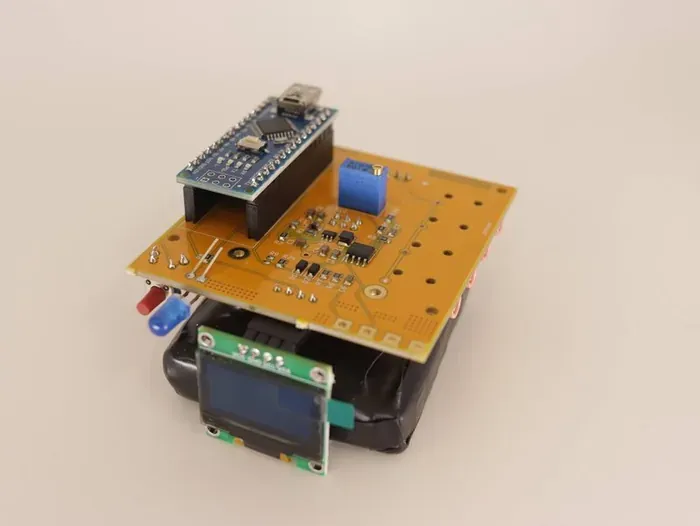
Accel Kitchen particle-detector (CsI scintillator) assembly kit Accel Kitchen Particle Detector (CsI scintillator)Accel Kitchen · assembly kit The detector that participants assemble with their own hands in the program. Using an inorganic CsI scintillator, it shows the instant radiation arrives in real time, with an LED and a waveform. You can identify nuclides from a gamma-ray energy spectrum, or catch cosmic rays. Includes a data-acquisition board, measurement software, and an online manual. View in the shop
the one you build

This single detector is the starting point for all the "other detectors" featured on this page. In the Accel Kitchen cosmic-ray inquiry program, participants assemble this detector themselves, and their inquiry begins by measuring cosmic rays and radiation at home.

It's also available in the shop, ready to use for middle- and high-school inquiry, classwork, and independent research projects.
+ a world of detectors

Detectors aren't just one kind.

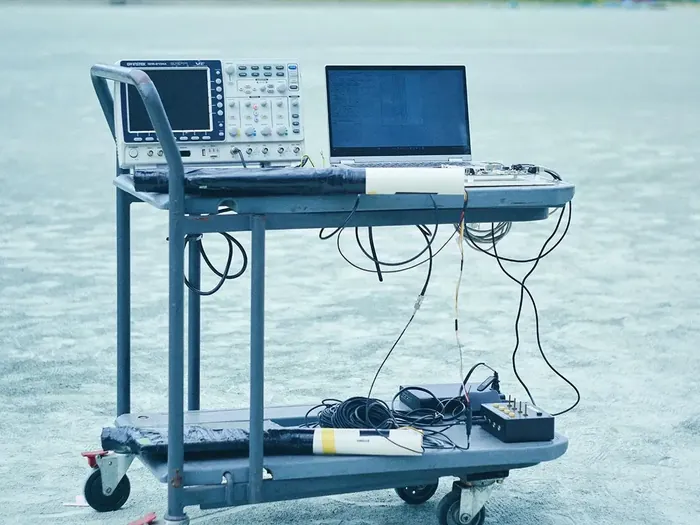
At Accel Kitchen, we loan participants a scintillator detector they assemble themselves. But that's not the only way to catch cosmic rays and radiation. Around the world there are many detectors suited to different purposes.
Here we introduce some of the best-known detectors that middle- and high-school students can use or learn from, grouped into three broad families. Let it be a doorway to discovering that "there are other ways to measure, too."

Catch muons & charged particles

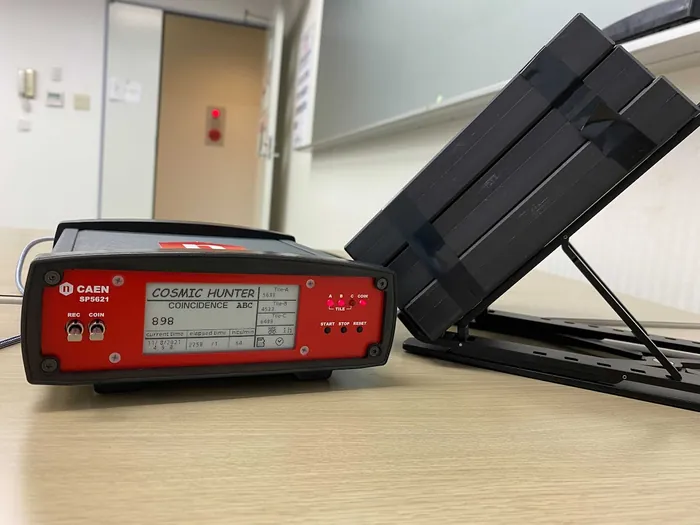
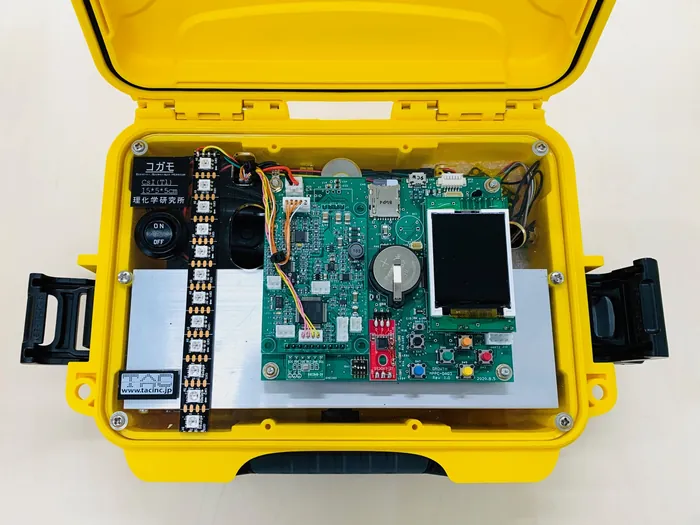
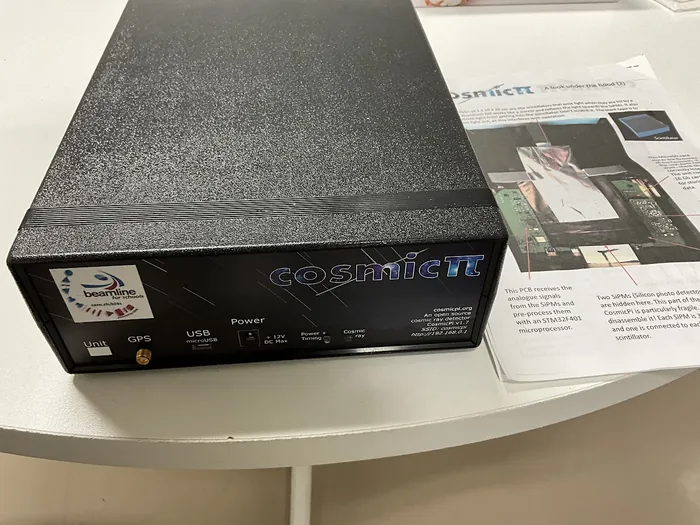
A type that uses scintillators which flash when a muon — the main player in cosmic rays — passes through. Simultaneous measurement across several layers (coincidence) confirms a particle "really did pass through."

Measure gamma rays & radiation

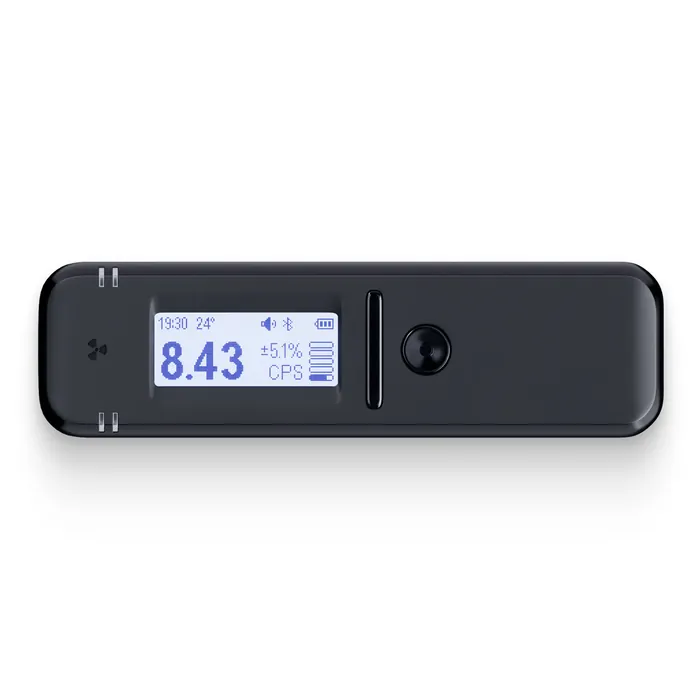
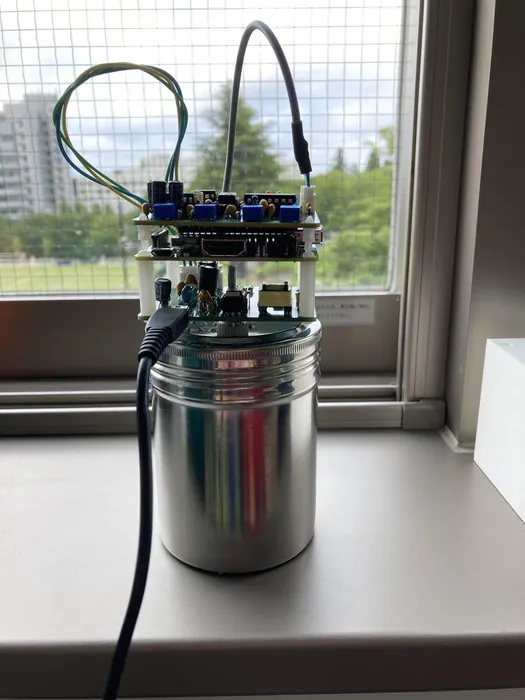
A type that measures the natural background radiation and gamma rays around us. From differences in energy, you can even work out which atomic nuclei they came from.

"See" particle tracks

A type that uses many tiny pixels to render the path a particle traveled as an image. It lets you experience radiation you can actually "see."

Family 01 · Muons Catch muons & charged particles
Family 02 · Gamma & Radiation Measure gamma rays & radiation
Family 03 · Tracks "See" particle tracks
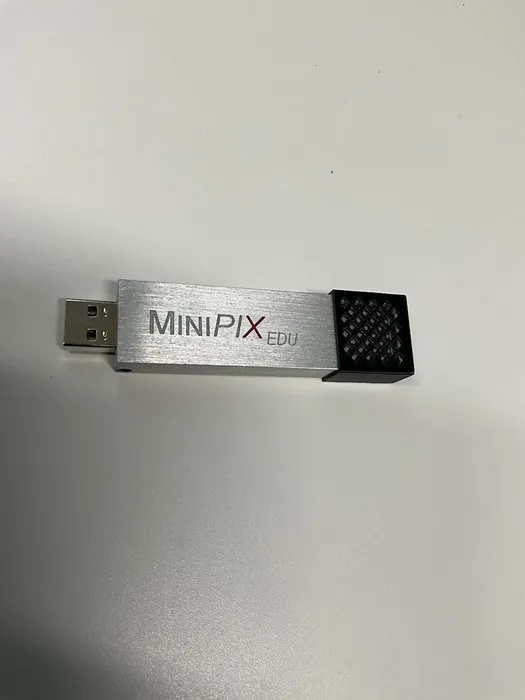
The Timepix detector used in CERN's Timepix@school program Track visualization TimepixDeveloped from CERN's Medipix2 · silicon pixel detector A silicon pixel detector born at CERN. Connect it to a computer by USB and the trails (tracks) left by cosmic rays and natural radiation appear on screen in real time — you can even tell the particle types apart. The CERN & Society Foundation's "Timepix@school" brings it to schools. Timepix@school
why it's special

While the previous two families count "how many passed through," a pixel detector like Timepix shows you the very path the radiation traveled, as an image.

A muon shooting straight through, an electron winding and curving, an alpha particle appearing as a dot — each particle paints a different "picture," and that's the appeal: you can intuitively feel radiation that should be invisible.

Credits: The names, photographs, and diagrams of each detector belong to their respective makers, organizations, and research groups. This page introduces an overview as a doorway into cosmic-ray and radiation inquiry. For accurate specifications, how to obtain each device, and the latest information, please see the official pages and materials linked from each card.

Start with your own detector.

Accel Kitchen delivers a cosmic-ray detector you build yourself, right to your home.
Now that you know the many kinds of detectors out there, why not begin by "measuring with your own hands"?