01 beyond cosmic rays

Everyday radiation, explored too.

The homemade detectors and scintillators used at Accel Kitchen aren't tools only for cosmic rays. Gamma rays from a radioactive source, natural radioisotopes hidden in rocks — invisible radiation is, in fact, all around us.

02 research examples

Examples of radiation inquiry.

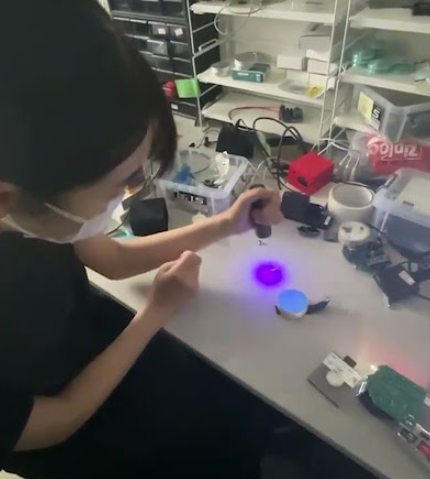
A student peering at a homemade scintillator glowing blue on a lab bench
UV RESIN SCINTILLATOR
01
Gamma rays × homemade scintillator

Measuring radiation with a "homemade scintillator" set in UV resin

Mix a fluorescent dye into clear UV resin and cure your very own scintillator. When radiation strikes it, the inside glows faintly. By making the scintillator yourself, you can build your own original detector from scratch.

A student taking measurements with an oscilloscope and signal generator on the desk, a 662 keV note and circuit diagram on the whiteboard
SCINTILLATION IMAGING
02
Scintillation light × imaging

"Photographing" radiation-induced scintillator fluorescence with a digital camera

For just an instant when radiation strikes a scintillator, a very faint light (scintillation light) is produced. Using a digital camera, the students photographed the scintillation light produced by radiation from sources such as cesium and americium.

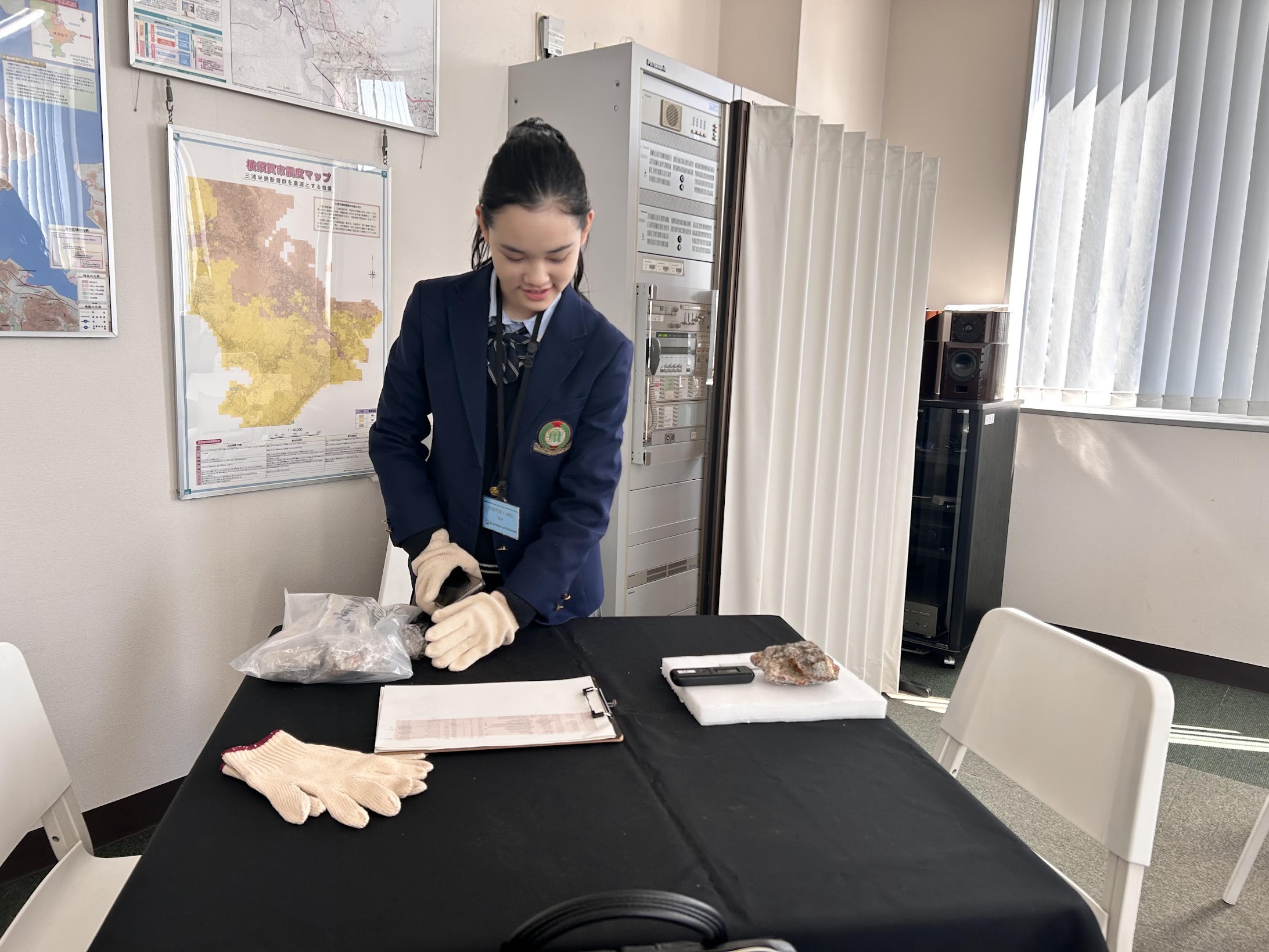
A student in school uniform handling a rock sample with white gloves; behind them, a rack of radiation meters and a dose-map poster
ROCKS & RADIOISOTOPES
03
Environmental radiation × natural radioisotopes

Measuring the radiation hidden in rocks — from deep-sea chimneys to the stones beneath your feet

Everyday rocks and minerals contain tiny traces of natural radioisotopes. With the cooperation of JAMSTEC, the students used gamma spectroscopy to measure the uranium and thorium in a variety of rocks, including samples from deep-sea hydrothermal vents (chimneys).

Why not catch some radiation yourself?

Radiation inquiry is one of the themes that grows out of the cosmic-ray inquiry program.
Start by measuring cosmic rays with a detector you build yourself, then follow your curiosity toward the "radiation all around us."
Completely free, with researchers and mentors alongside you the whole way.