Seeing is believing.

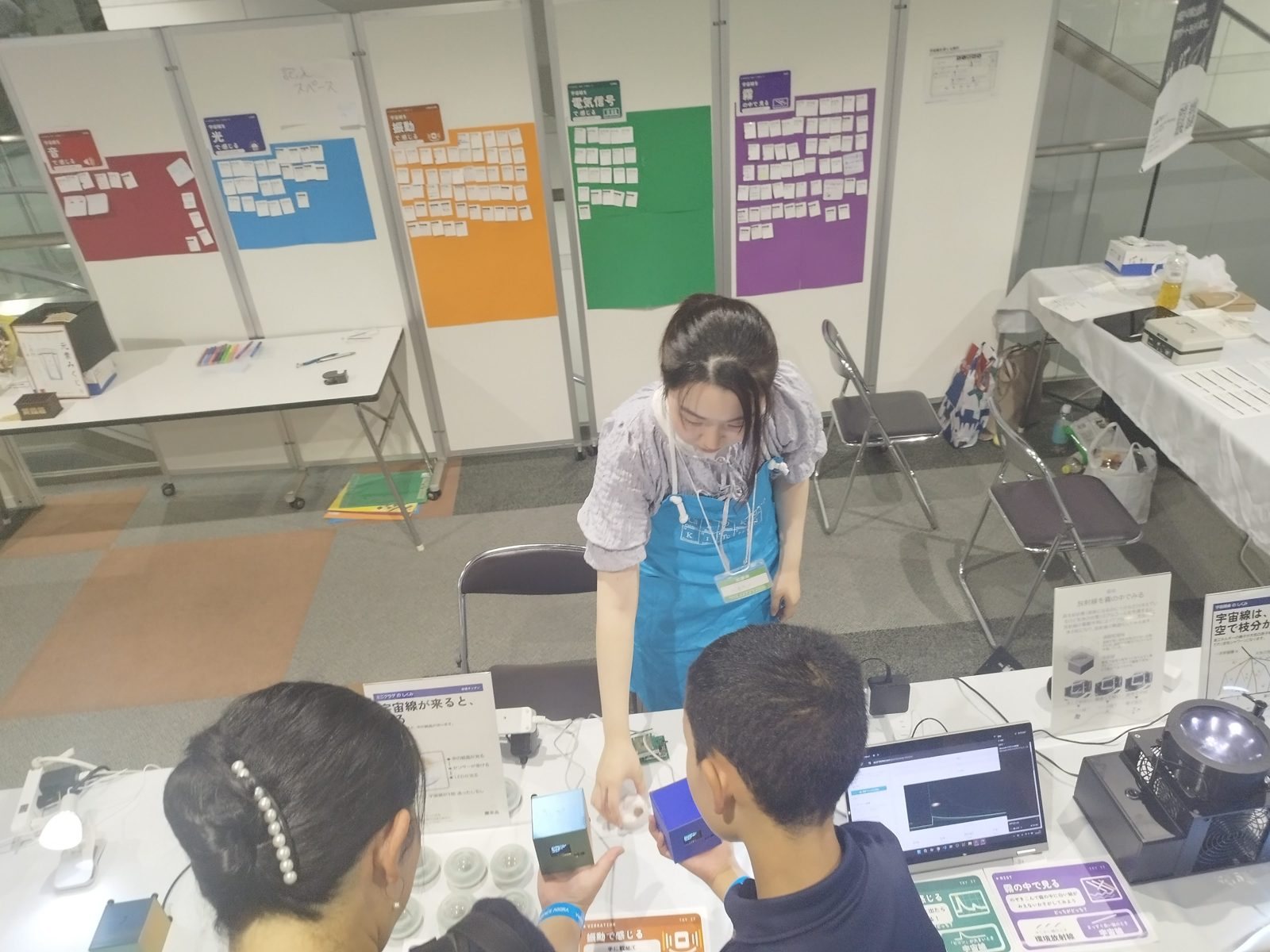
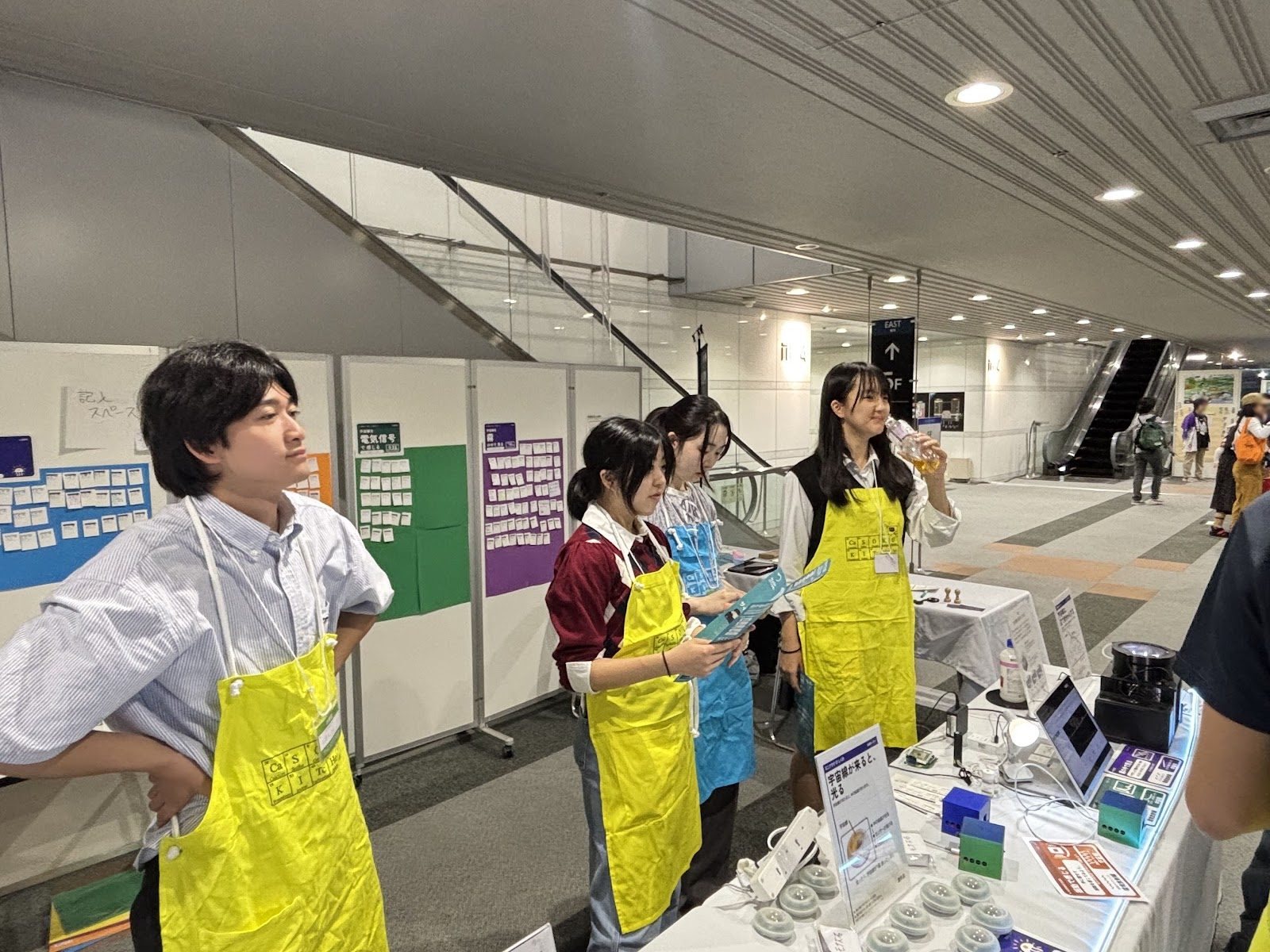
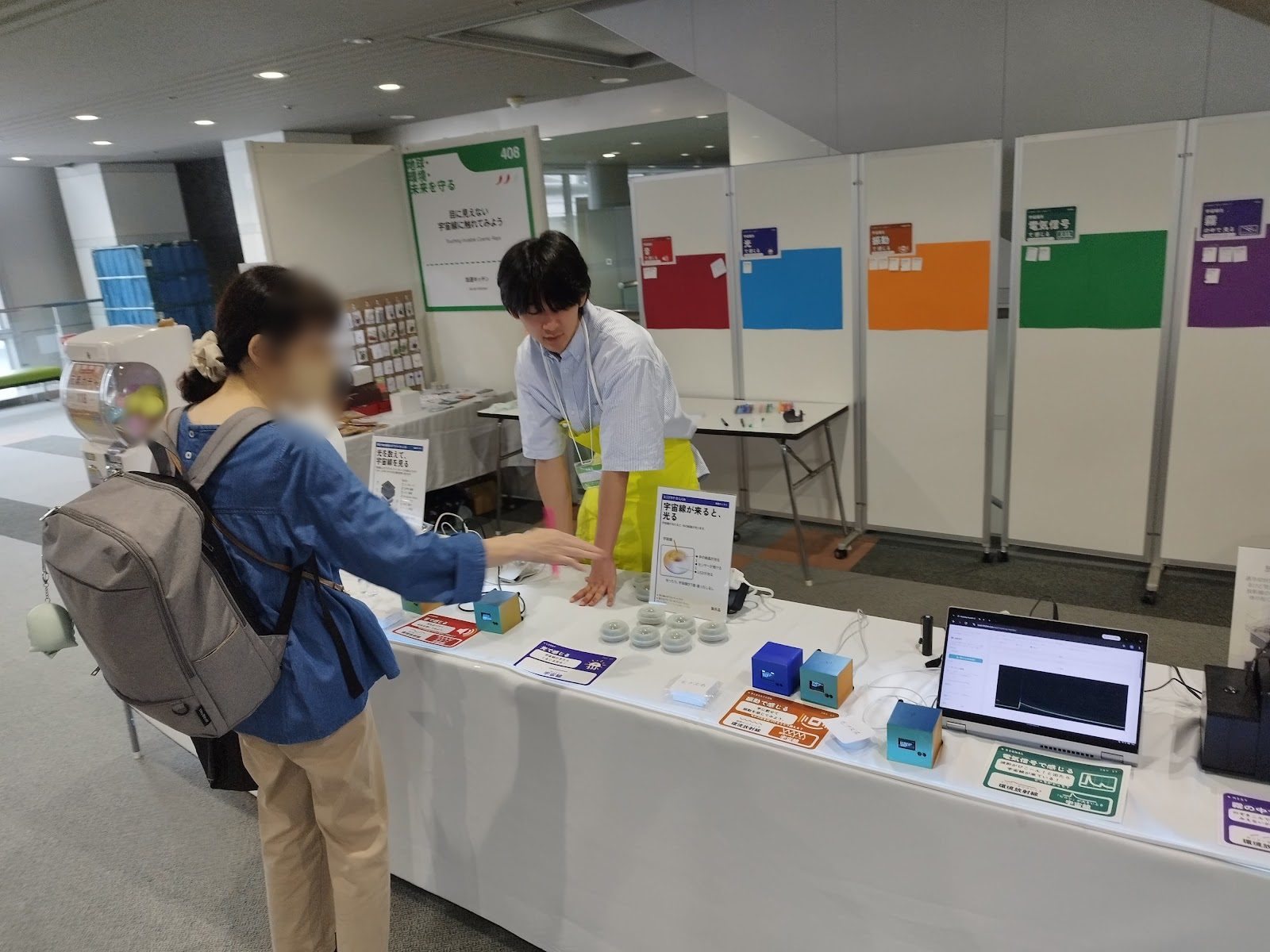
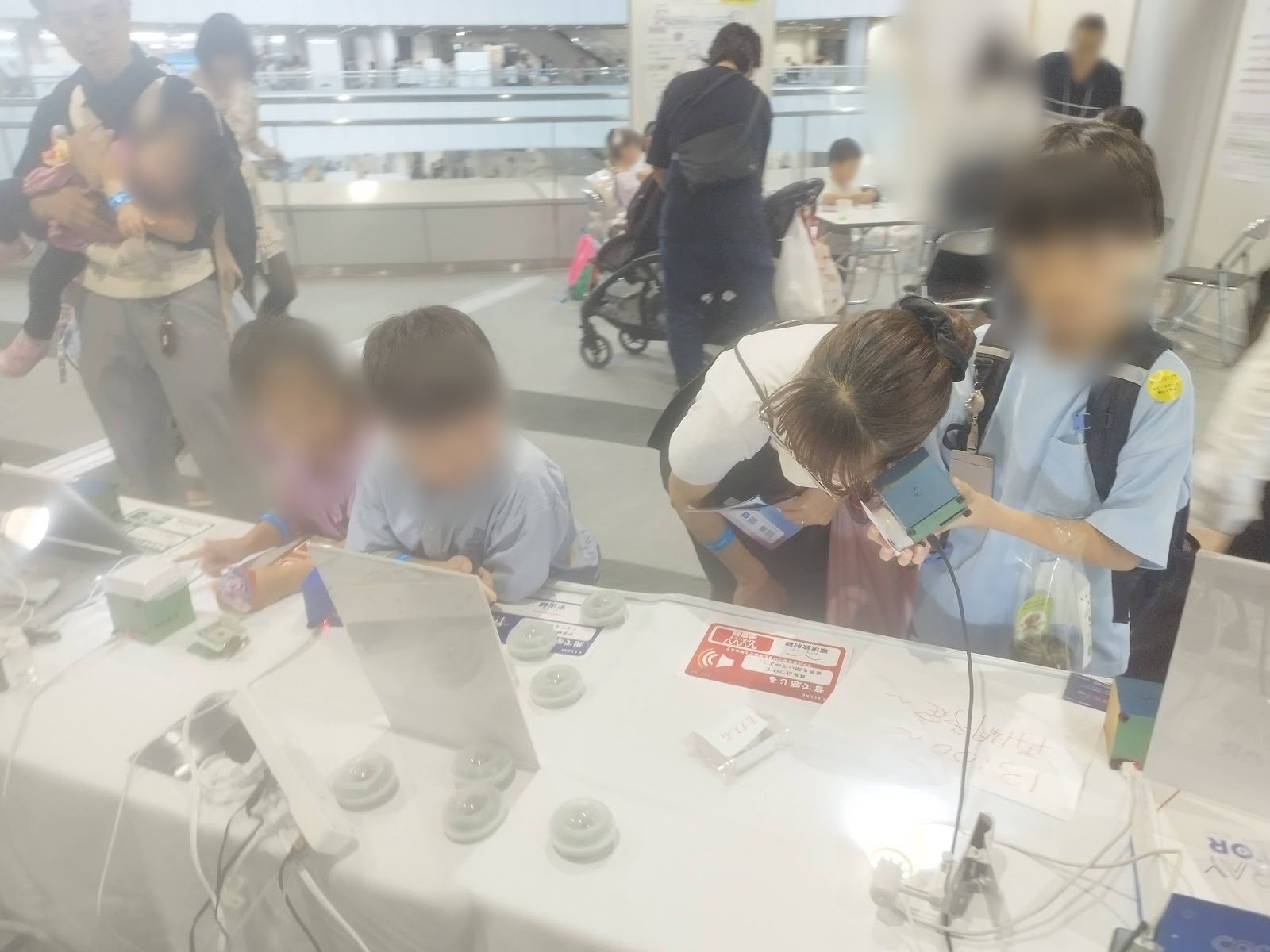
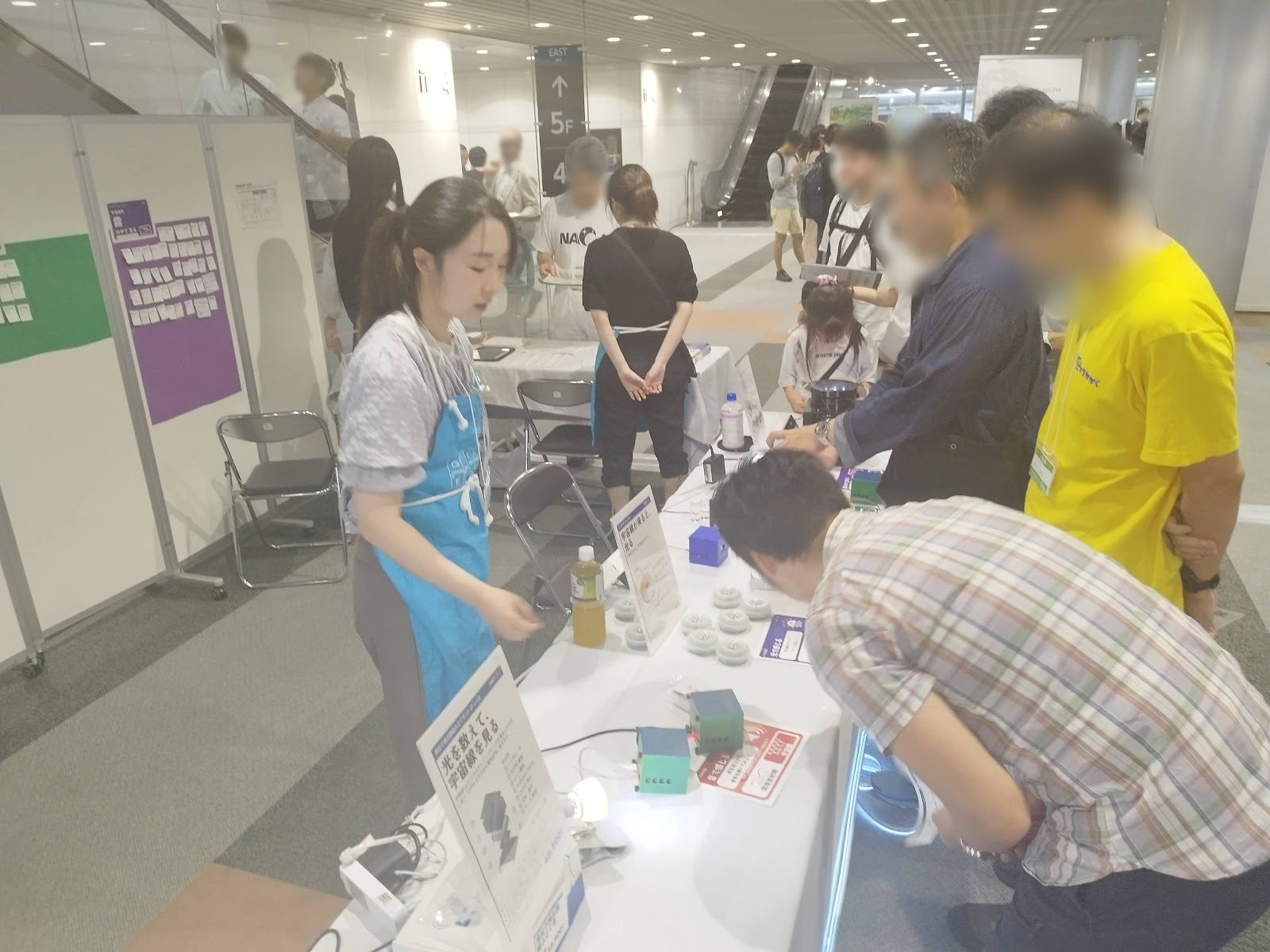
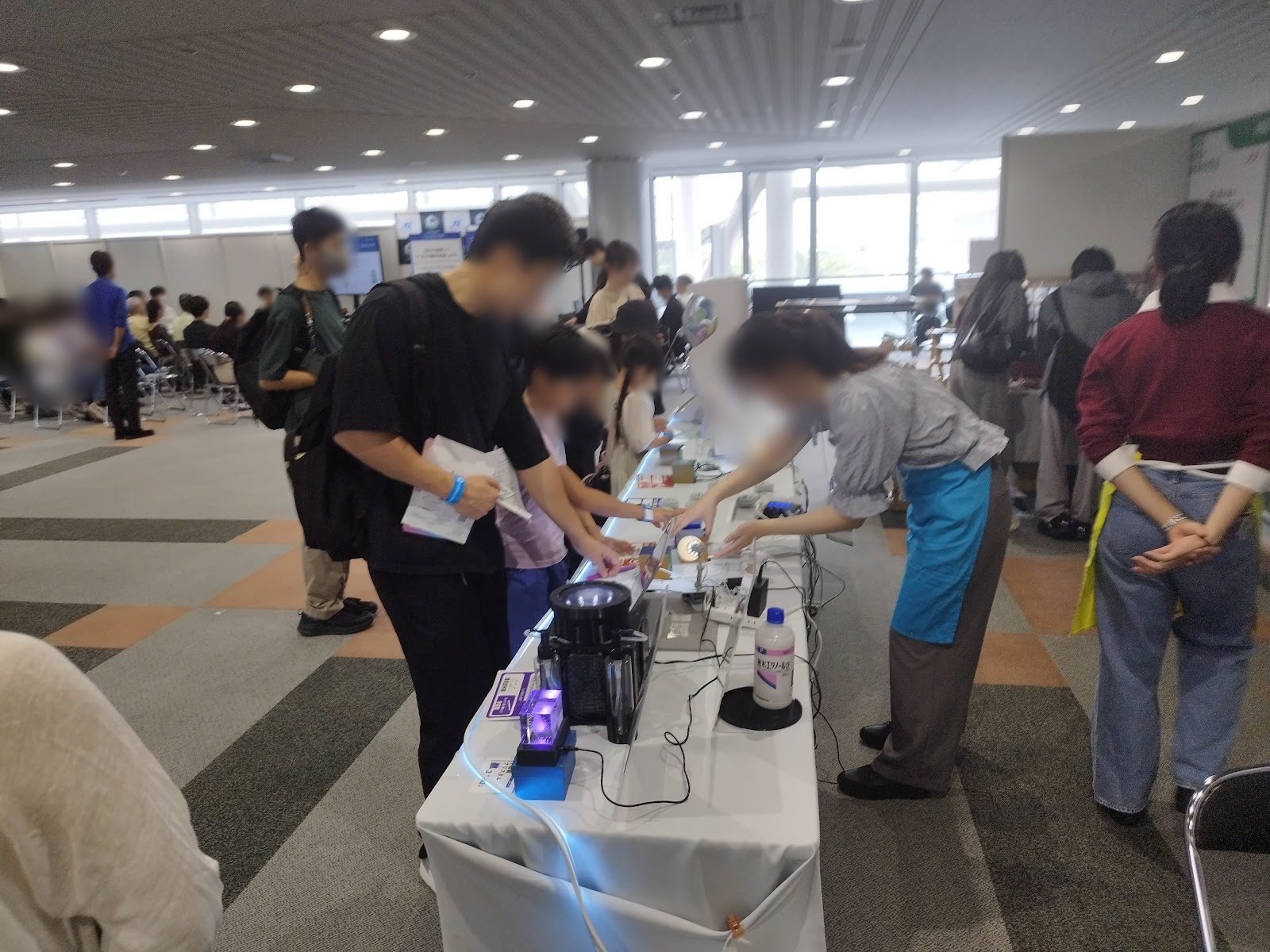
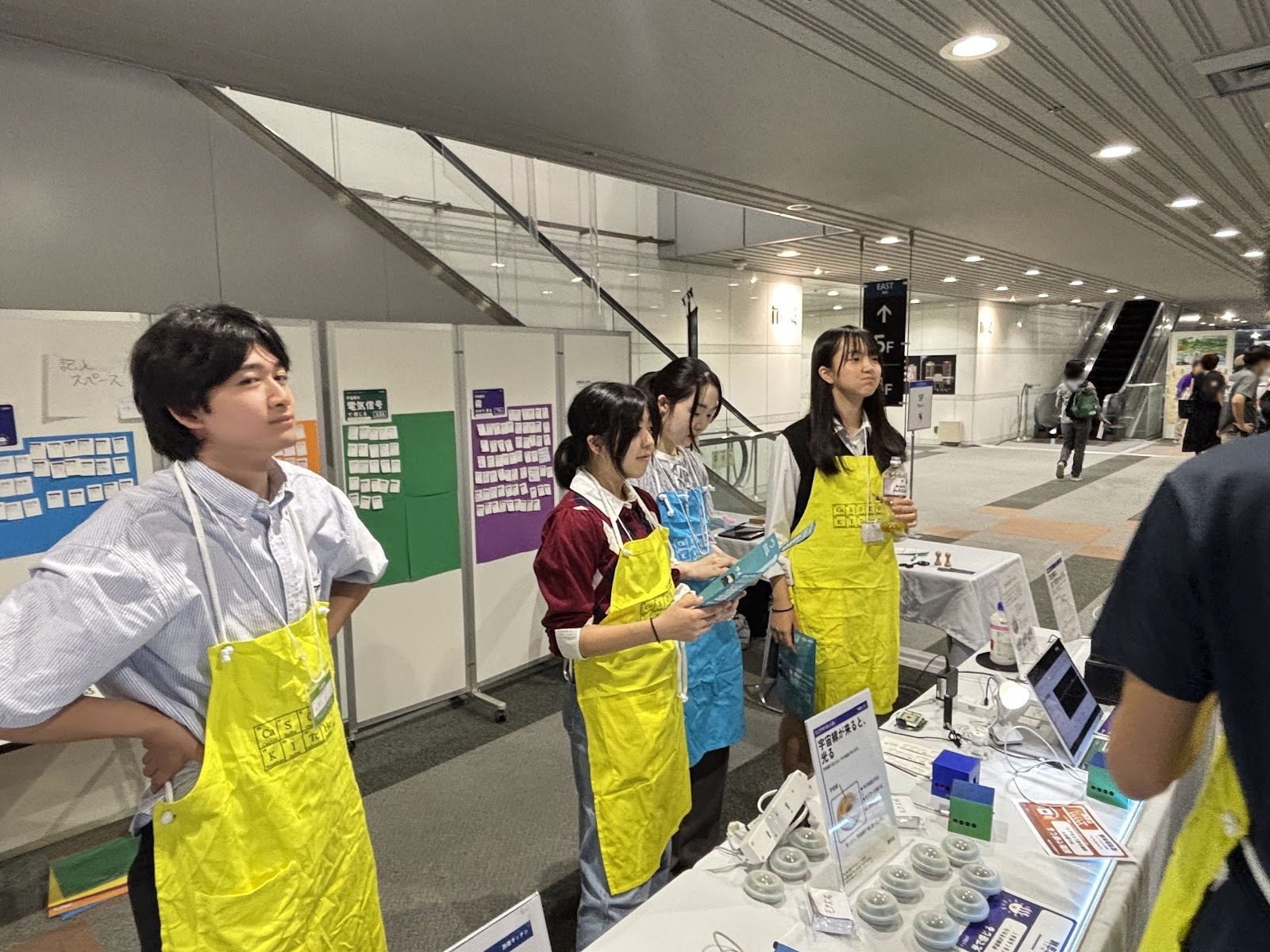
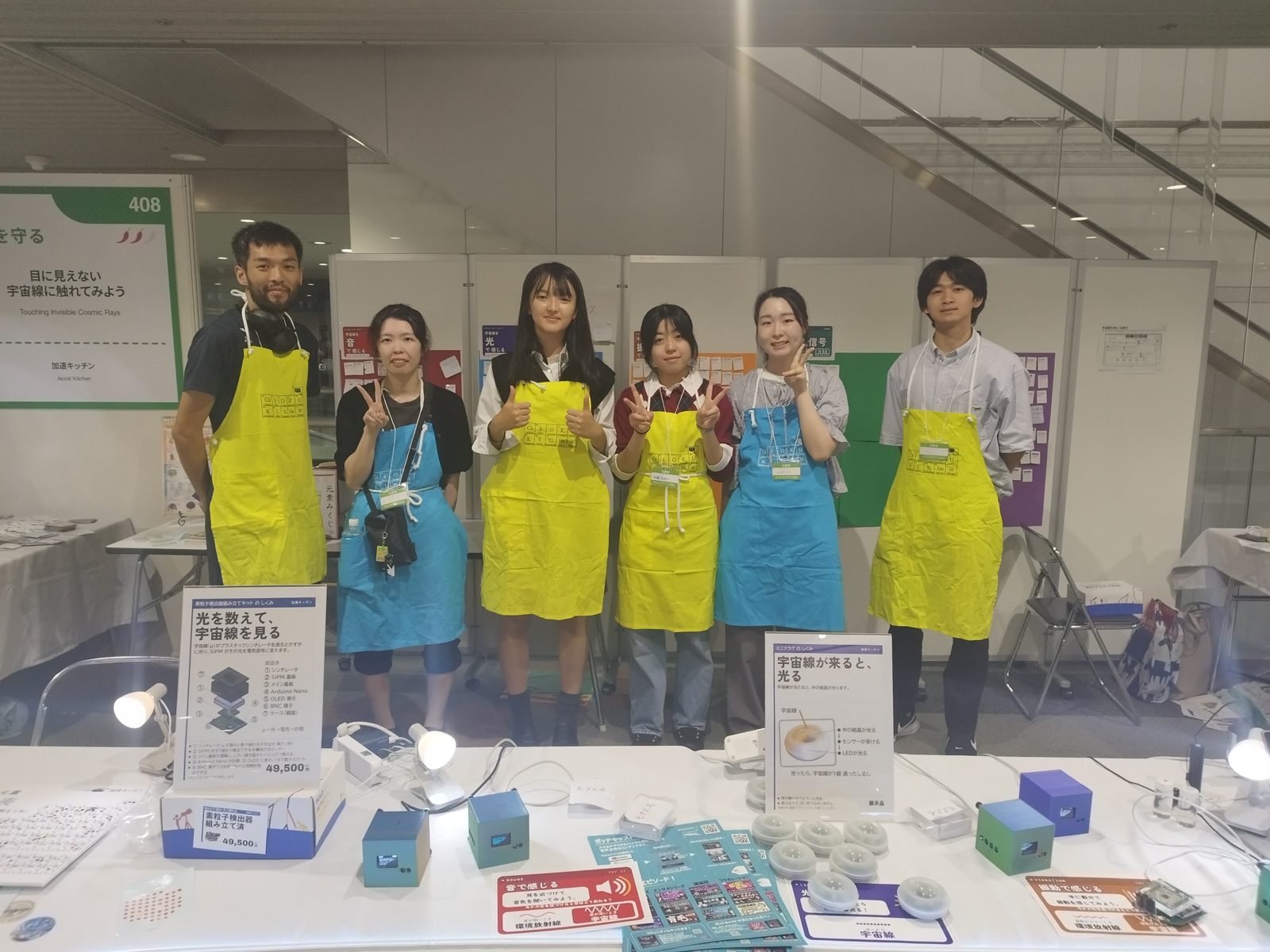
Cosmic rays pour down from space, and about one of them is passing through your head every second. We asked visitors to feel that arrival in five different ways — mist, electrical signal, sound, light and vibration — and collected, one person at a time, the way each of them felt it best. The explainers were school students who measure cosmic rays at home.
At Science Agora 2025 we exhibited, together with KEK, a cosmic-ray detector that makes a sound — an inclusive exhibit built so that visitors with visual impairments could enjoy cosmic rays too.
The feedback we received there became this year's starting point. "Visual impairment" is not one thing: some people read braille, some use a magnifier, some listen to audio, and backgrounds differ widely within it. Rather than preparing a single "correct" way to feel something, what matters may be offering several ways of feeling side by side. With that in mind, we rebuilt the booth around five different approaches to sensing a cosmic ray.
The question was simple. How does a person intuitively register that something invisible, something you cannot feel, has "arrived"? We wanted to gather views not only from visitors with visual impairments but from people of many backgrounds and every age group, and so get closer to the human mechanism behind sensing radiation and particles.


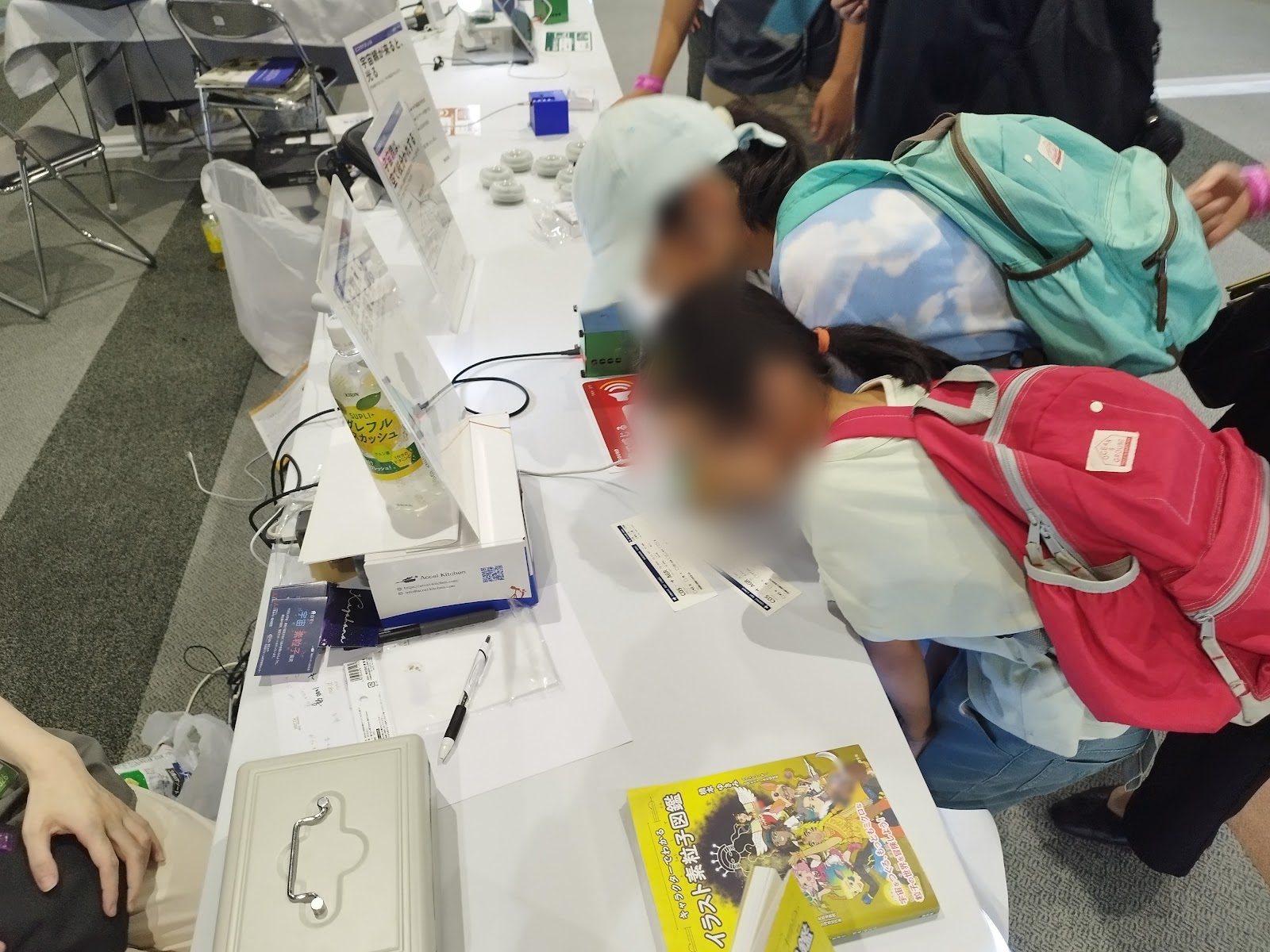
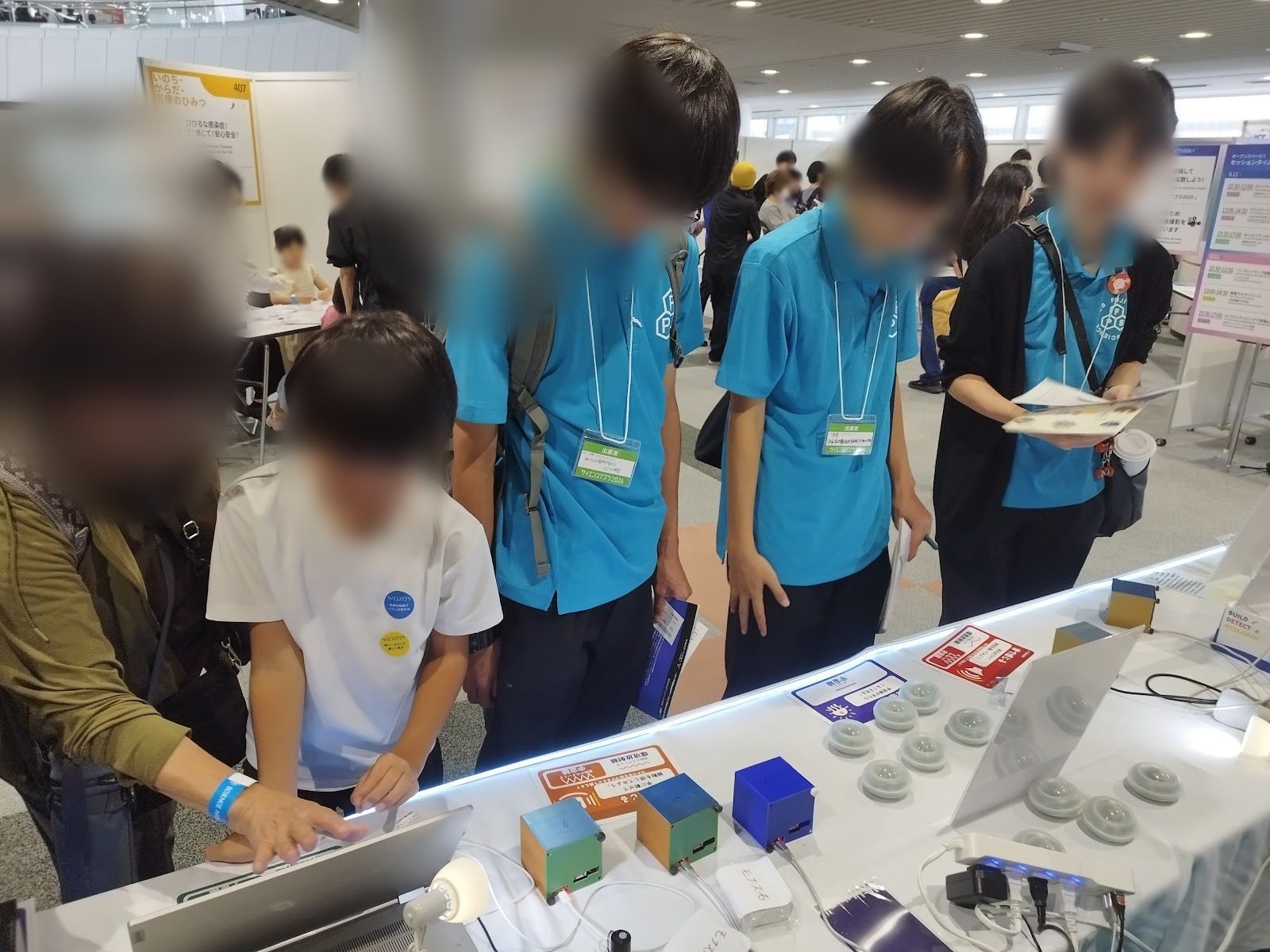
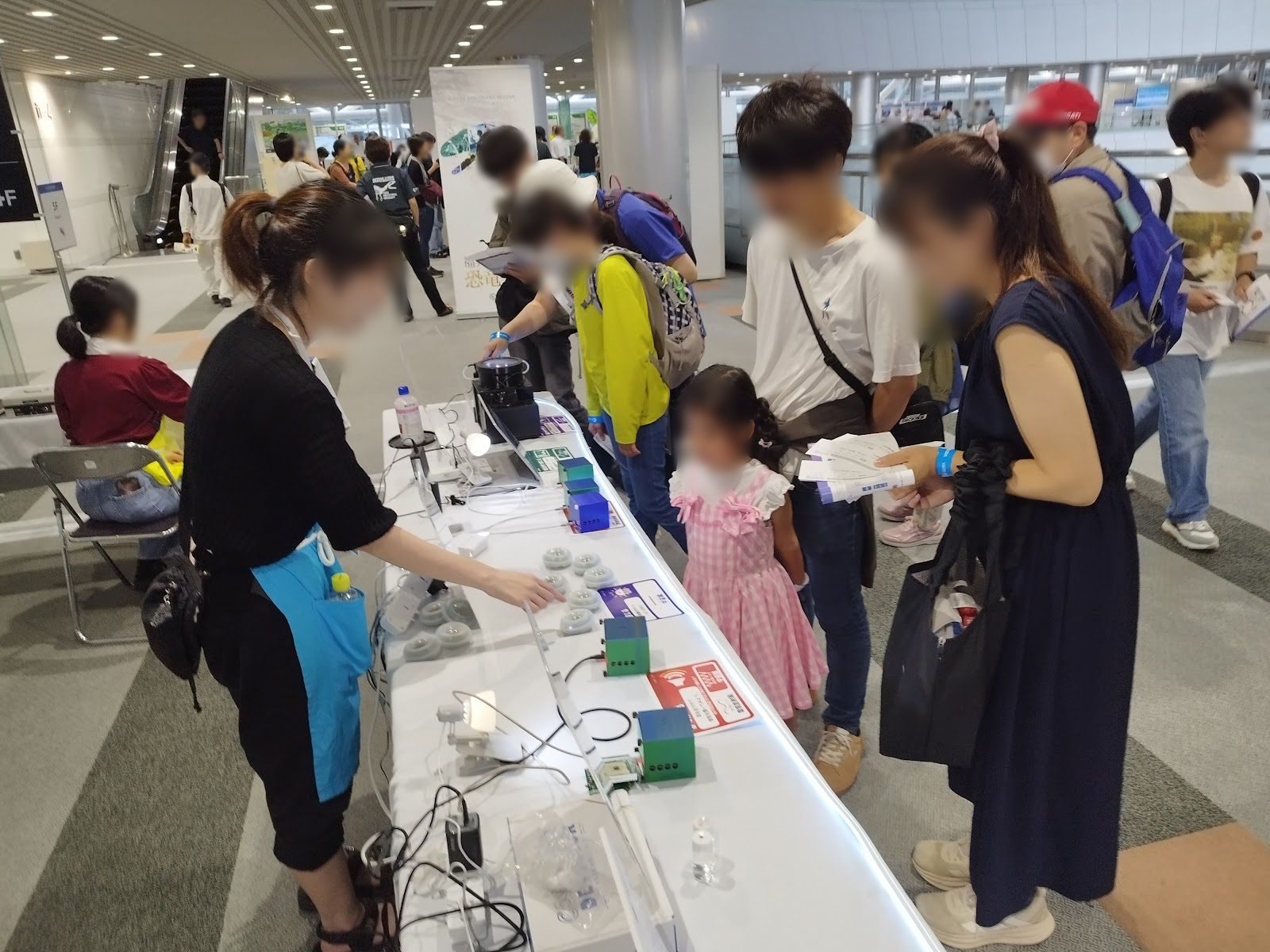
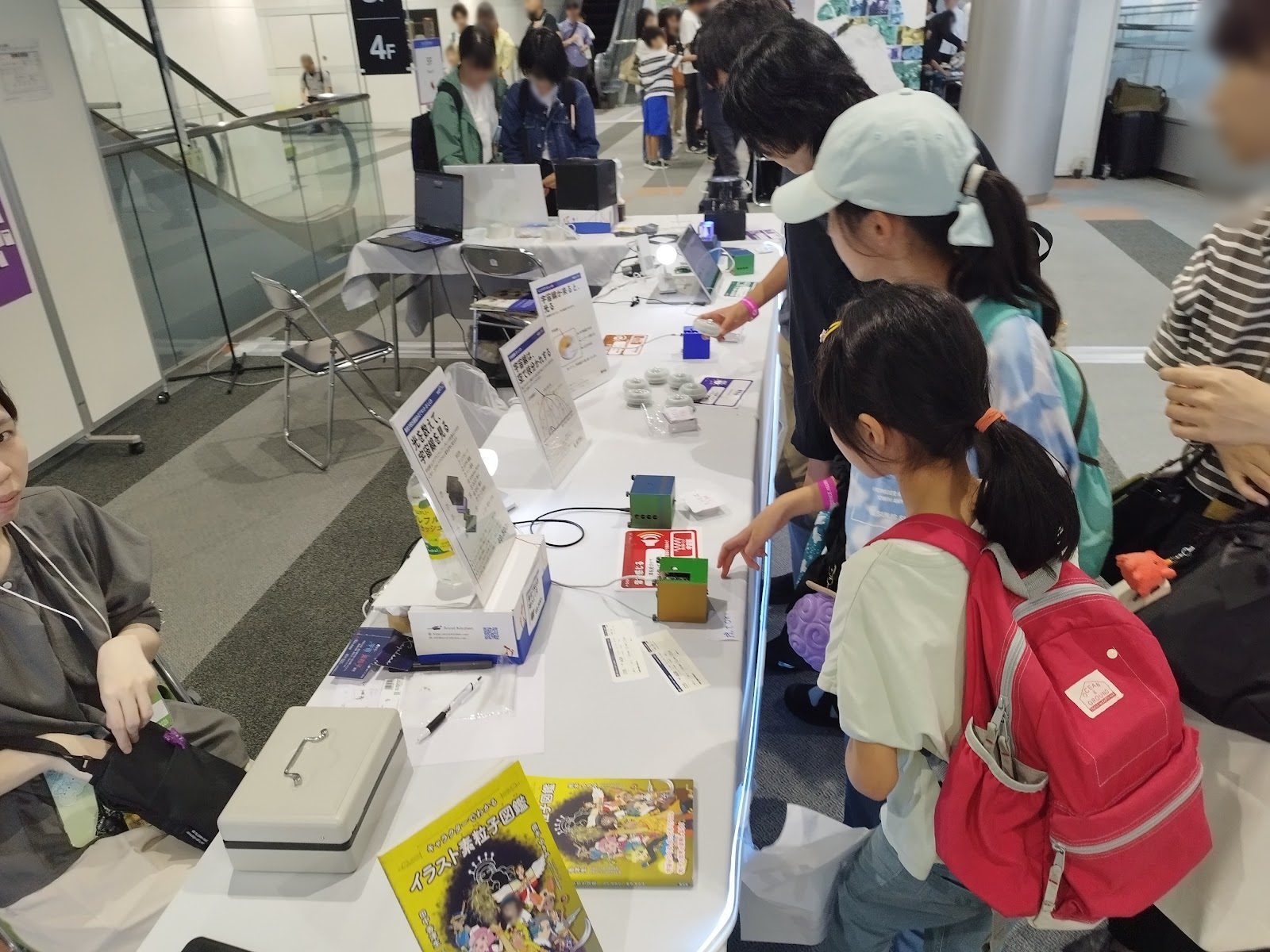
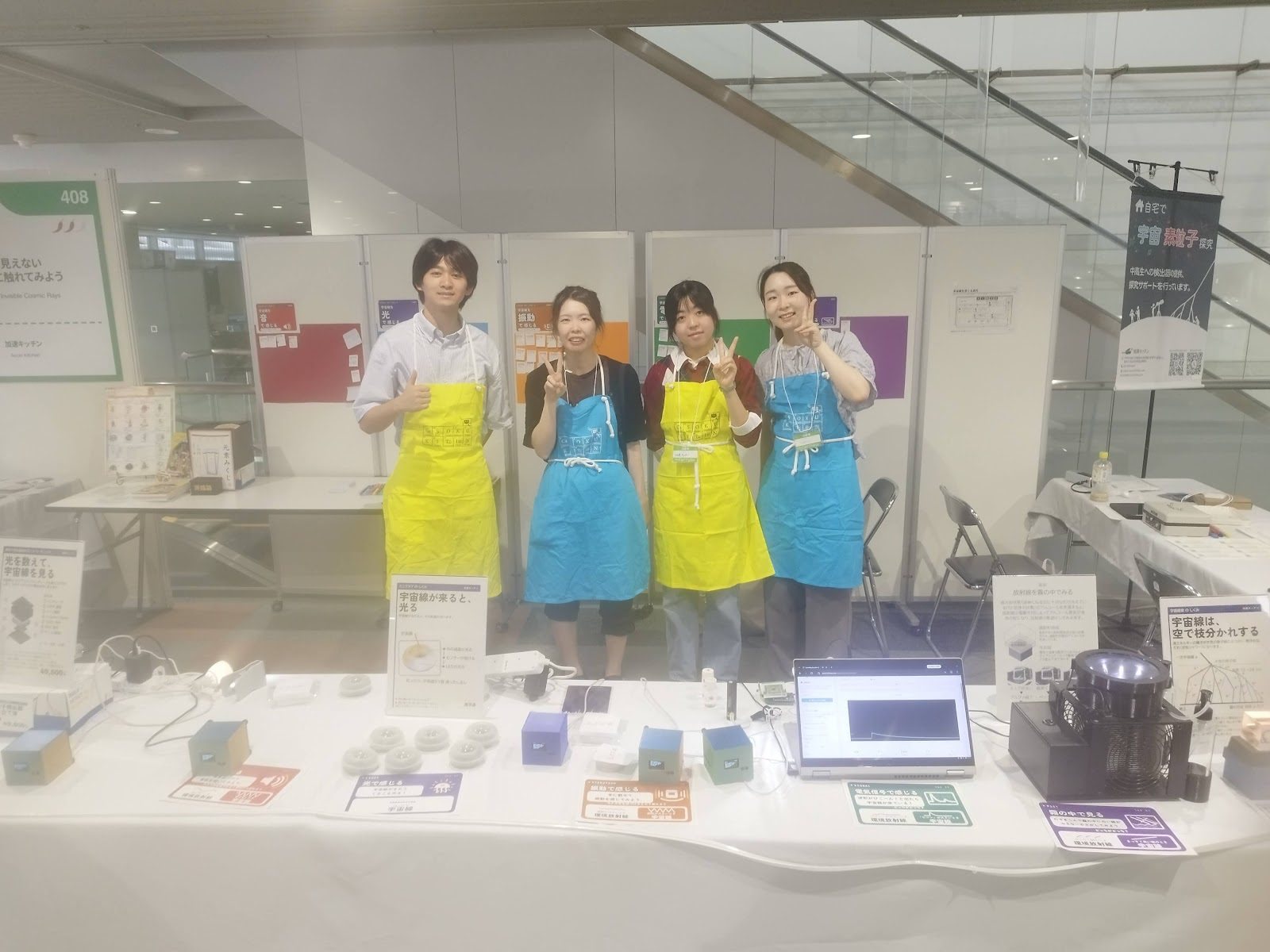
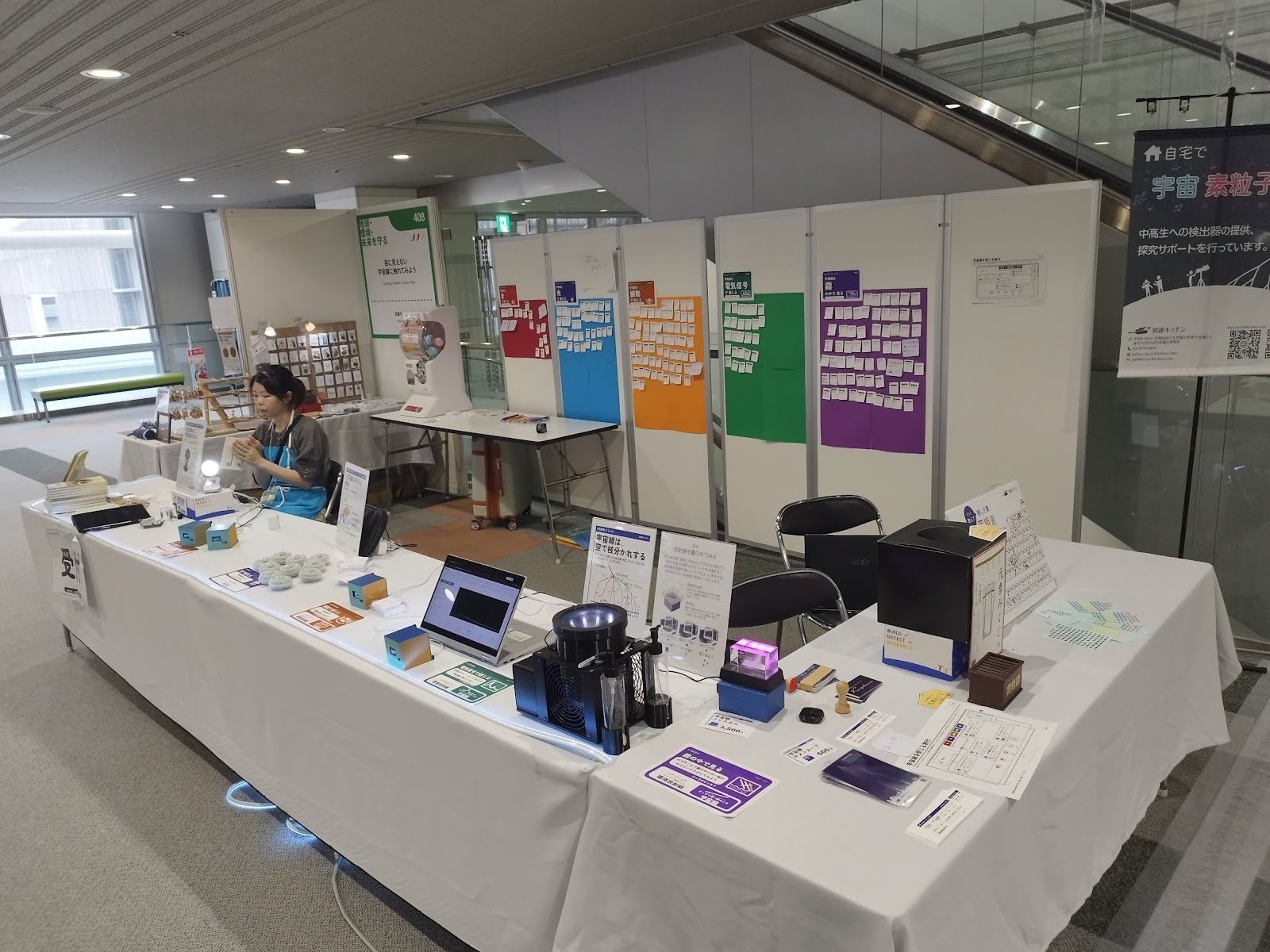
Every device translates the instant a cosmic ray arrives into a different sense. Most of them are detectors built by the school students doing inquiry projects with Accel Kitchen, and by the university and graduate students who support them.
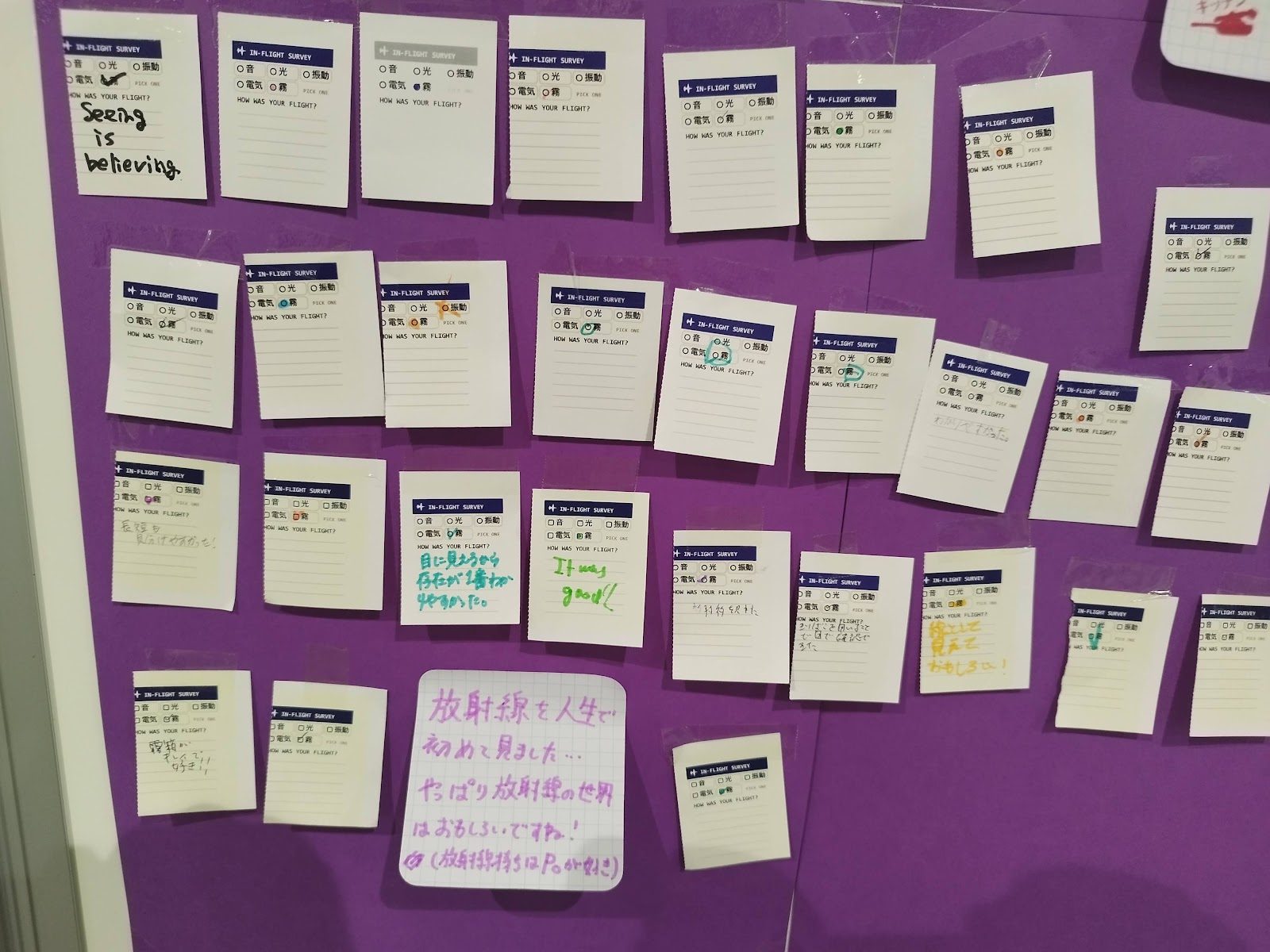
Seeing is believing.
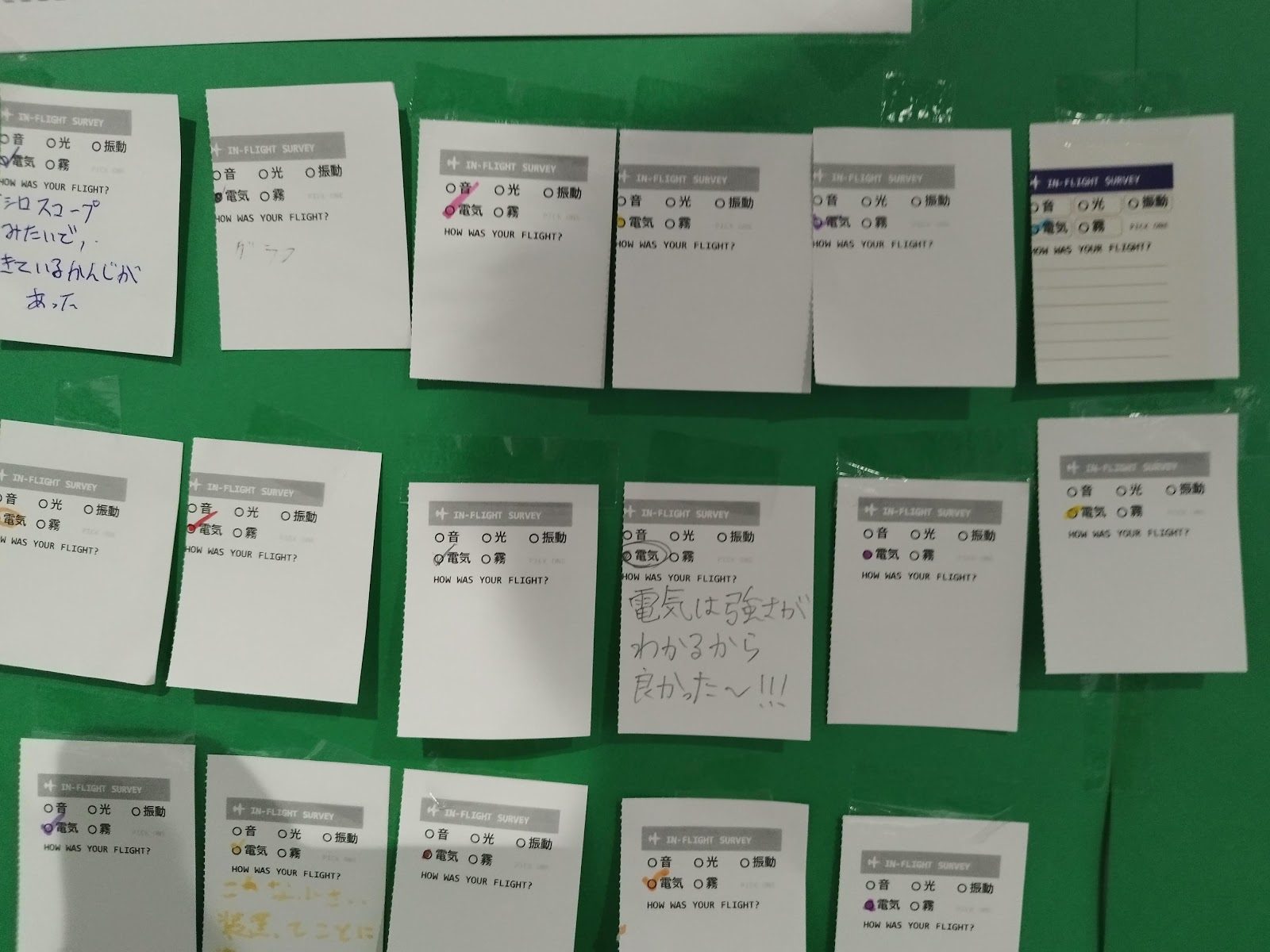
Like an oscilloscope — it felt alive
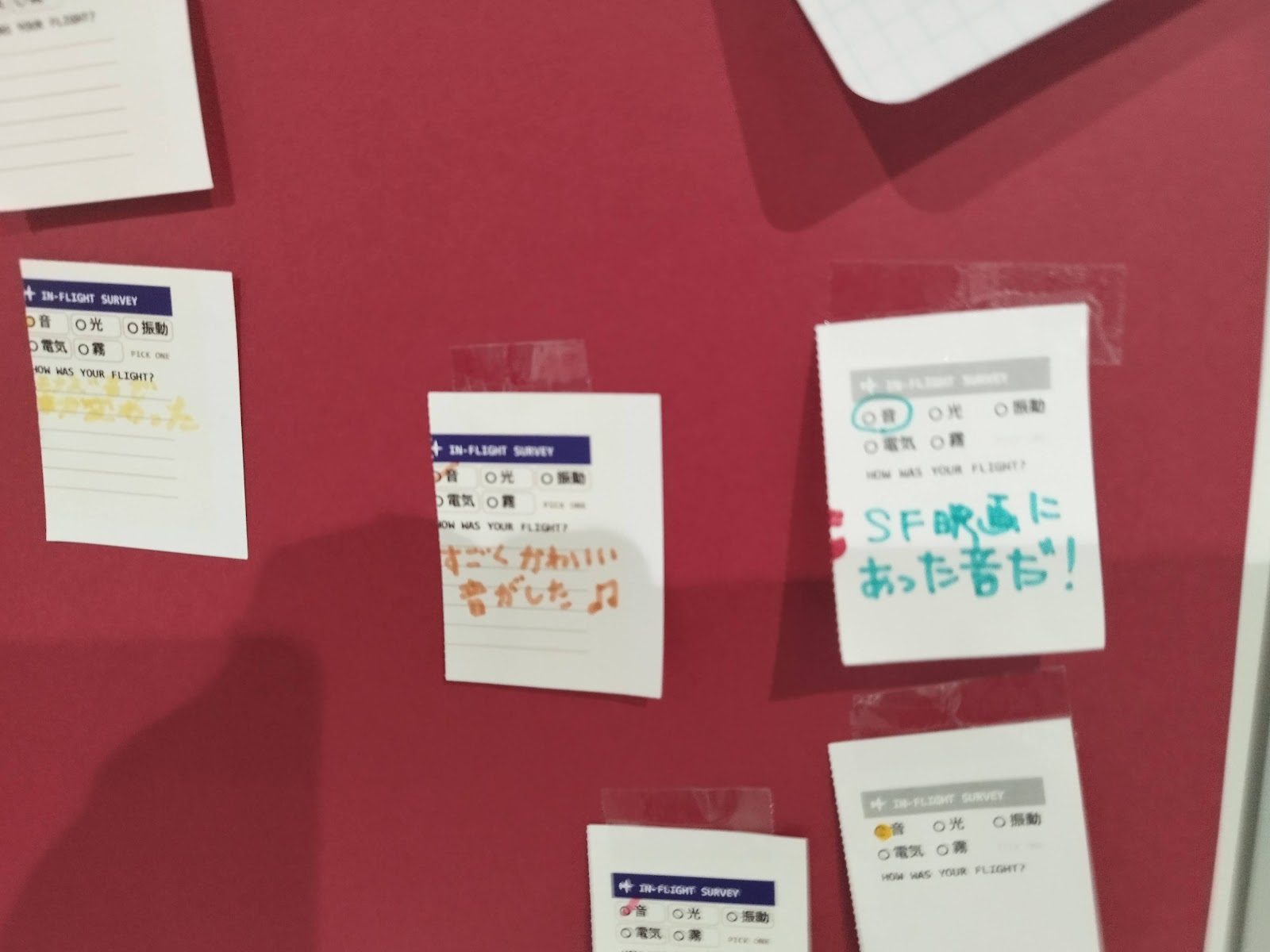
That is the sound from a sci-fi film!
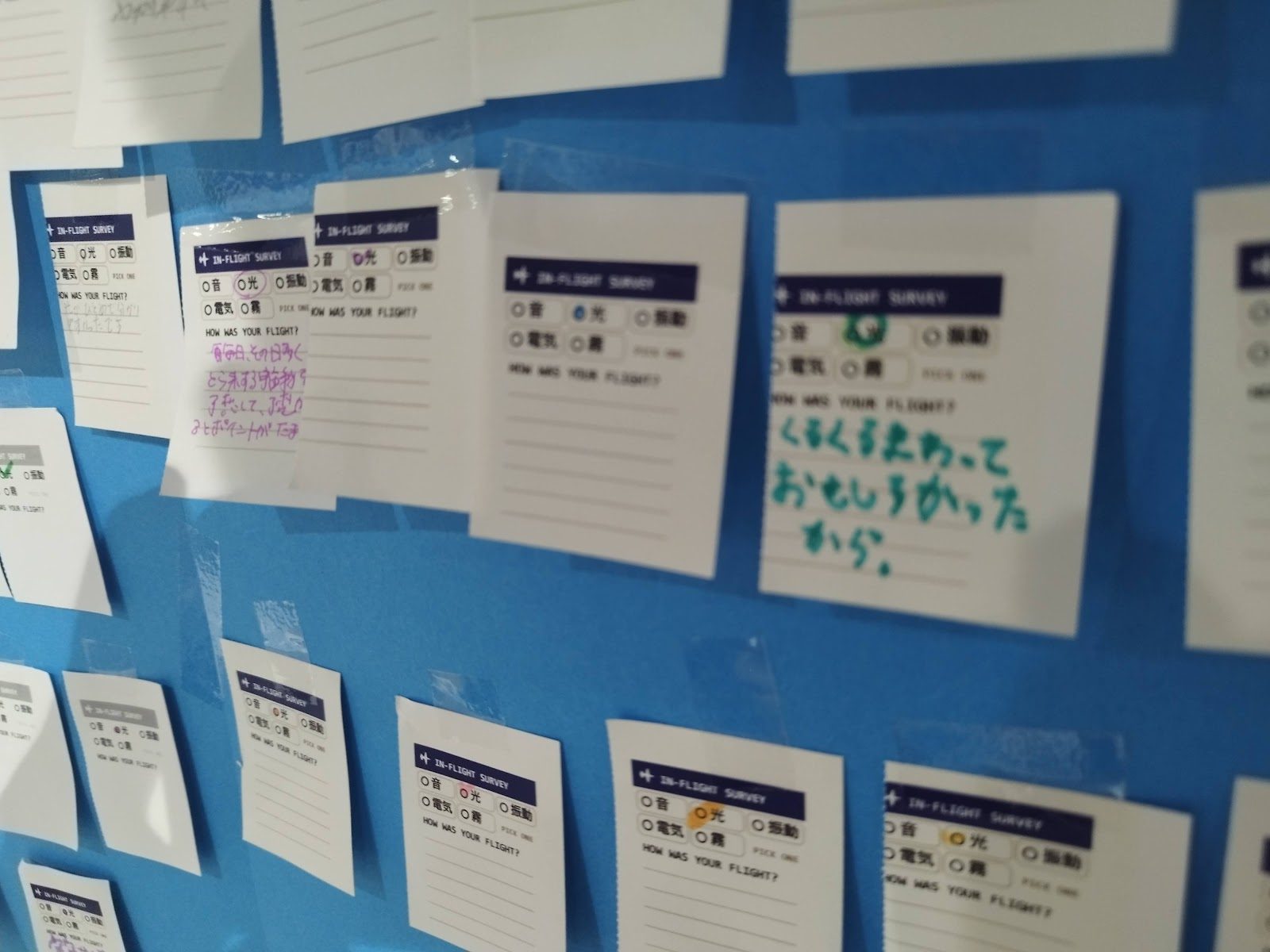
I liked the way it spun around.
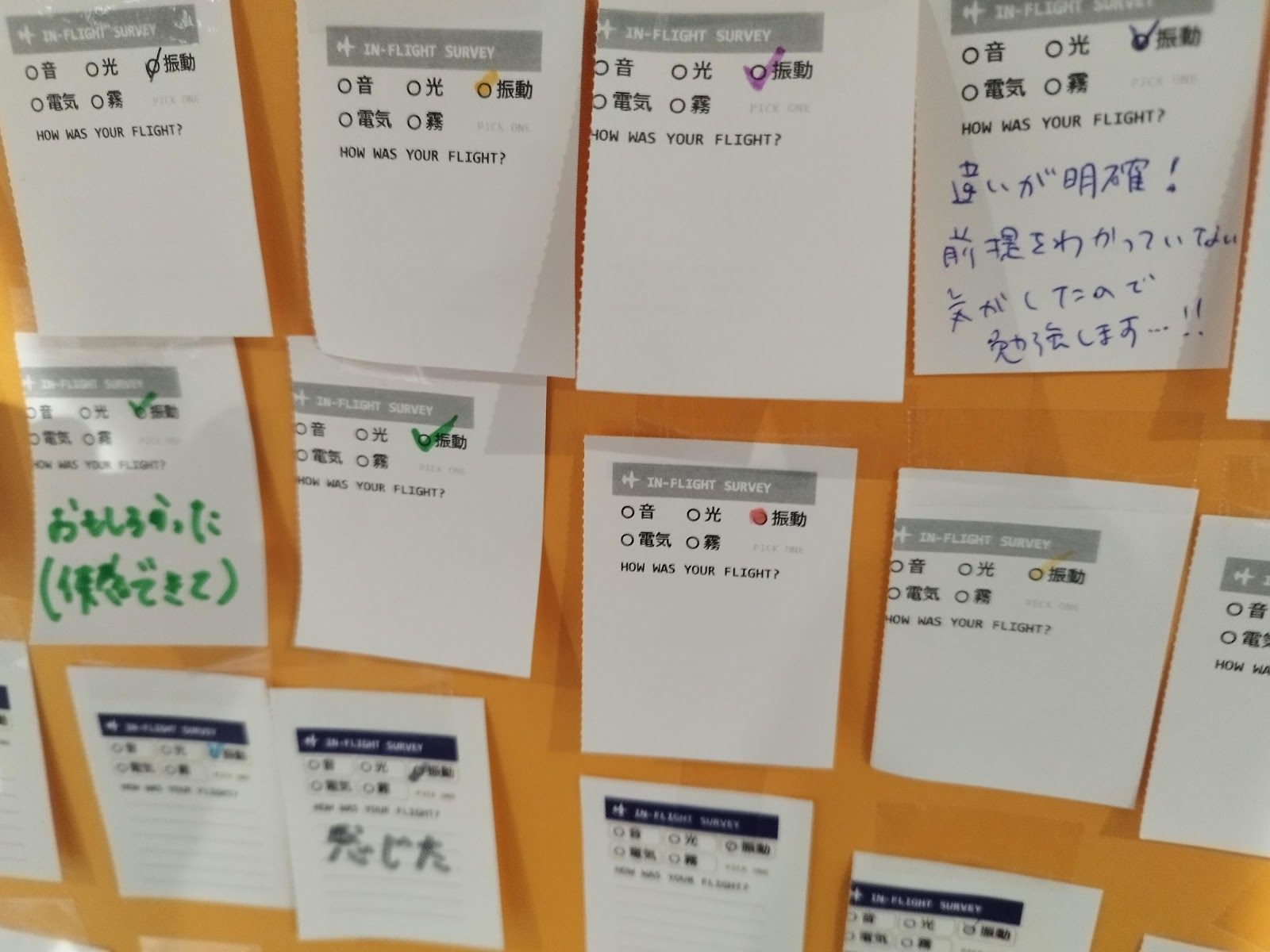
The buzzing was fun
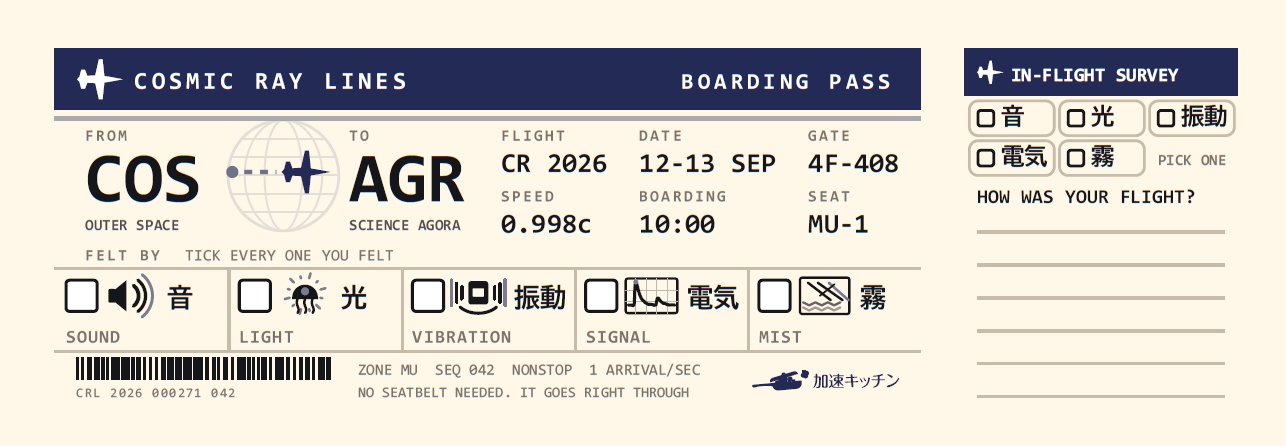
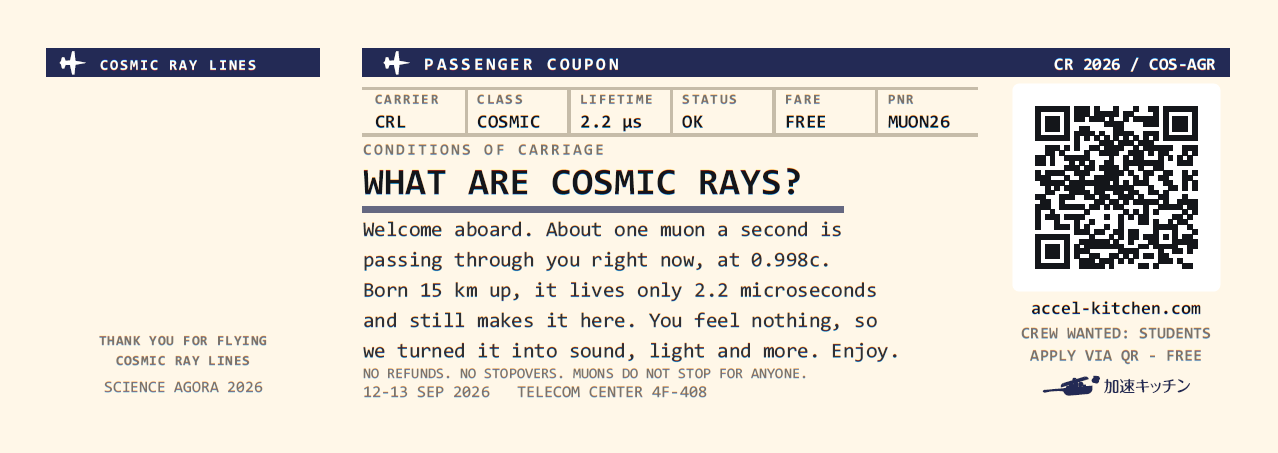
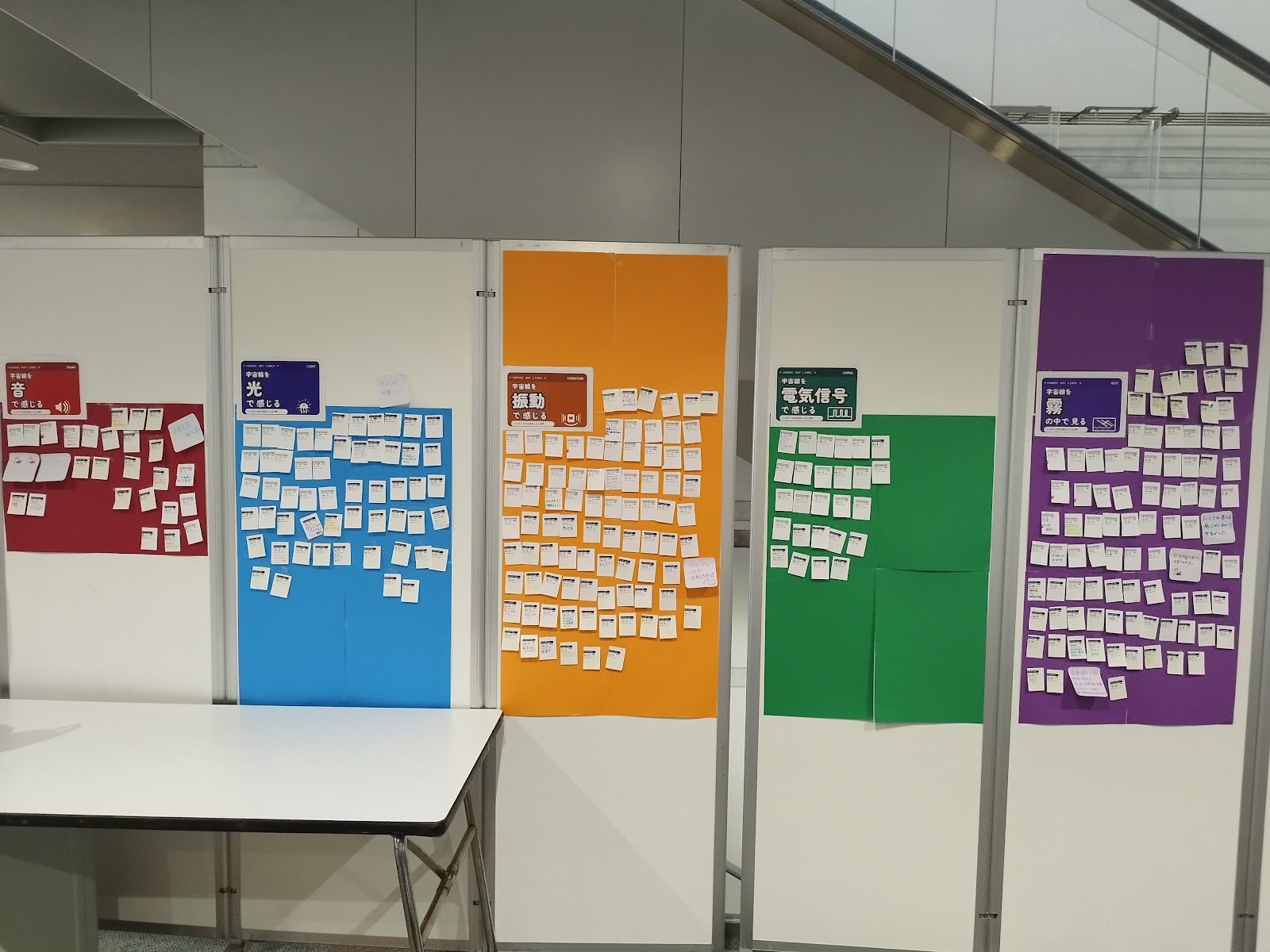
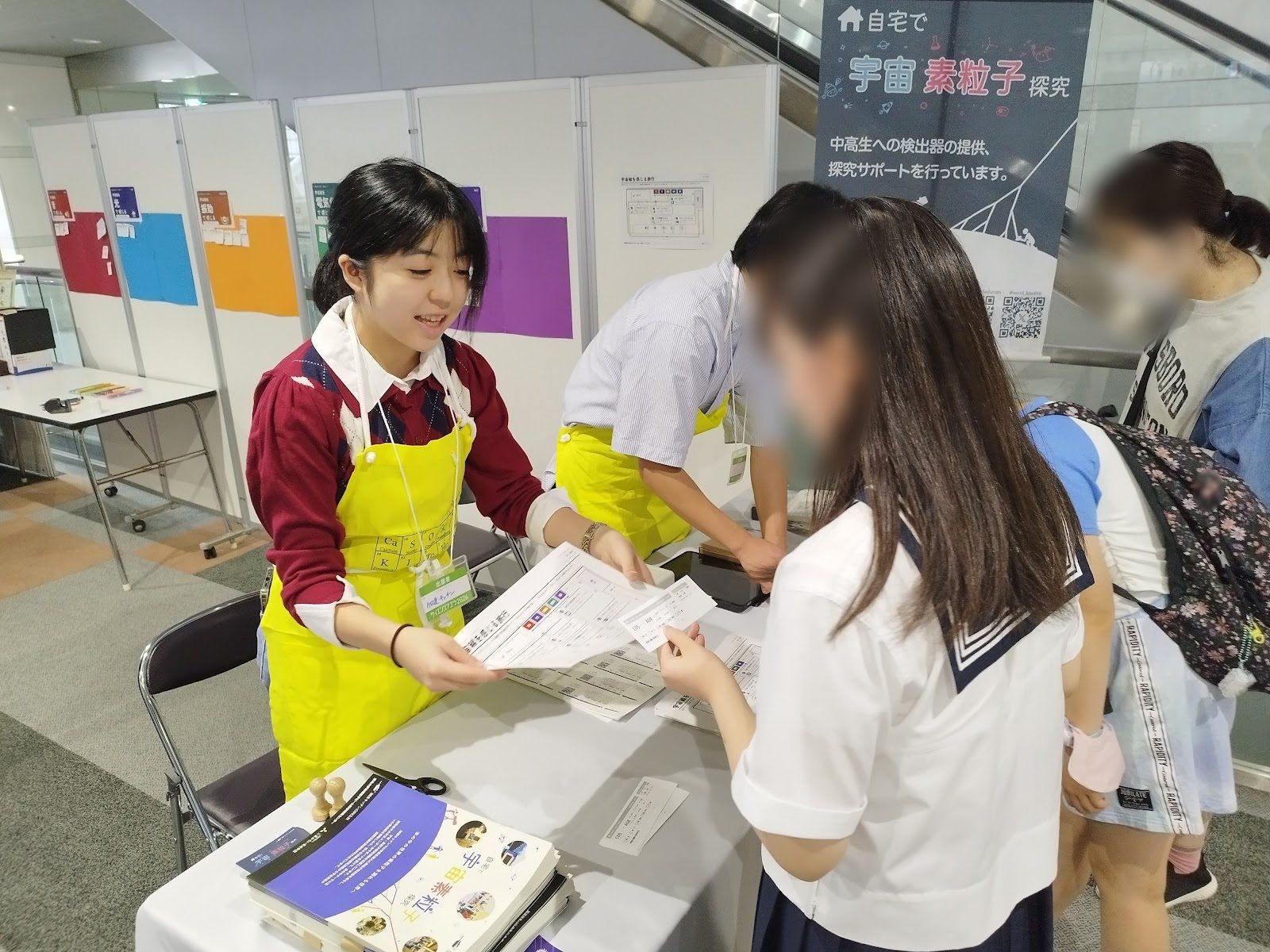
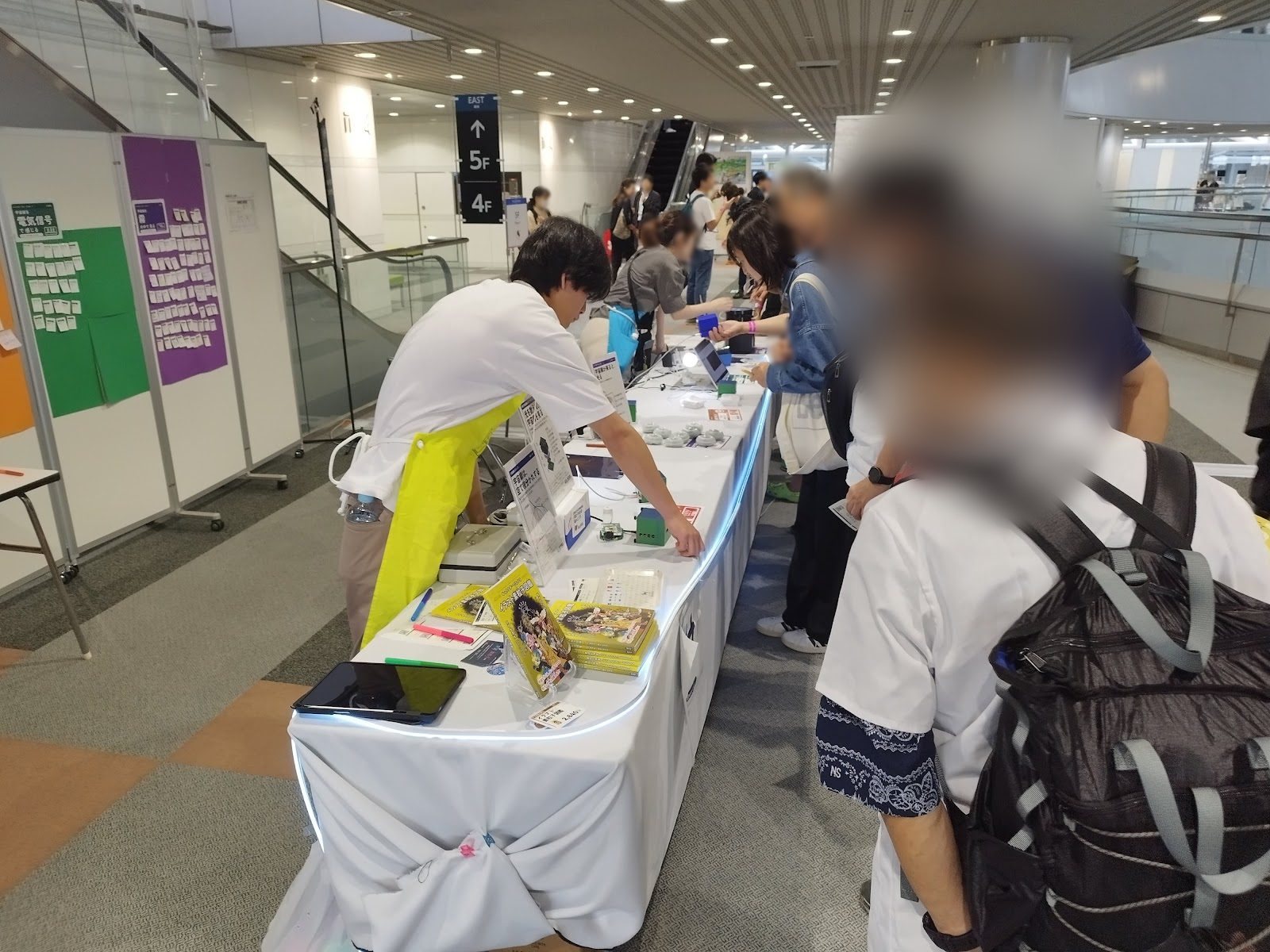
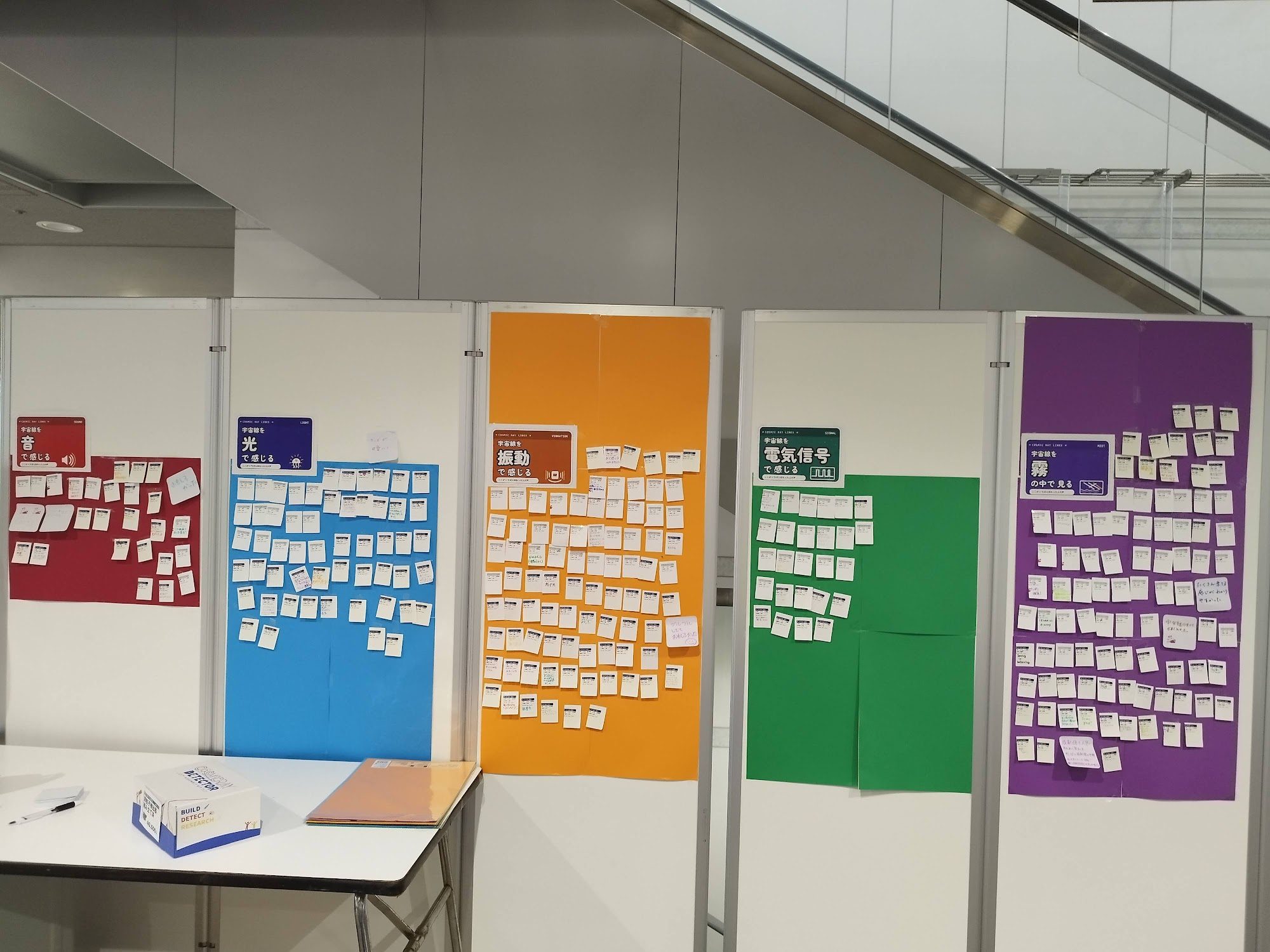
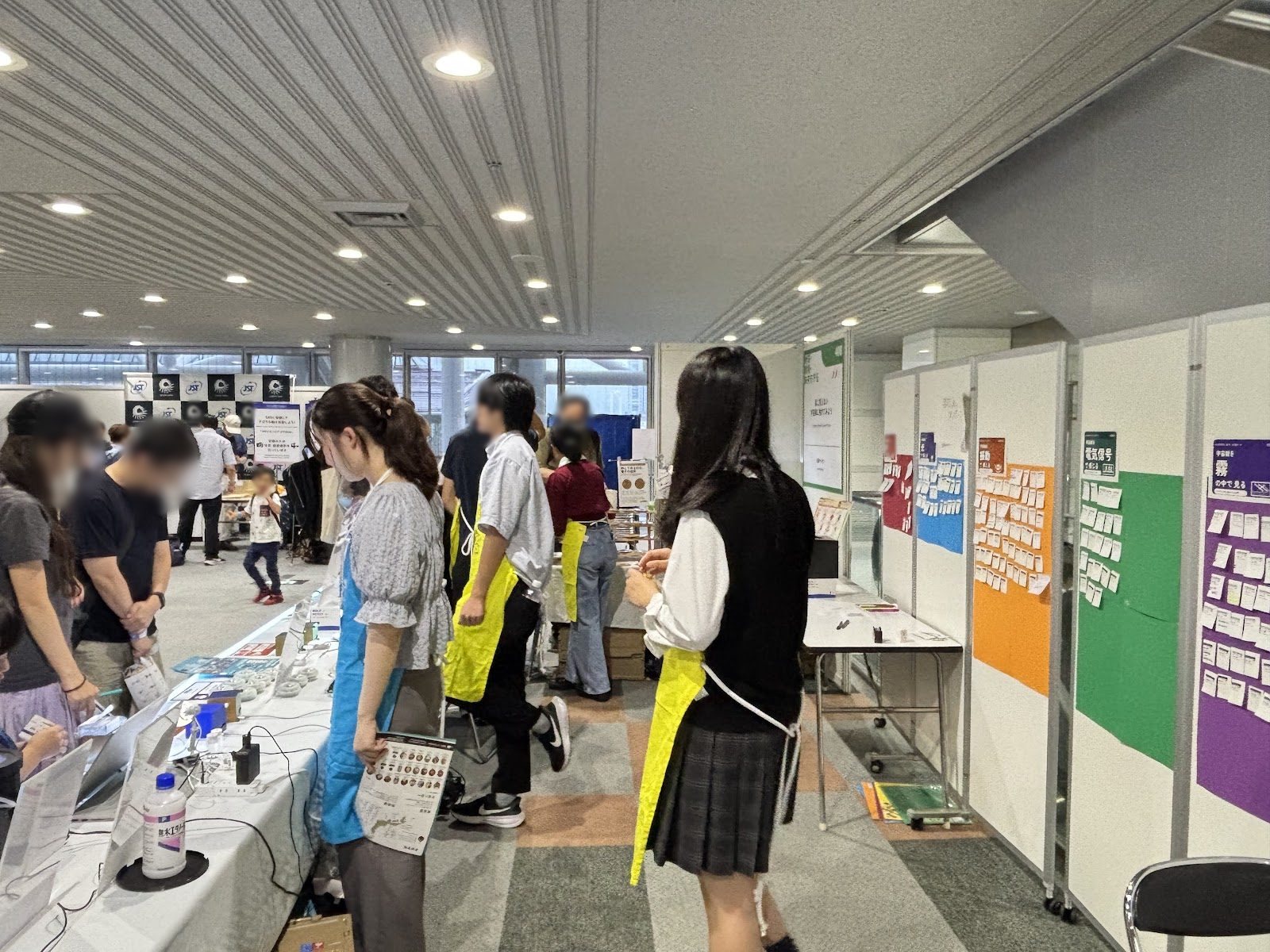
At reception, every visitor received a "boarding pass" for a journey with cosmic rays. Visit the five devices and tick every one where you felt a cosmic ray. Choose the single one that reached you most, write a comment, tear off the stub and pin it to the board of the same colour. That was the whole journey.
Making the pass a travel document rather than a questionnaire made visitors want to try all five devices, and one look at the boards showed where everyone else had felt something. The pinned stubs became our data exactly as they were.
All 600 passes we had prepared were handed out during the two days, and some later visitors took part without one. The number of people who actually tried the five devices is higher still.


The two days left us with a great deal to think about. The first and biggest surprise was that the answers did not cluster.
There must be one way that human beings find easiest to sense, and the answers will pile up there.
Mist, electrical signal, sound, light and vibration were all chosen as "the one I felt most", and remarkably evenly. How a person receives something unknown turned out to depend enormously on their own background.

This year we rendered cosmic rays as electronic beeps. That brought a stream of specific feedback about the timbre itself, such as "the bleeping is so sci-fi, it is easy to picture". Deciding what sound announces the particle is part of the design.

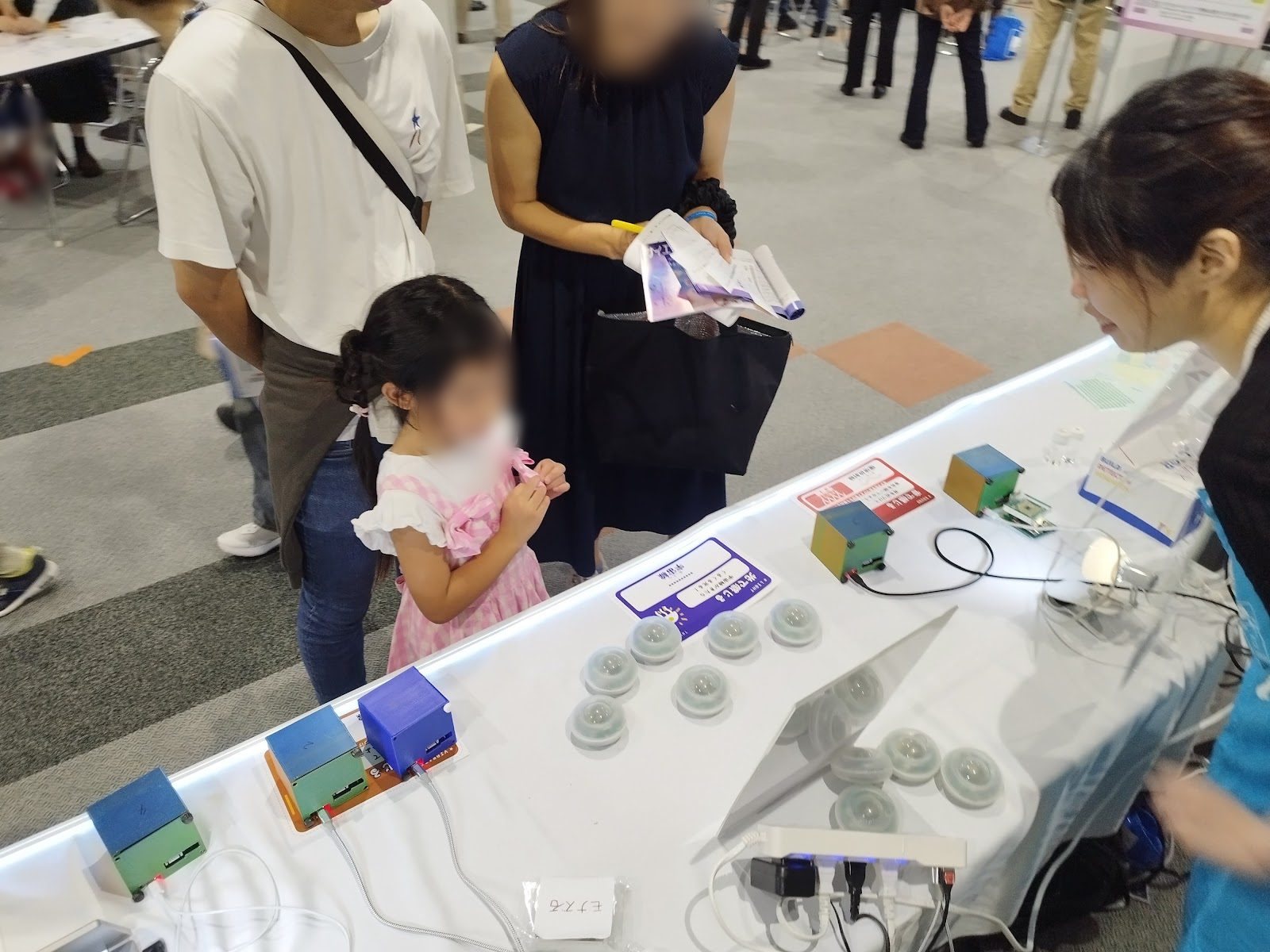
For the light station we used detectors with a tiny effective area, such as the "mini-jellyfish", which flash only about once a minute, and laid out many of them so that one would light up now and then. That arrangement let visitors feel the randomness for themselves: cosmic rays do not wash over you evenly like a wave, they arrive as particles, at one point at a time — and several people told us it pulled them up short.

Many visitors with visual impairments came to see us again this year and gave us feedback directly. Several said the vibration mechanism we introduced this year was even easier to sense than sound when you cannot see. The change as a stone came closer, making the buzzing stronger, also came through intuitively in the palm of the hand.

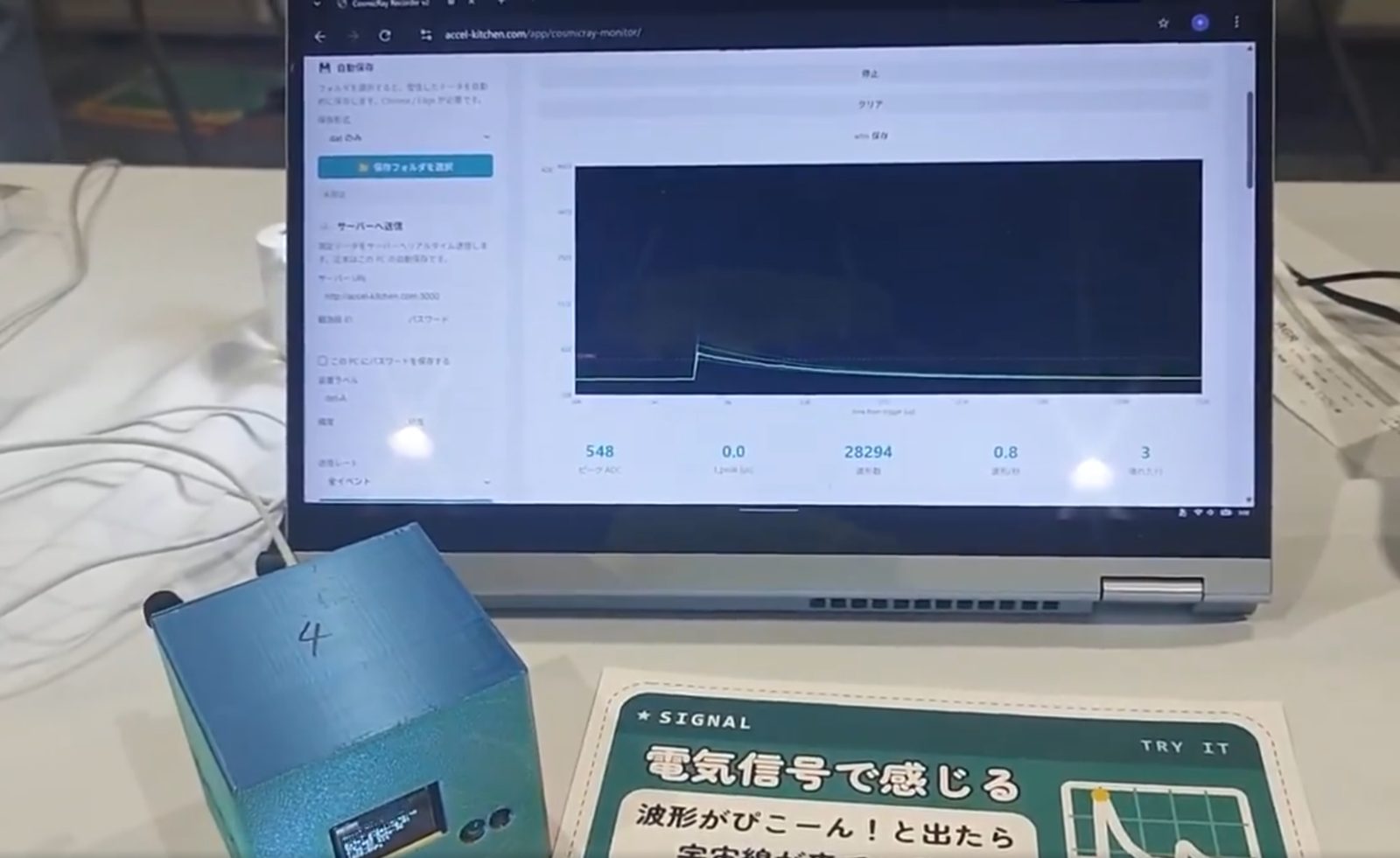
The station that shows the electrical signal as it is drew comments such as "it is just like an oscilloscope" and "the most quantitative way to observe". Telling cosmic rays from background radiation by pulse height resonated especially with adults and with science enthusiasts.

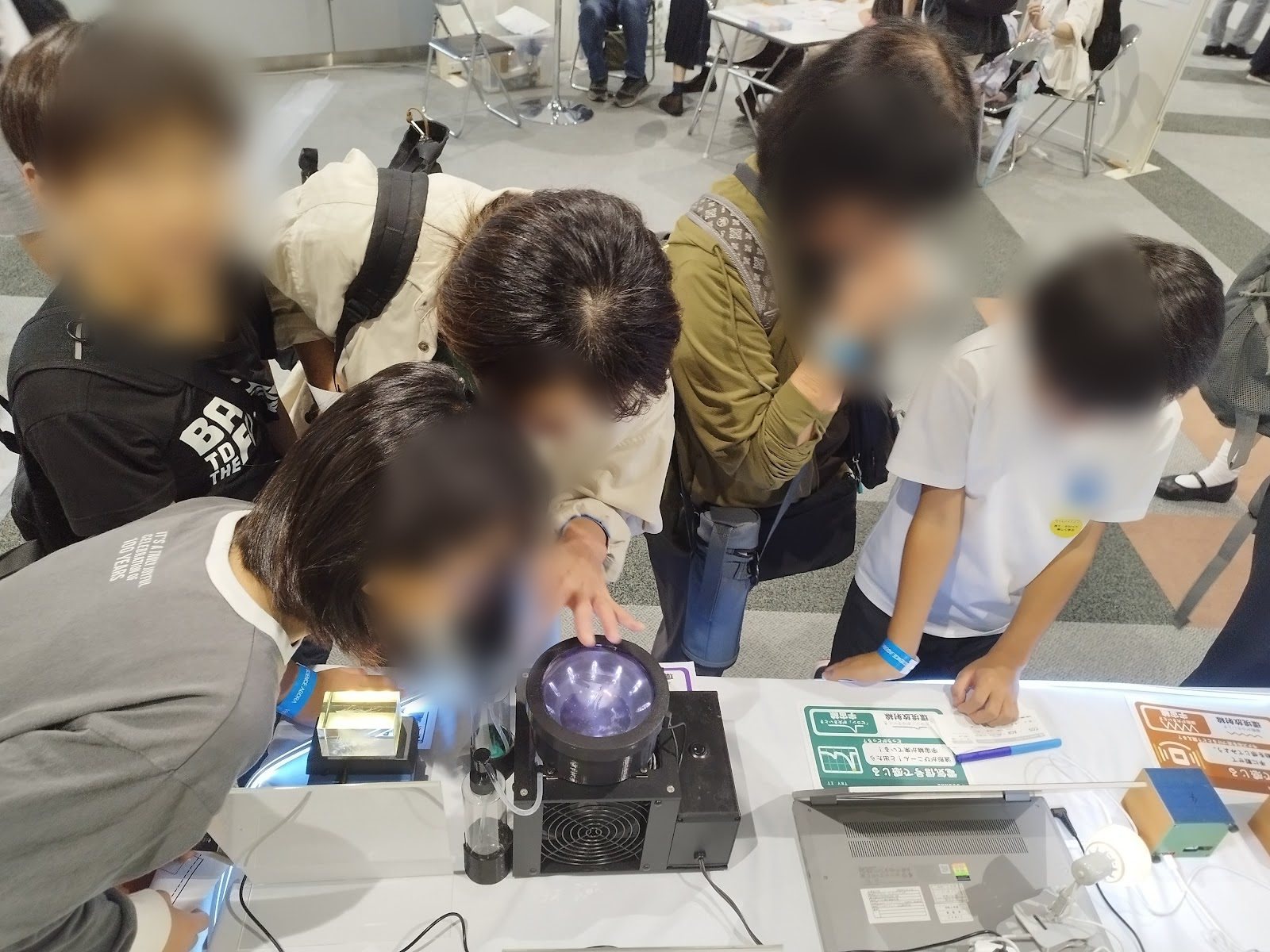
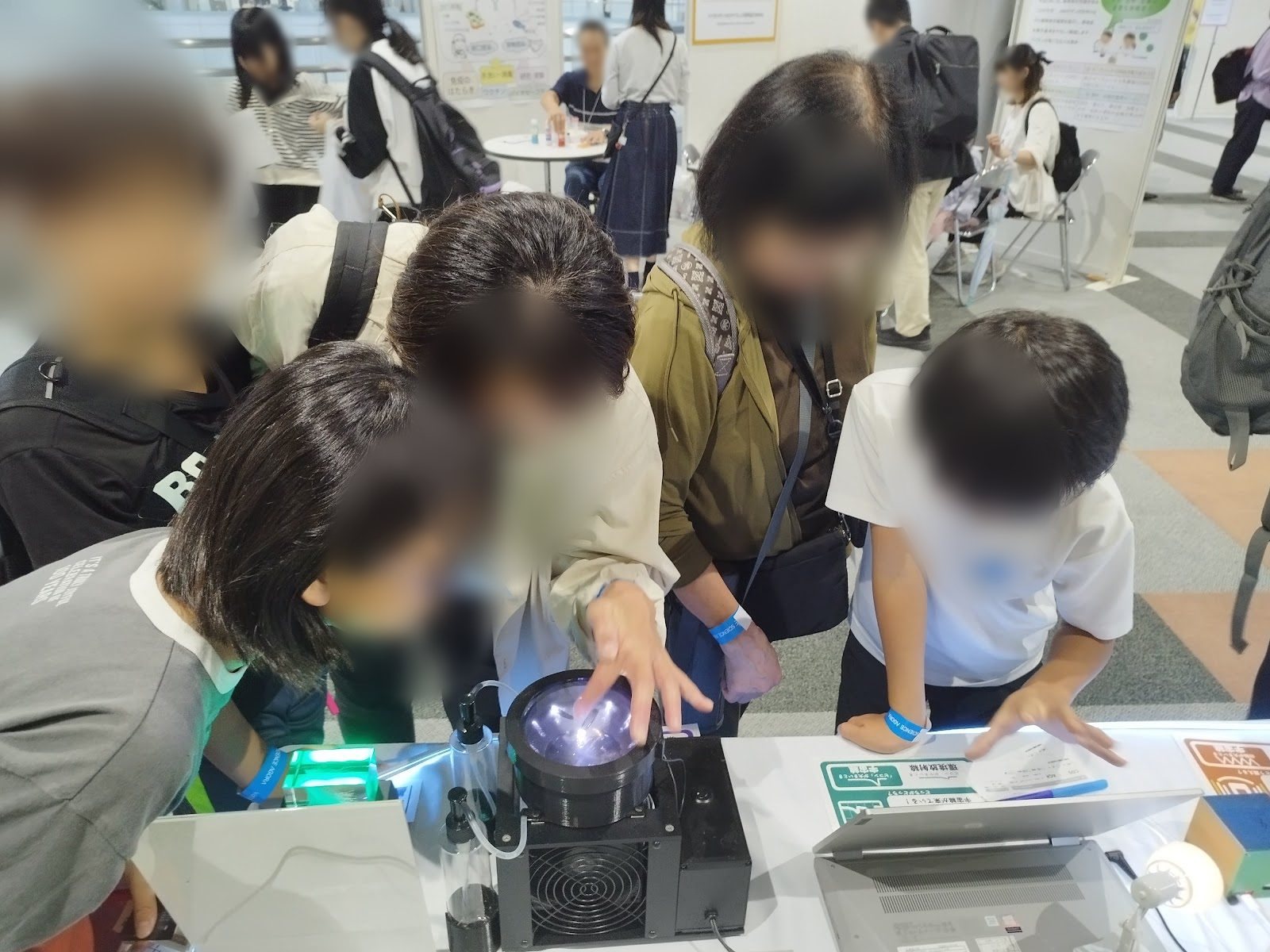
The cloud chamber was as popular as ever. Alongside comments like "vision, after all!" and "seeing is believing", one visitor wrote "I saw radiation for the first time in my life". When it comes to confirming that something exists, we were reminded how persuasive the eye still is.

Accel Kitchen supports particle-physics inquiry by junior- and senior-high-school students. Several hundred students a year assemble their own detectors and measure cosmic rays at home. The detectors shown here were built by those students and by the university and graduate students who support them.
How should they talk about their detectors and their observations so that it really gets through? Once again the students themselves stood in front of visitors, introduced their detectors and heard opinions first-hand. A chance to hear honest reactions face to face is precious for students carrying on an inquiry project.
Dialogue between the students measuring cosmic rays and the public — over two days the booth produced exactly the kind of value that only a place like Science Agora can.