To members of the press
High-school students develop a palm-sized cosmic-ray detector; CERN performance-evaluation results published in an international journal
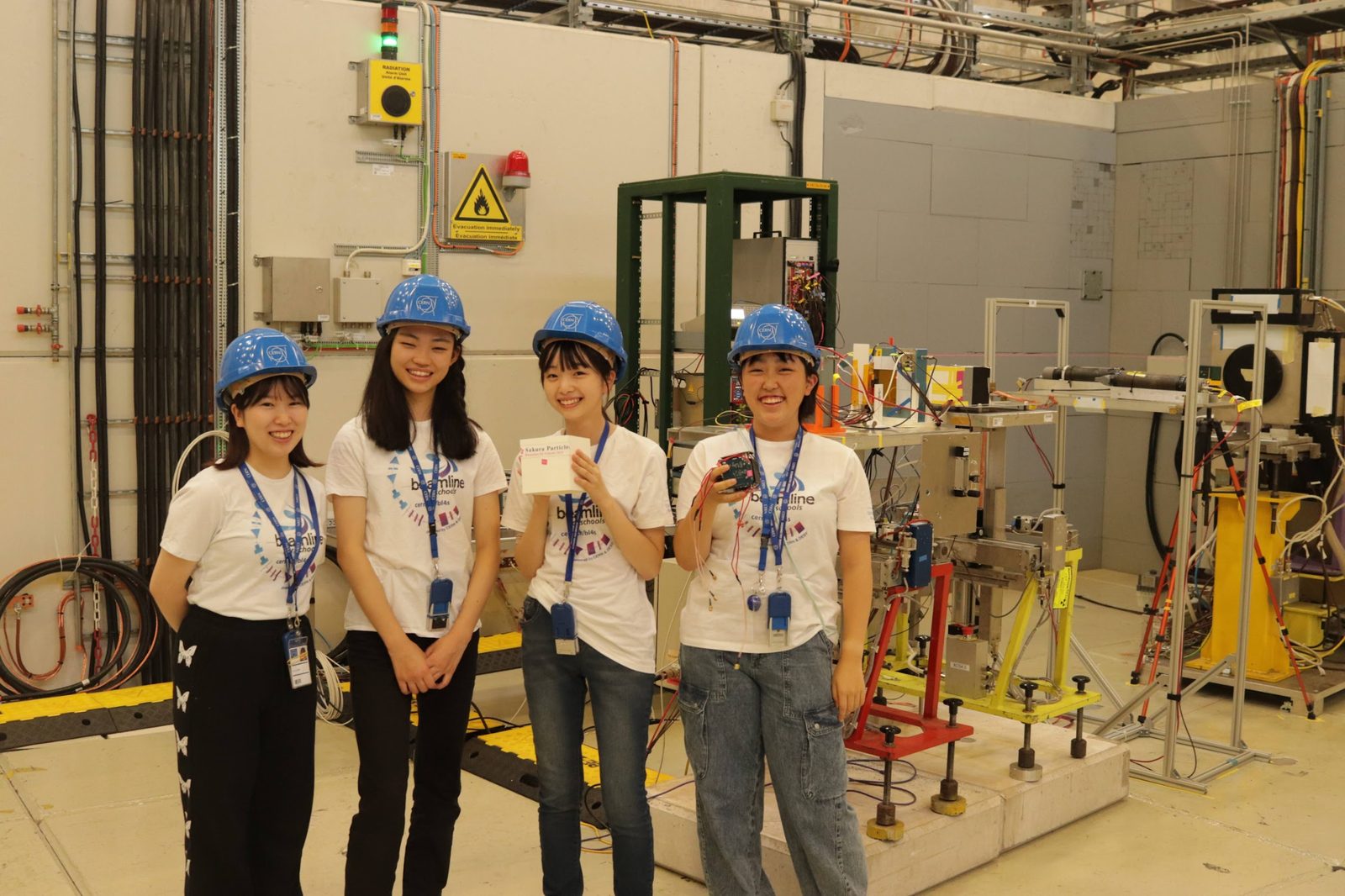
Research on “SAKURA,” a palm-sized two-dimensional radiation-imaging detector developed by the high-school team Sakura Particles, has been published as a paper in the international journal Nuclear Instruments and Methods in Physics Research Section A (NIM-A). Its performance was evaluated at CERN (the European Organization for Nuclear Research) in Geneva, Switzerland, in September 2024, with a team of five high-school students carrying out the entire process — from designing and building the detector through beam testing, data analysis and writing the paper.
- Journal
- Nuclear Instruments and Methods in Physics Research Section A (Elsevier)
- Paper title
- “A Compact Two-Dimensional Radiation Detector for Educational Applications”
- Published
- May 19, 2026
- DOI
- 10.1016/j.nima.2026.171664
- Volume
- Vol. 1090, 171664
How a high-school team was selected for a CERN experiment
The Japanese high-school team Sakura Particles applied to Beamline for Schools (BL4S) 2024, an international particle-physics experiment competition for high-school students run by CERN (Switzerland), and was chosen from 461 entries as one of the grand-prize winners (three teams, from Japan, Estonia and the United States). It was the first time junior- and senior-high students from Japan had carried out a particle-physics experiment at a major accelerator facility.
Following its selection, Sakura Particles travelled to CERN in Geneva, Switzerland, in September 2024 and brought “SAKURA” — the palm-sized two-dimensional cosmic-ray imaging detector it had developed and built itself — to the T10 beamline for a performance-evaluation test. From designing and building the detector through the on-site experiment and data analysis, the high-school students took the lead at every stage.
Why this detector matters
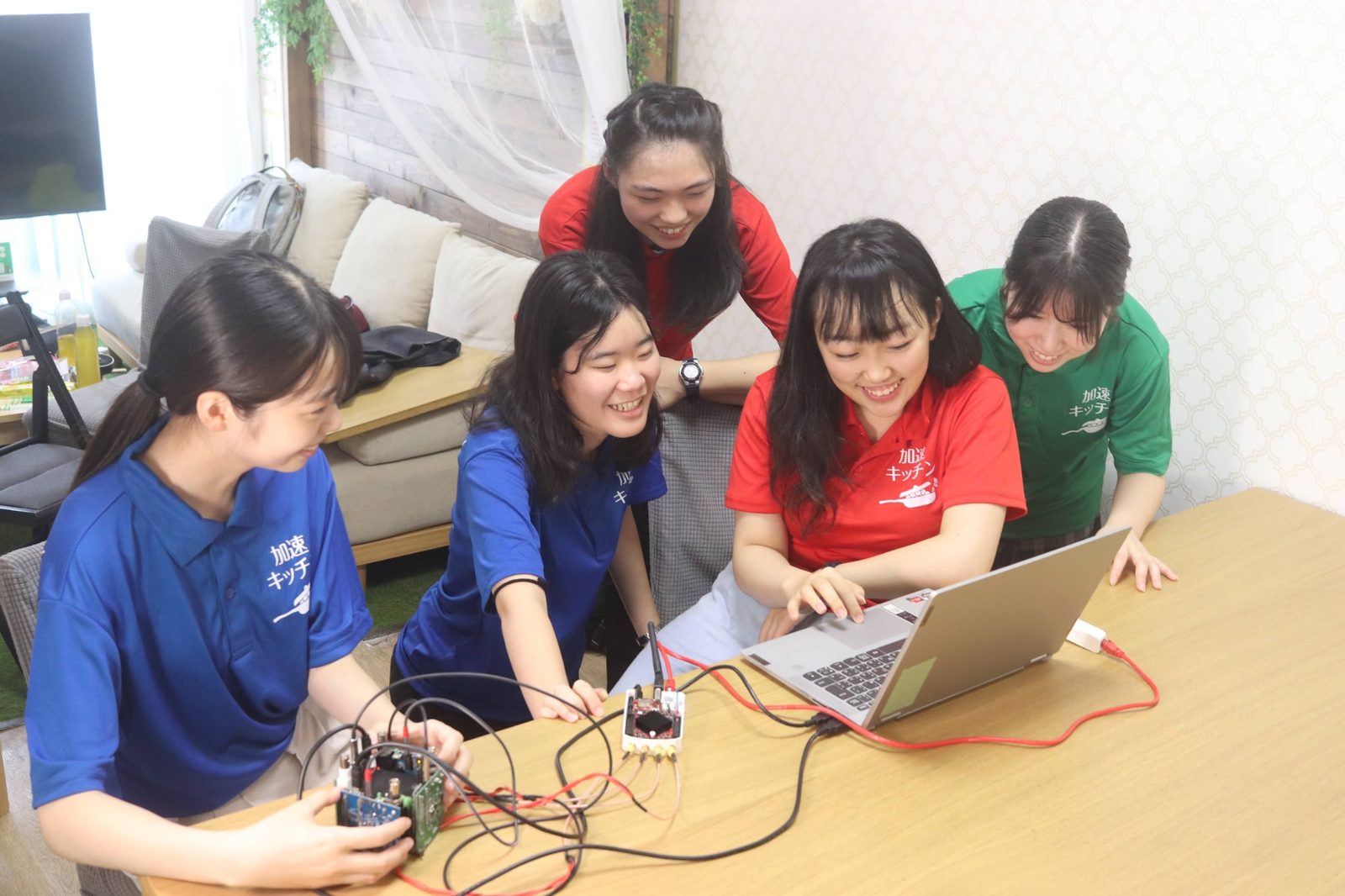
SAKURA set out to break through the wall of “cosmic-ray imaging,” something that had been out of reach in education until now. Accel Kitchen had long provided junior- and senior-high students with palm-sized cosmic-ray detectors, but because these could only read the output of a single scintillator, they could not capture particle tracks and so could not be used for imaging such as muography (a see-through technique that uses cosmic rays). Existing muography equipment, meanwhile, was expensive, bulky and complex to operate, so its use was limited to a handful of research institutions.
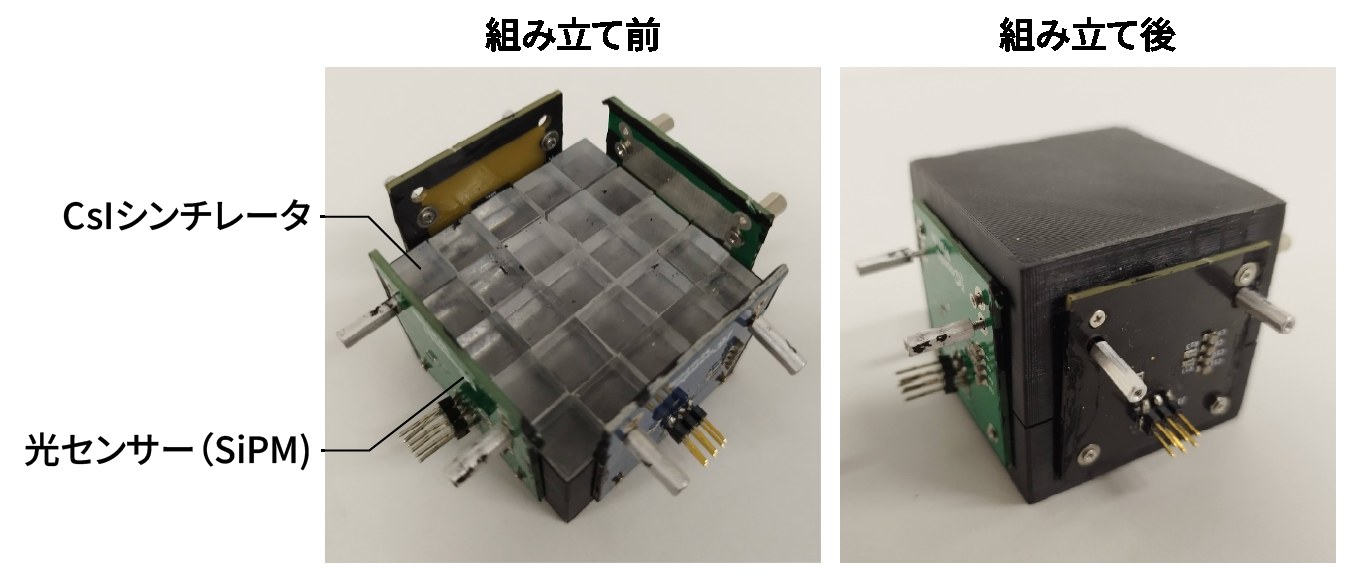
So Sakura Particles developed SAKURA, a palm-sized two-dimensional imaging detector that gives a simple read-out of where a particle was detected. They devised a method that arranges 25 crystals, which glow under cosmic rays, in a 5×5 grid and identifies which crystal a cosmic ray passed through from the ratio of light intensities measured by four optical sensors placed above, below, left and right, and designed and built the detector from scratch.
Evaluation through beam testing at CERN
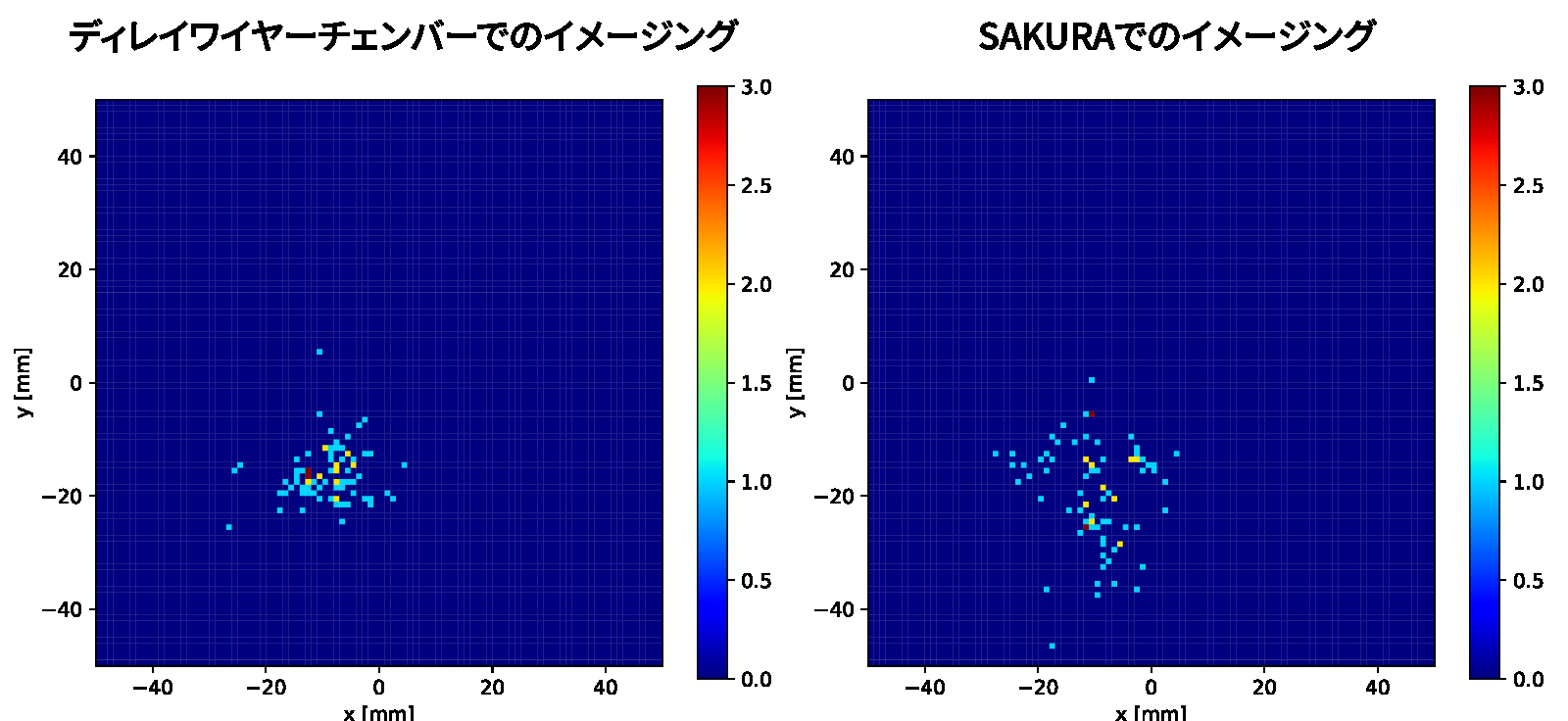
At CERN’s T10 test beamline, a 5 GeV/c muon beam was directed at 13 set positions, and SAKURA’s imaging results were compared with those of a high-precision imaging detector provided by CERN, the “delay-wire chamber.” The position resolution obtained was X = 13.4 mm, Y = 7.68 mm.
The imaging results were also confirmed to broadly agree with predictions from an in-house Monte Carlo ray-tracing simulation of photon propagation.
Significance and what lies ahead
SAKURA showed that simple cosmic-ray imaging is possible at a low cost of about 150,000 yen. This allows even high-school students to perform basic muography in the classroom or at home. By using Red Pitaya, an FPGA-equipped ADC board widely used in education, data acquisition and signal processing are not left as a “black box,” so even students with no coding or data-analysis experience can reconstruct measurement images themselves.
Going forward, we aim to expand opportunities for high-school students to explore cosmic-ray imaging with this detector. Through Accel Kitchen’s educational-outreach network, we have so far lent out more than 300 detectors and supported experiments in the homes of over 200 students. With SAKURA, we expect student-led inquiry — such as estimating the muography of a school building’s structure — to spread even further.
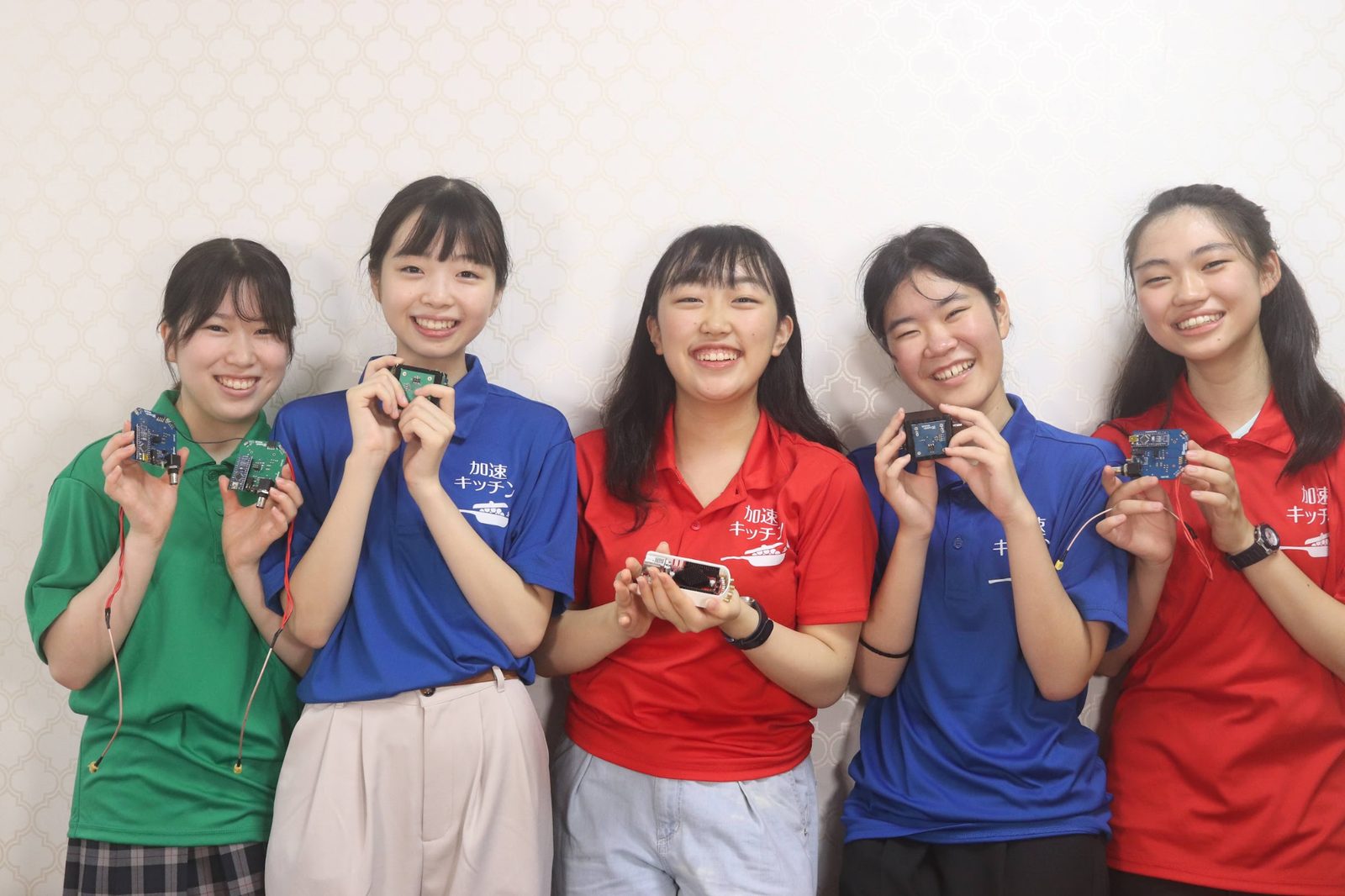
The members of Sakura Particles
* Affiliations are as of the time of the experiment and of paper submission.
About Accel Kitchen
Accel Kitchen is an organization that lends particle detectors to junior- and senior-high students free of charge and supports their inquiry into the universe and particle physics in partnership with research institutes. To date we have lent out more than 300 detectors and supported the inquiry of over 200 students. Participation is free.
Press & media contact
- High-resolution activity photos and detector images on request
- Interview arrangements with team members
- Expert answers to technical questions about the paper and the experiment