To members of the press
Media AdvisoryInvitation to CoverJunior- and senior-high students take on a muon-beam experiment at the world's highest-intensity accelerator, J-PARC
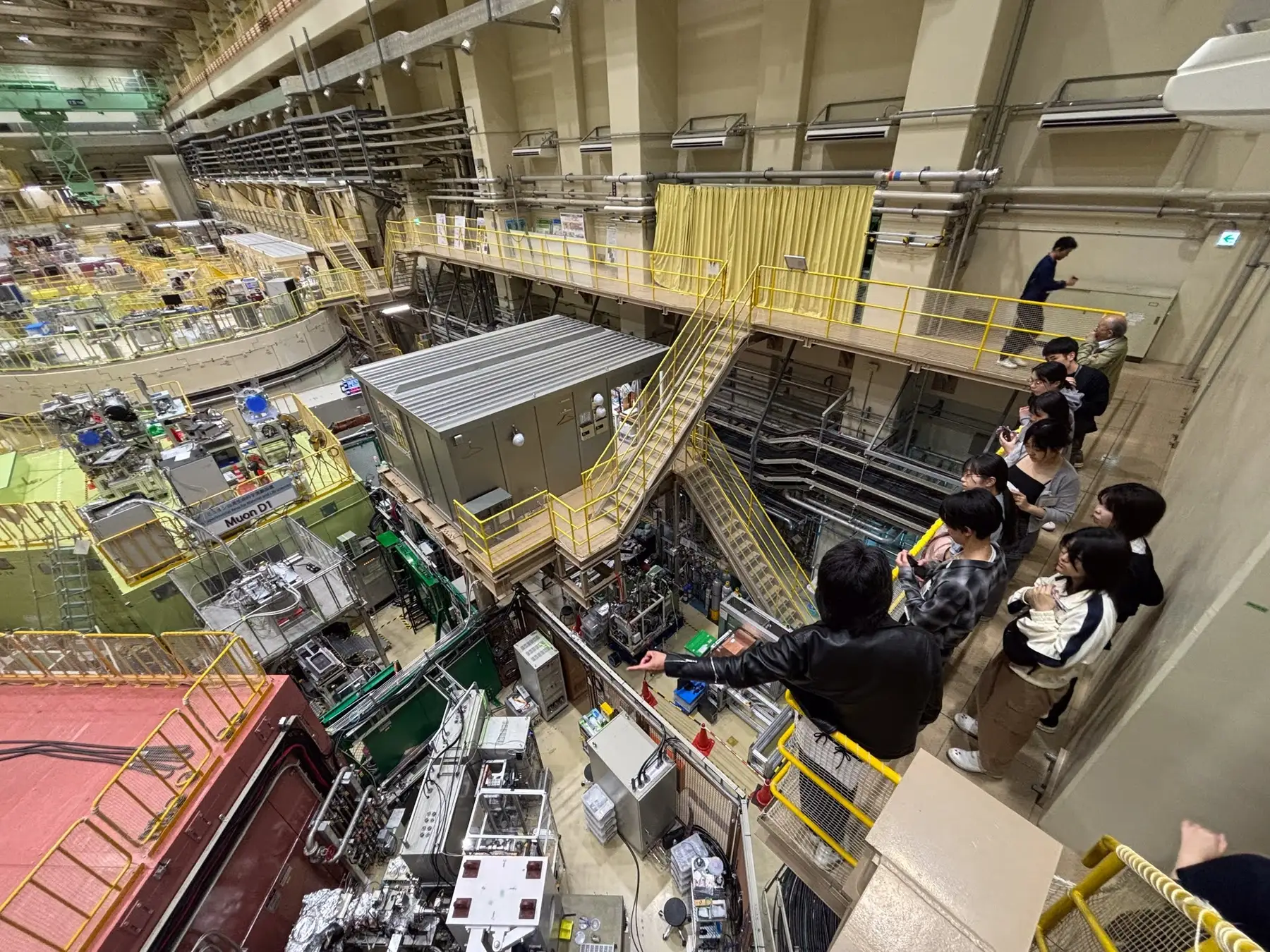
On June 20–21 (Sat–Sun), 2026, at the Muon D1 area of the Materials and Life Science Experimental Facility (MLF) at the high-intensity proton accelerator facility J-PARC, 11 junior- and senior-high students supported by Accel Kitchen LLC will take on muon-beam experiments under five themes they proposed themselves. This will be the second beam experiment by junior- and senior-high students at J-PARC, following last year's world-first (May 2025; 4 students / 3 themes), expanded substantially in both participants and themes. We cordially invite members of the press to cover the event.
- Date
- June 20 (Sat)–21 (Sun), 2026
* See the schedule below for details. - Venue
- Muon D1 area, Materials and Life Science Experimental Facility (MLF), J-PARC (Tokai, Ibaraki)
- Participants
- 11 junior- and senior-high students supported by Accel Kitchen (5 themes in total)
- Coverage
- Please contact the press desk at the end of this release.
The students' self-proposed five beam experiments
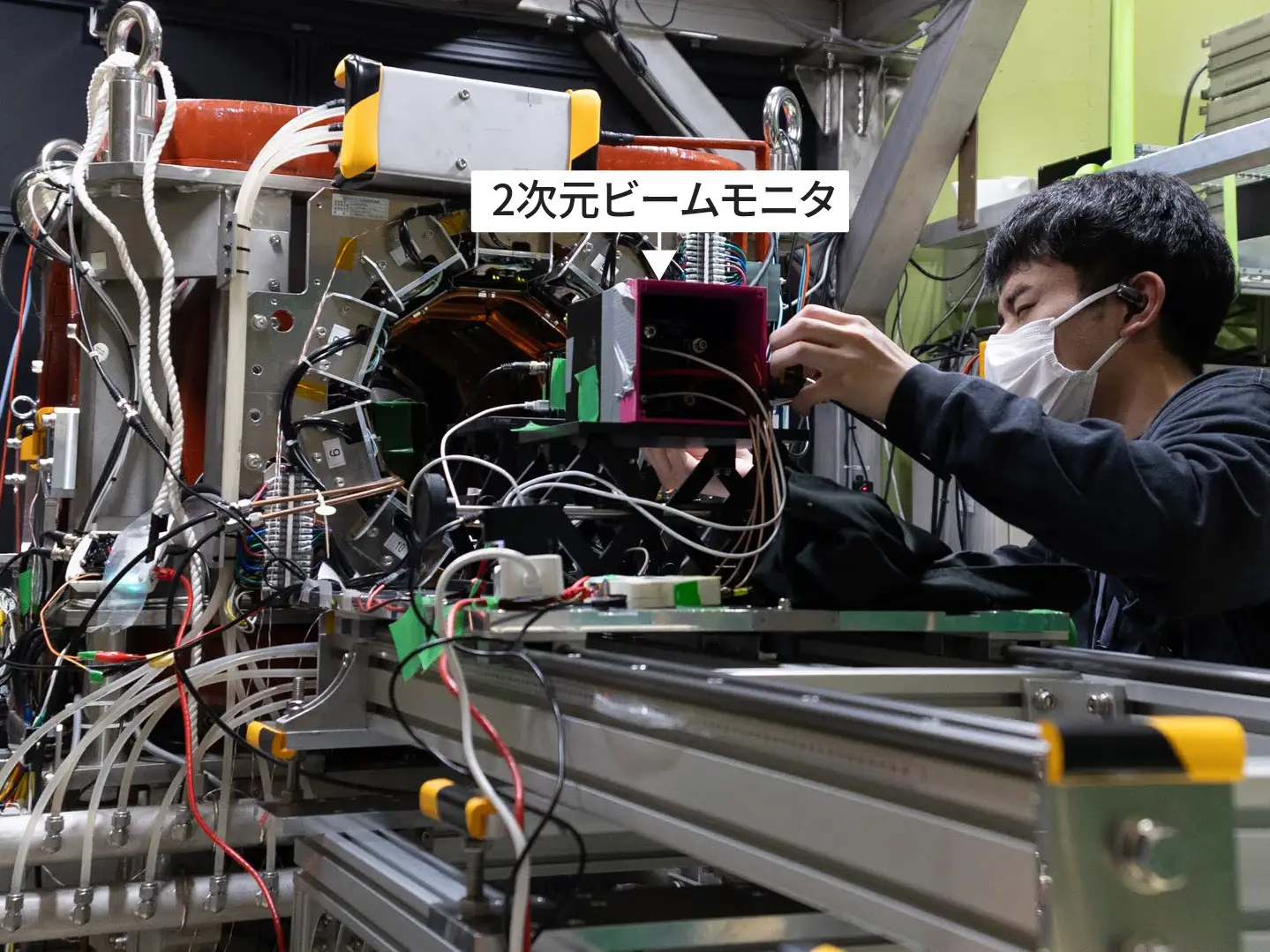
Evaluating momentum and velocity by measuring the curvature of muon trajectories in a magnetic field
At home, Iriyama uses neodymium magnets and a radiation detector to estimate energy from the curvature of beta rays. At J-PARC, he will bend a muon beam of predetermined energy with a magnet and determine its momentum and velocity from the curvature.
Investigating the relationship with momentum based on measurements of muon velocity
This is their second consecutive year taking part. They will refine and improve the measurement method they used last year — determining velocity from the time a muon takes to travel between two detectors (time of flight) — to attempt it at higher precision. Their results from last year's J-PARC experiment have been highly praised at research presentations.
Validating an L-shaped arrangement using two Cosmic Watch detectors
At home she measures the relationship between cosmic rays and solar activity, and at J-PARC she will use the muon beam to evaluate the detection sensitivity of the “L-shaped arrangement” of detectors she uses for this cosmic-ray observation. Hamamoto has been selected for this year's Tobitate! Study Abroad JAPAN program, and plans to visit schools and research institutes in several countries to install cosmic-ray detectors and run hands-on workshops on site.
The effect of temperature on detectors
At home, Tsuchiya observes the relationship between solar activity and cosmic rays, while Hattanji observes the influence of weather on cosmic rays. At J-PARC, they will change the detector's temperature with cold packs and heat pads to investigate how sensor temperature affects detection performance (the sensitivity of the SiPM optical sensor).
Measuring cosmic-ray velocity with a QuarkNet detector
At Joshi Gakuin Junior and Senior High School, students measure the velocity of cosmic rays in the school's astronomical dome using a detector equipped with a high-speed data-acquisition circuit provided by QuarkNet (USA). In this J-PARC beam experiment, they will observe a beam of fixed energy in order to evaluate the detector's performance.
The day's schedule (tentative)
6.20Saturday
- 10:00–11:00Tour of JRR-3 (research reactor) at the Japan Atomic Energy Agency (JAEA)
- 13:00–14:00Tour of areas within J-PARC by the participating students
- 14:00–17:00Equipment setup and operation checks
6.21Sunday
- 9:00–15:00Each beam experiment is carried out (Themes 1–5)
At the MLF Muon D1 area.
A look back at last year's experiment
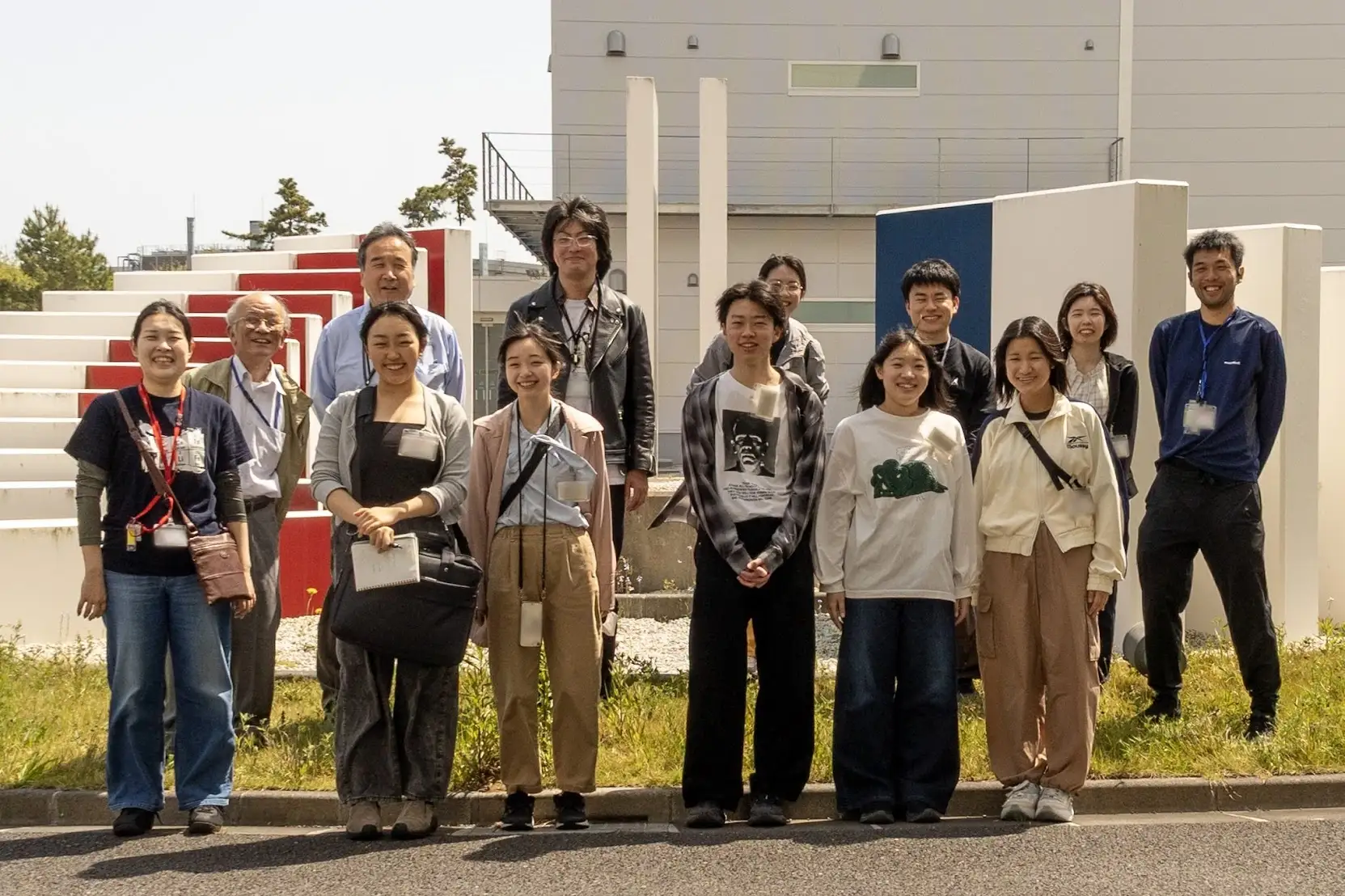
The first-ever beam experiment by junior- and senior-high students at J-PARC was conducted in May 2025, when four students worked on three themes. For details, see last year's press release (official J-PARC website).
Glossary
A large-scale research facility jointly operated by the High Energy Accelerator Research Organization (KEK) and the Japan Atomic Energy Agency (JAEA) in Tokai, Ibaraki. It hosts world-leading research across a wide range of fields — from fundamental studies in particle physics, nuclear physics, condensed-matter physics, chemistry, materials science and biology to applied research for industry. At the MLF within J-PARC, research is carried out using the world's highest-intensity muon and neutron beams, drawing researchers from around the world.
Accel Kitchen's mission is to create a world in which everyone can explore the universe and particle physics through their own efforts. Run mainly by undergraduate and graduate students from science, engineering and many other fields, the initiative has gradually grown into what is now the world's largest particle-exploration network. We distribute inexpensive, easy-to-use particle detectors to junior- and senior-high students who want to measure particles and study the properties of this minuscule world, connect them with researchers and a variety of citizen-science projects, and create opportunities for joint research with researchers and students around the world. accel-kitchen.com
MUSE is a world-leading muon-beam experimental facility located within the MLF at J-PARC. Using high-intensity muons, it can probe the internal structure, magnetism and superconductivity of materials non-destructively, and it is used across a wide range of fields including condensed-matter physics, materials science and life science.
About Accel Kitchen
Accel Kitchen is an organization that lends particle detectors to junior- and senior-high students free of charge and supports their inquiry into the universe and particle physics in partnership with research institutes. To date we have lent out more than 300 detectors and supported the inquiry of over 200 students. Participation is free.
Press coverage requests & inquiries
If you would like to cover this event, please contact the desk below.
- Press contact: Maiko Sudo (Accel Kitchen LLC)
- Tel: 03-4500-0403
- Email: info@accel-kitchen.com