11 junior- and senior-high students carry out a muon-beam experiment at the world's highest-intensity accelerator, J-PARC
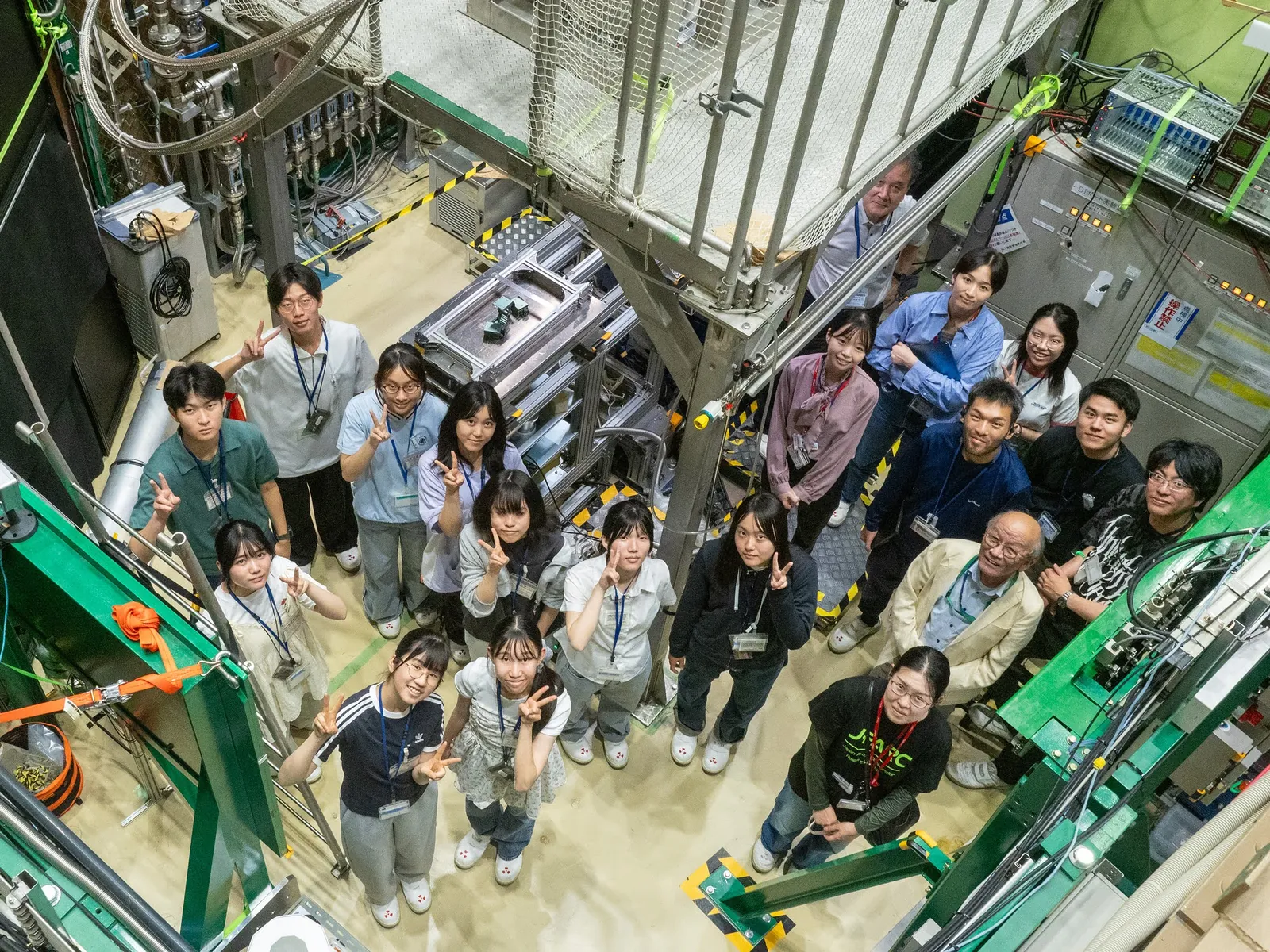
On June 20–21 (Sat–Sun), 2026, at the Muon D1 area of the Materials and Life Science Experimental Facility (MLF) at the high-intensity proton accelerator facility J-PARC (Tokai, Ibaraki), 11 junior- and senior-high students supported by Accel Kitchen LLC took on muon-beam experiments under five themes they proposed themselves and successfully carried out every one of them. This was the second beam experiment by junior- and senior-high students at J-PARC, following last year's world-first (May 2025; 4 students / 3 themes), held on a significantly larger scale in both participants and themes.
Overview
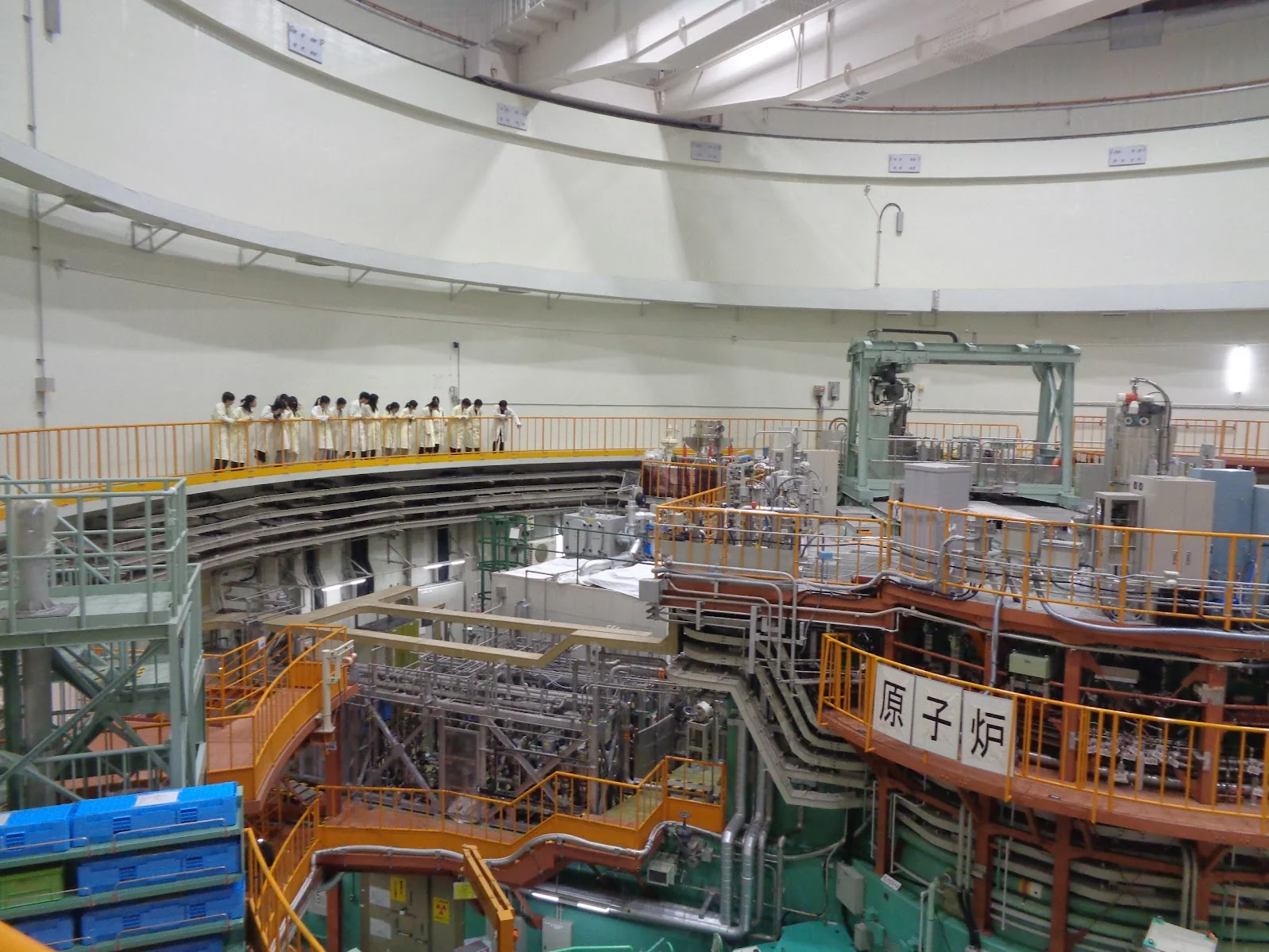
J-PARC (Tokai, Ibaraki) is a world-class high-intensity proton accelerator facility that produces a wide variety of quantum beams, including neutrons, muons, hadrons and neutrinos. These beams are used in a broad range of research, from particle and nuclear physics to condensed-matter physics, chemistry, materials science and biology. Accel Kitchen provides junior- and senior-high students with simple detectors and has so far supported more than 300 students in observing radiation and cosmic rays at home. This time, we invited proposals for muon-beam experiments from the students we support, and the five selected projects (11 students) carried out their experiments in the D1 area on June 20–21. On the first day, the participating students toured facilities associated with JRR-3 (a research reactor) at the Japan Atomic Energy Agency (JAEA), then moved on to the beamline of the Muon Science Establishment (MUSE) to look around and prepare for their experiments.
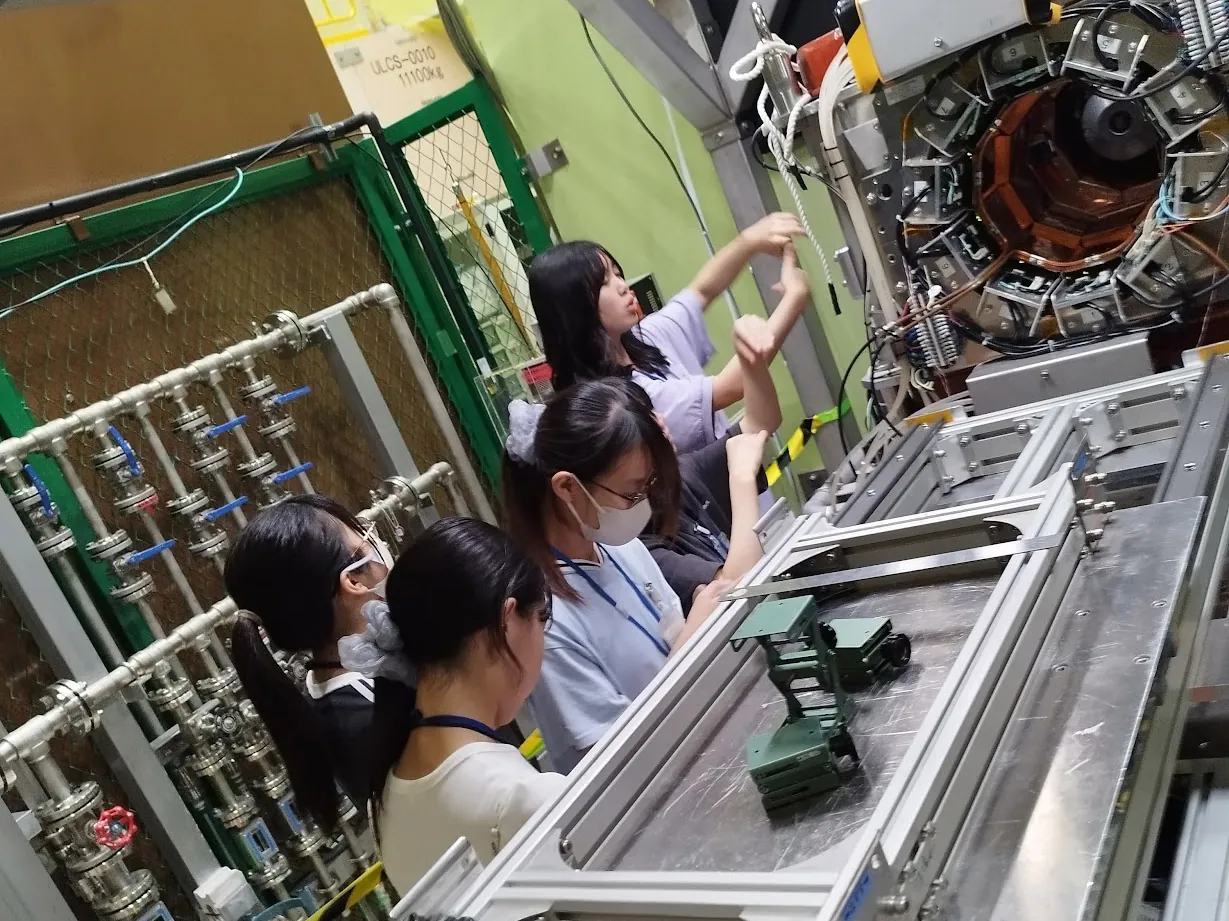
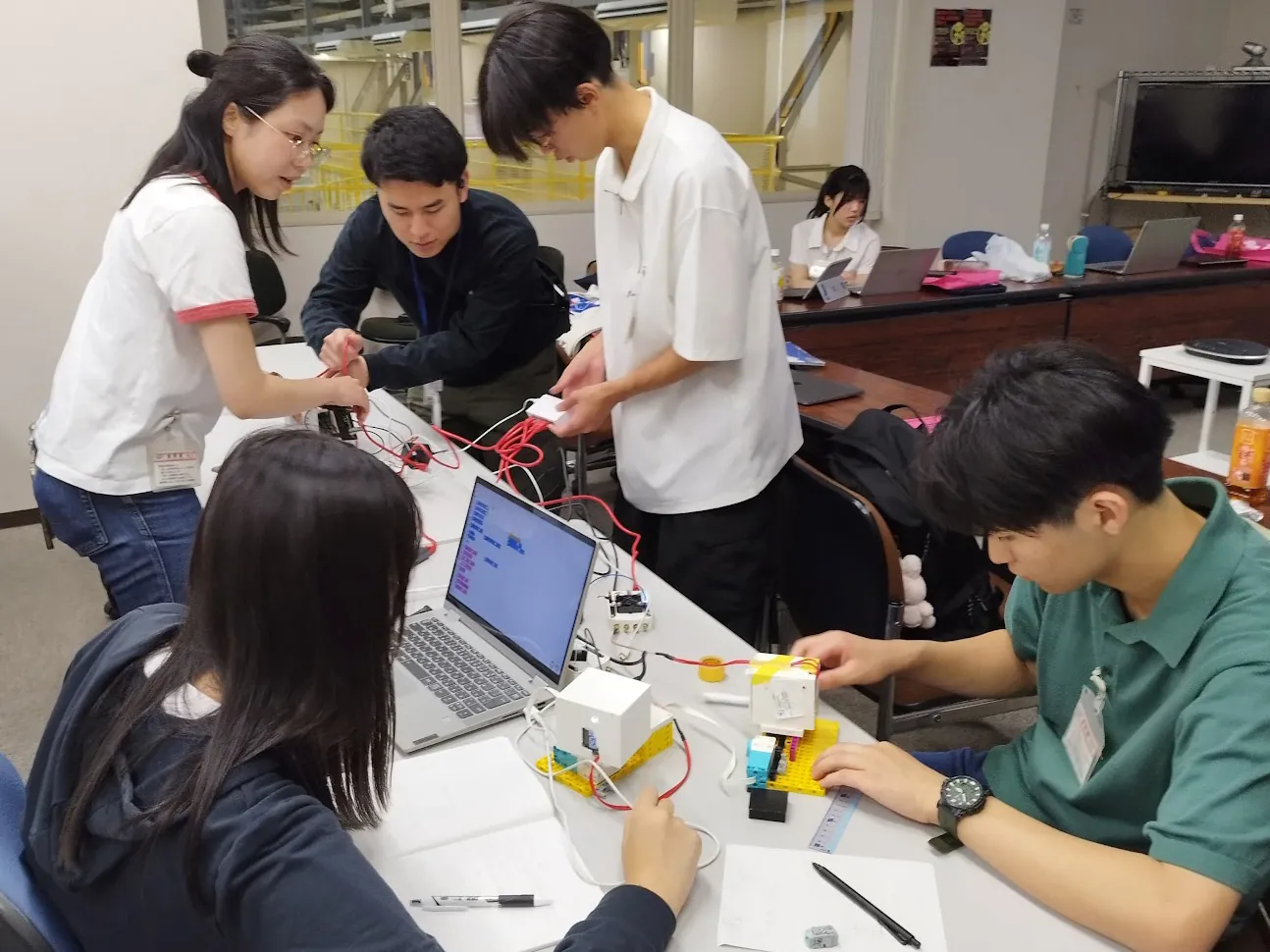
On the second day, each of the five proposed experiments was carried out, and the necessary data were collected as planned. Preparations such as installing detectors within the radiation-controlled area were handled by undergraduate and graduate-student staff registered as radiation workers, while the junior- and senior-high students prepared for data acquisition remotely from a meeting room within the facility.
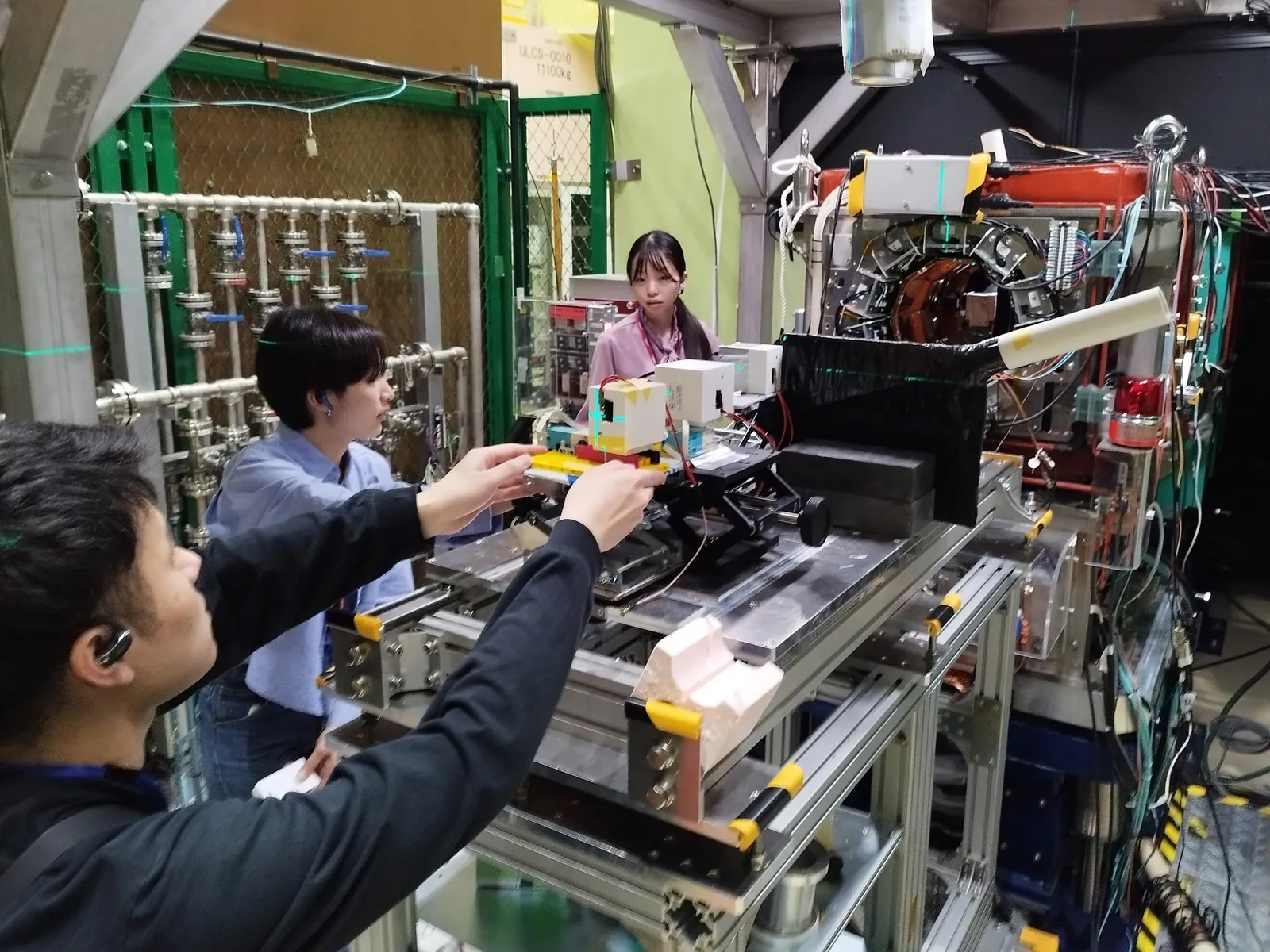
The participating students' experiments
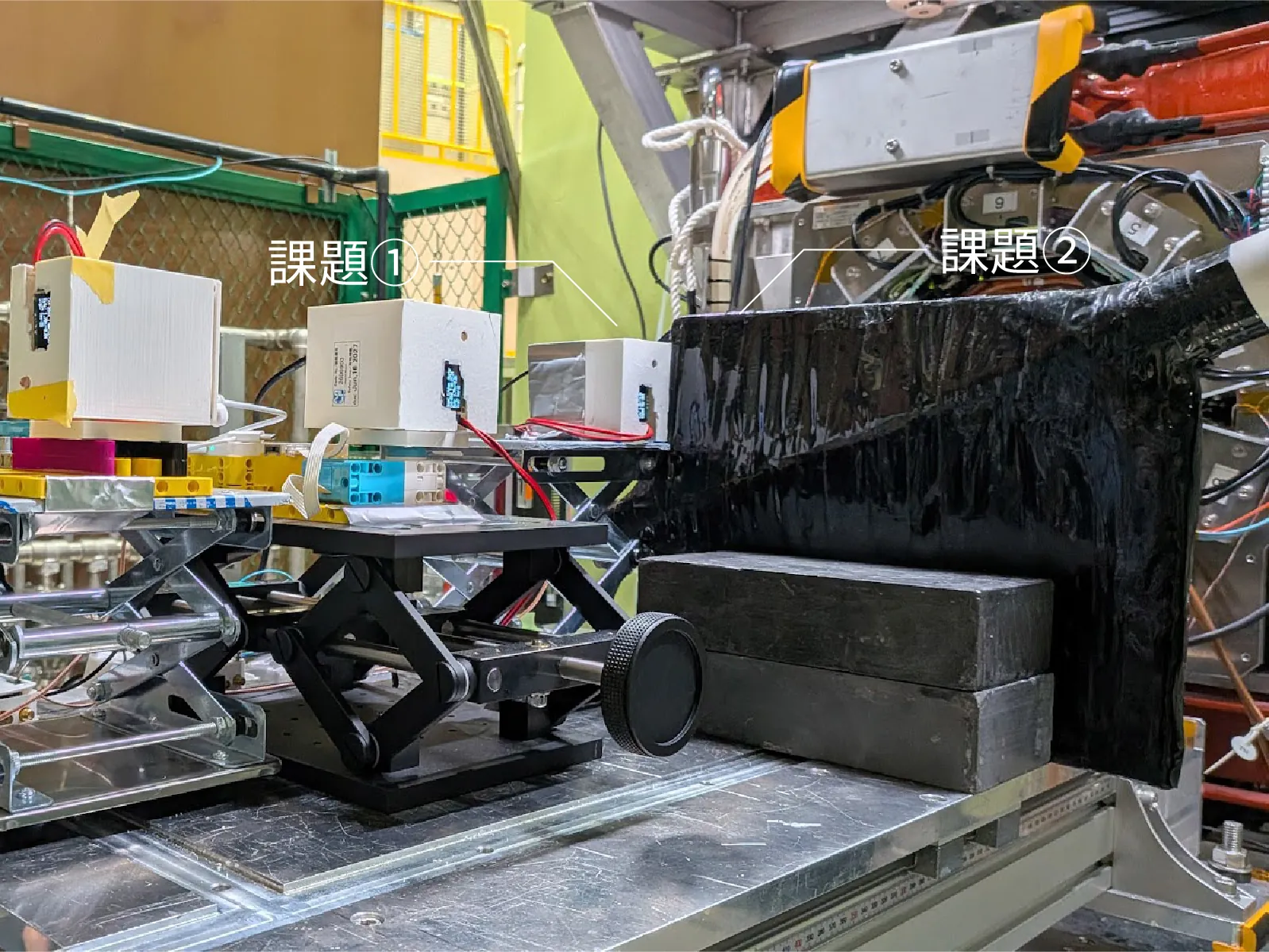
Project 1: Investigating the relationship with momentum based on measurements of muon velocity
This was their second consecutive year taking part. They refined and improved the measurement method they used last year — determining velocity from the time a muon takes to travel between two detectors (time of flight) — to attempt it at higher precision. Their results from last year's J-PARC experiment have been highly praised at research presentations.
Project 2: Measuring muon velocity with a QuarkNet detector
At Joshi Gakuin Junior and Senior High School, students measure the velocity of cosmic rays in the school's astronomical dome using a detector equipped with a high-speed data-acquisition circuit provided by QuarkNet (USA). In this J-PARC beam experiment, they used this detection system to measure the velocity of muons at a fixed energy.
Project 3: Evaluating momentum and velocity by measuring the curvature of muon trajectories in a magnetic field
At home, Iriyama uses neodymium magnets and a radiation detector to estimate energy from the curvature of beta rays. At J-PARC, he took on an experiment to bend a muon beam of predetermined energy with a magnet and determine its momentum and velocity from the curvature.
Project 4: Evaluating detection sensitivity as a function of muon incidence angle
At home, Hamamoto measures the relationship between cosmic rays and solar activity, and at J-PARC she used the muon beam to evaluate how the detection sensitivity of the detectors she uses for this cosmic-ray observation varies with angle. Hamamoto has been selected as one of this year's exchange students under “Tobitate! Study Abroad JAPAN” (a public-private overseas study-support program), and plans to visit schools and research institutes in several countries to install cosmic-ray detectors and run hands-on workshops on site.
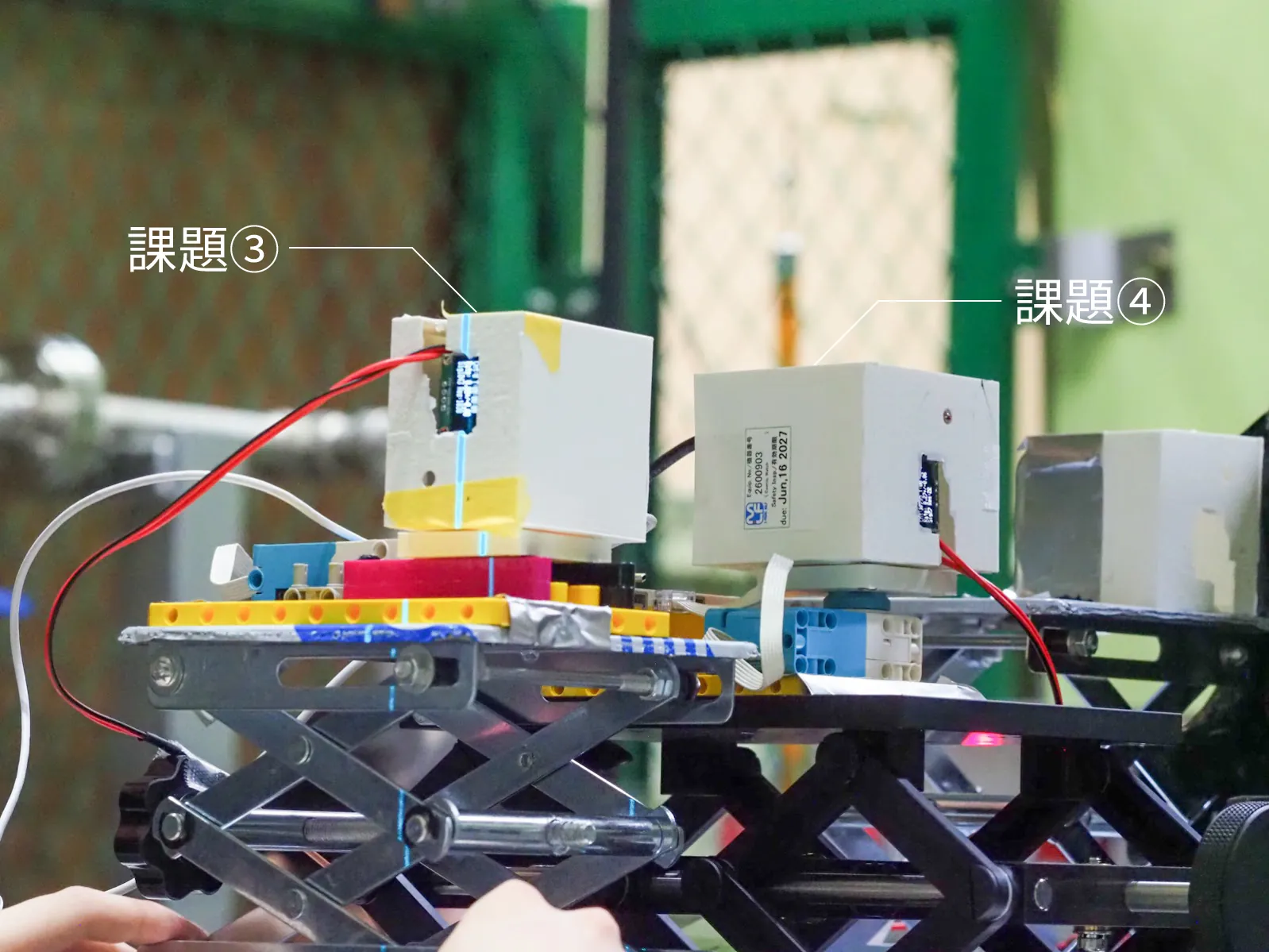
Project 5: The effect of temperature on detectors
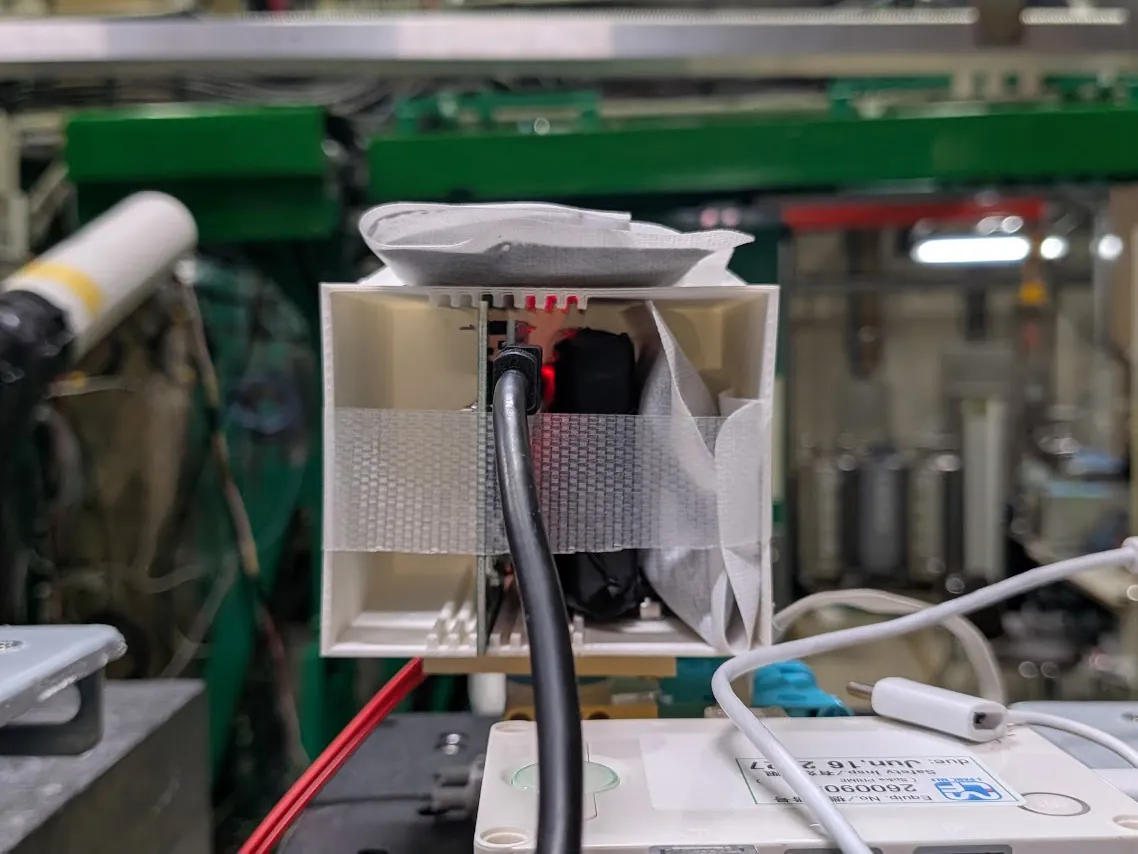
At home, Tsuchiya observes the relationship between solar activity and cosmic rays, while Hattanji observes the relationship between cosmic rays and the influence of weather. At J-PARC, they changed the detector's temperature with cold packs and heat pads to investigate how sensor temperature affects detection performance (the sensitivity of the SiPM optical sensor).
The students' next steps and findings
The 11 junior- and senior-high students who carried out experiments at J-PARC will now analyze their data and plan to publish their findings at academic conferences and in papers.
Support staff
Accel Kitchen: Rikako Kono (Nagoya University, 1st-year doctoral student), Suzuna Nakagawa (SOKENDAI, The Graduate University for Advanced Studies, 2nd year of the five-year integrated doctoral program), Yutaro Yanagisawa (Tohoku University, 2nd-year master's student), Chizuru Nose (Tohoku University, 1st-year doctoral student), Mihiro Nukiwa (Institute of Science Tokyo, 2nd-year undergraduate), Kazuo Tanaka (Representative)
KEK Institute of Materials Structure Science (Materials and Life Science Division, J-PARC Center): Izumi Umegaki (Assistant Professor), Shoichiro Nishimura (Special Assistant Professor)
Reference: Last year's experiment
Press release (May 2025): https://j-parc.jp/c/press-release/2025/05/23001516.html
Glossary
A large-scale research facility jointly operated by the High Energy Accelerator Research Organization (KEK) and the Japan Atomic Energy Agency (JAEA) in Tokai, Ibaraki. It hosts world-leading research across a wide range of fields — from fundamental studies in particle physics, nuclear physics, condensed-matter physics, chemistry, materials science and biology to applied research for industry. At the MLF within J-PARC, research is carried out using the world's highest-intensity muon and neutron beams, drawing researchers from around the world.
Accel Kitchen's mission is to create a world in which everyone can explore the universe and particle physics through their own efforts. Run mainly by undergraduate and graduate students from science, engineering and many other fields, the initiative has gradually grown into what is now the world's largest particle-exploration network. We distribute inexpensive, easy-to-use particle detectors to junior- and senior-high students who want to measure particles and study the properties of this minuscule world, connect them with researchers and a variety of citizen-science projects, and create opportunities for joint research with researchers and students around the world. accel-kitchen.com
MUSE is a world-leading muon-beam experimental facility located within the MLF at J-PARC. Using high-intensity muons, it can probe the internal structure, magnetism and superconductivity of materials non-destructively, and it is used across a wide range of fields including condensed-matter physics, materials science and life science.
About Accel Kitchen
Accel Kitchen is an organization that lends particle detectors to junior- and senior-high students free of charge and supports their inquiry into the universe and particle physics in partnership with research institutes. To date we have lent out more than 300 detectors and supported the inquiry of over 200 students. Participation is free.
Contact for this release
- Accel Kitchen LLC, Press contact: Maiko Sudo
Tel: 03-4500-0403 / Email: info@accel-kitchen.com - High Energy Accelerator Research Organization (KEK), Public Relations
Tel: 029-879-6047 / Email: press@kek.jp - J-PARC Center, Public Relations Section
Tel: 029-287-9600 / Email: pr-section@ml.j-parc.jp