For immediate release
Six detectors, four countries, twenty-five days — building the stations where students measure the same sky
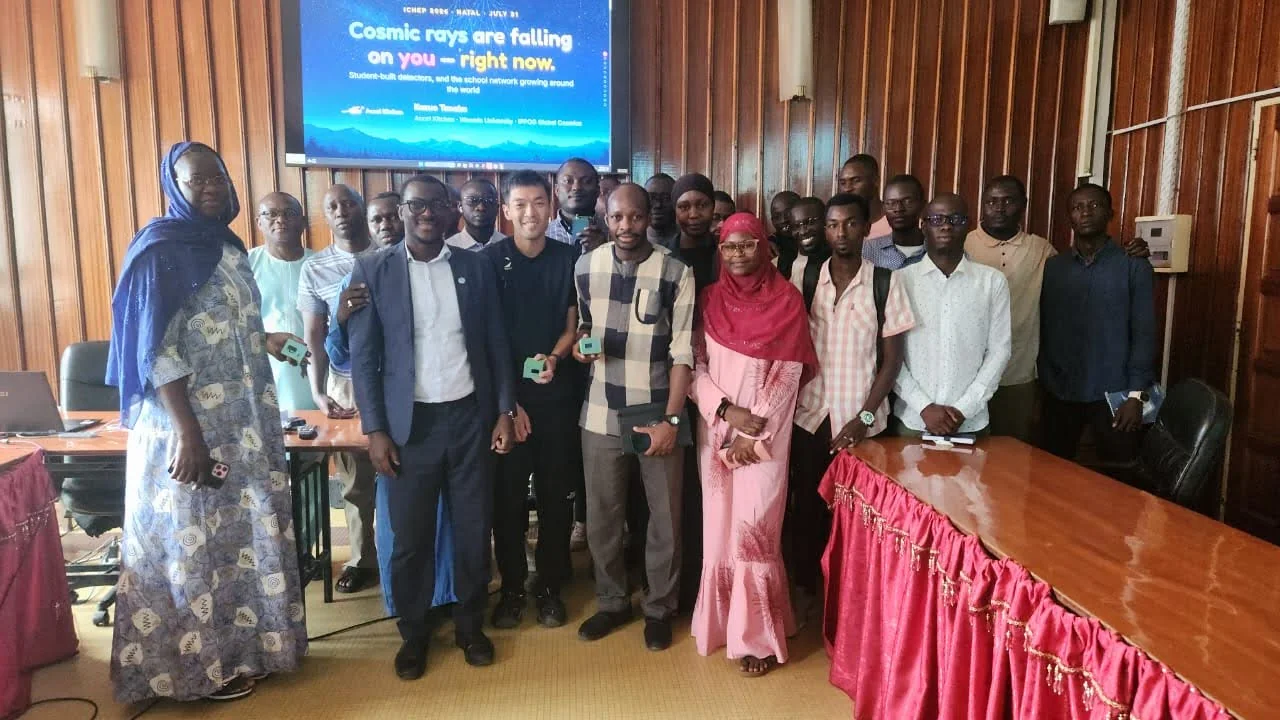
Kazuo Tanaka, founder of Accel Kitchen, travelled to Senegal, Brazil, Argentina and the Dominican Republic between 23 July and 16 August 2026. At each stop he ran a cosmic-ray workshop at the host university and left detectors behind — six in total, the same palm-sized instruments Japanese secondary-school students assemble themselves. The point of the trip was not to deliver equipment. It was to create stations where students in Japan and students abroad can measure the same sky by the same protocol, and then compare what they got.
Cosmic rays fall everywhere
Particle physics has always been an awkward subject for student research. The objects are invisible, and the experiments usually need an accelerator. Cosmic rays are the exception. Particles born far out in space are arriving at every point on the Earth's surface right now, which makes measuring them the one particle-physics experiment any school can actually run — provided someone hands the students a detector.
Accel Kitchen has built its programme on that fact. More than 300 detectors have been lent out free of charge; assembly workshops run more than ten times a year, and around 300 students a year solder their own unit. Over 100 of them keep measuring for more than a year, and students have proposed close to 100 research topics of their own. In 2026, two peer-reviewed papers were published with high-school students as first authors.
"Everywhere" is also, precisely, the condition for international exchange. Last year students in Japan and students in Chicago each recorded the drop in galactic cosmic-ray intensity that followed a major solar flare — independently, on opposite sides of the Pacific, with recovery taking several days. They then met online and compared the two datasets directly. A phenomenon that is global by definition was established as global by the students themselves, which no single detector could have done.
Something else came out of it. Japanese students are often hesitant to approach peers abroad, but wanting the other side's data turned out to be a far stronger motivation than wanting the conversation. Give a student a job to do and the talking starts. This trip was about widening that opportunity.
From 36°N to 39°S
How many cosmic rays reach the ground depends on latitude. The Earth is a magnet, so closer to the equator more incoming particles are deflected away and fewer arrive. Putting the same detector, running the same protocol, at a different latitude is therefore an experiment in itself.
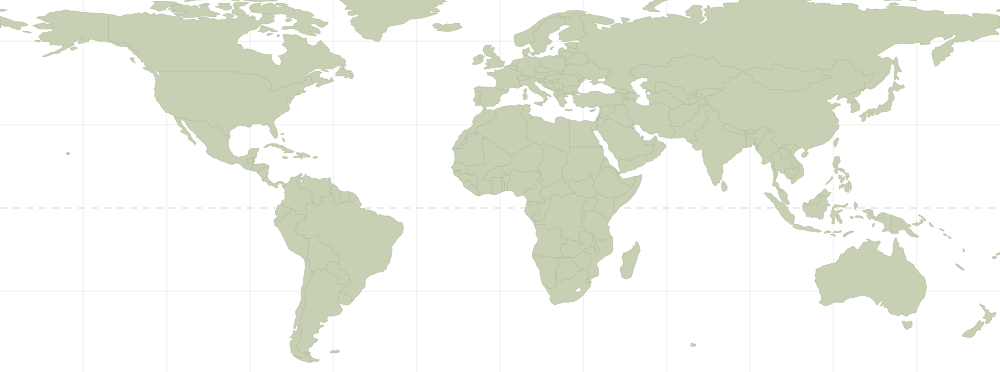
Shanghai, Madrid, Lisbon, Buenos Aires, Santiago, Panama City and New York were transit stops only.
Dakar — leaving the first one behind
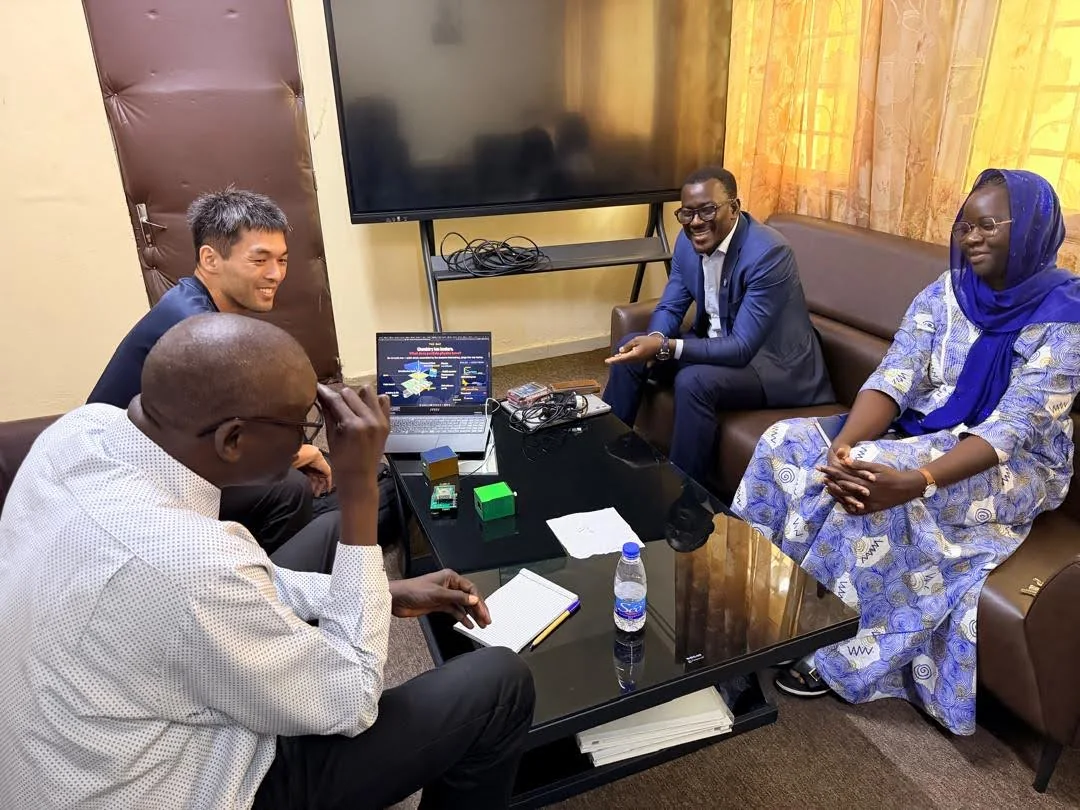
On 26–27 July the tour reached Cheikh Anta Diop University (UCAD) in Dakar, Senegal, hosted by Prof. Alassane Traore. After a lecture introducing the programme, the detectors were opened up and passed around: how the scintillator couples to the photosensor, how to make the box light-tight, how to set the threshold.
One detector stayed at the university.
Natal — a classroom story, told at ICHEP
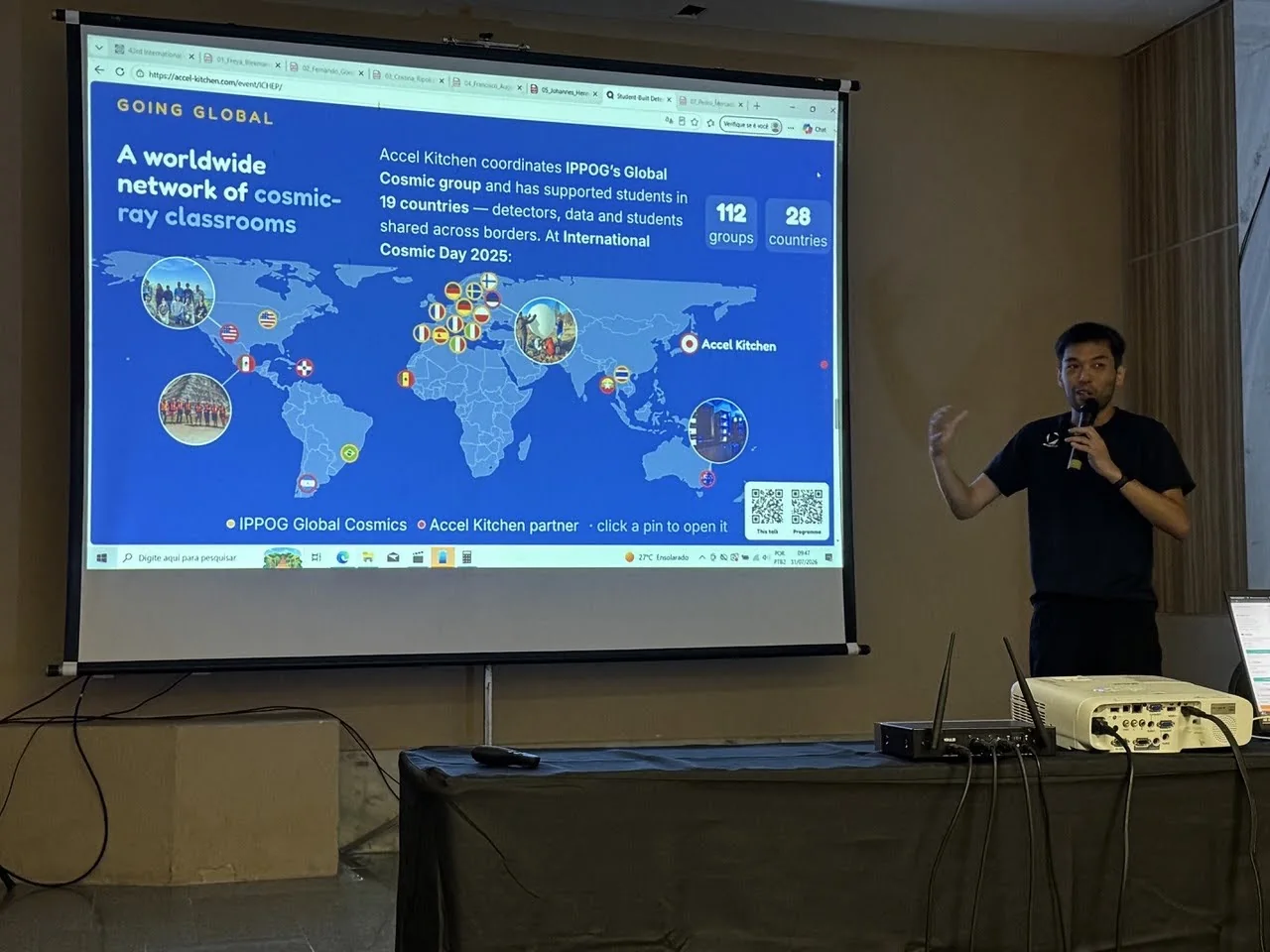
The 43rd International Conference on High Energy Physics (ICHEP2026) ran in Natal, Brazil from 30 July to 5 August. ICHEP is one of the largest conferences in the field. Tanaka gave an oral presentation on 31 July in the Education & Outreach session, and spent the week in discussion with the particle-physics outreach groups gathered there from around the world.
Neuquén — a university, a province and its schools
From 6 to 8 August the tour was based at the Faculty of Engineering (FAIN), Universidad Nacional del Comahue in northern Patagonia.
Day one was an international lecture in the faculty auditorium, titled "Symmetry Breaking Between Particles and Antiparticles: Interdisciplinary Research Emerging from Radiation Measurement". More than 50 people attended in the room and roughly 100 more watched the YouTube stream.
Day two ran through the Ministry of Education of Neuquén Province, the Dean of Engineering, Dr. Marcelo Moreira, the university's international relations office and ANIDE, the provincial innovation agency, on educational partnerships and the exchange of students and staff. That evening came a public hands-on muon-detection workshop, open to all and streamed over Zoom to master's students at a distance.
Three detectors stayed here, hosted by the university and by the regional science club Mg. Ana Prieto works with. In 2027, Japanese high-school students selected for the Tobitate! Study Abroad Initiative are due to stay in Argentina and take cosmic-ray data together with their hosts.
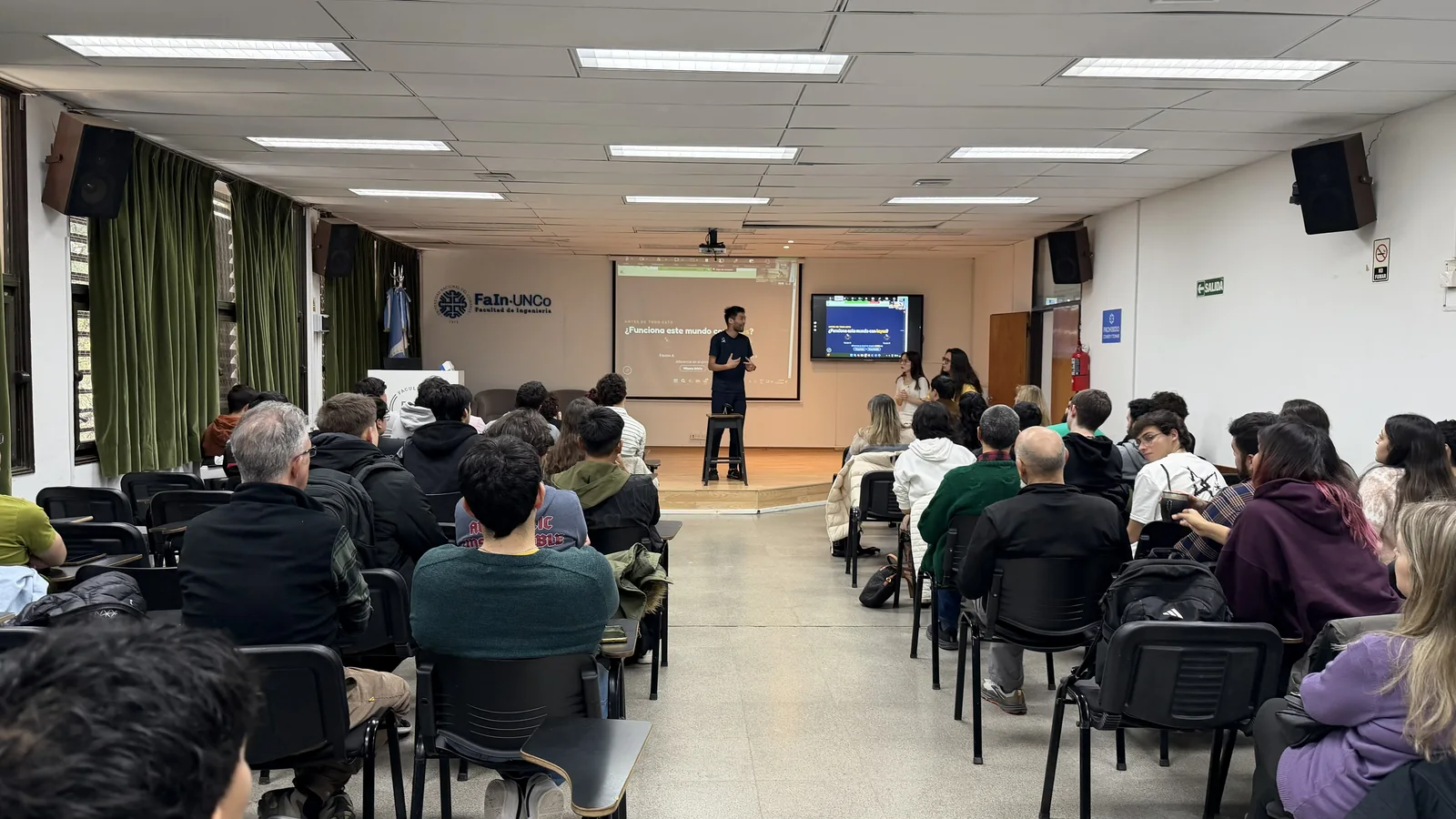
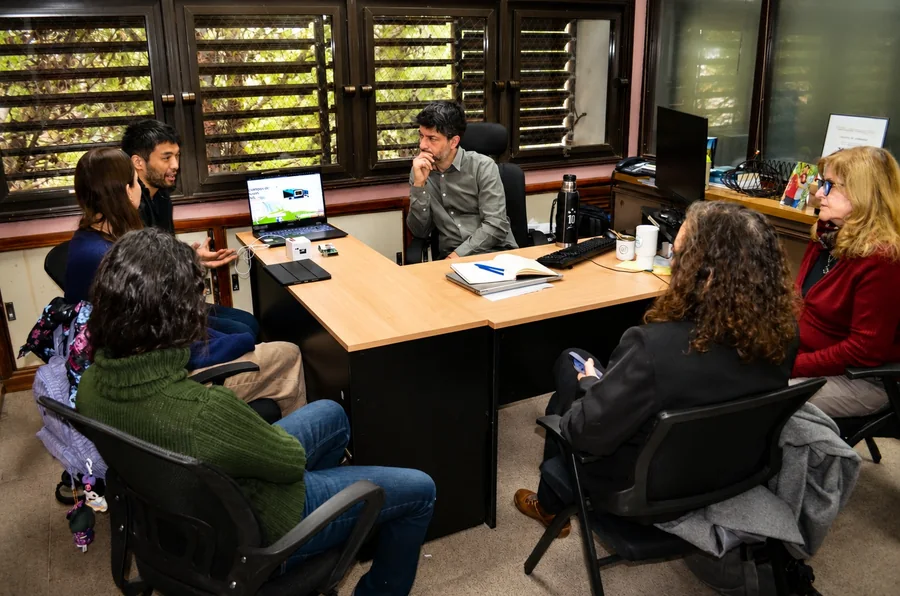
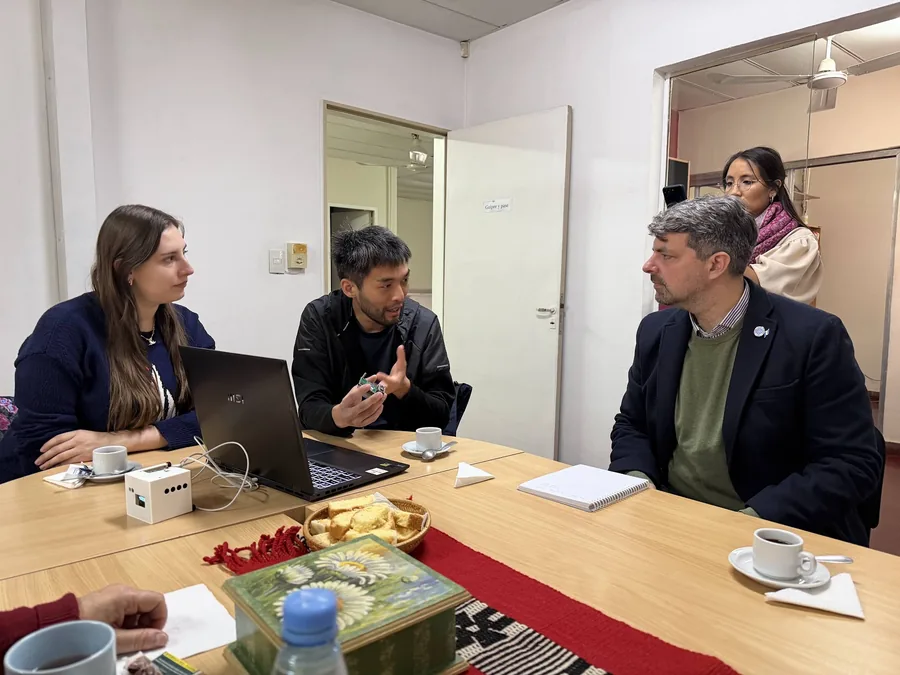
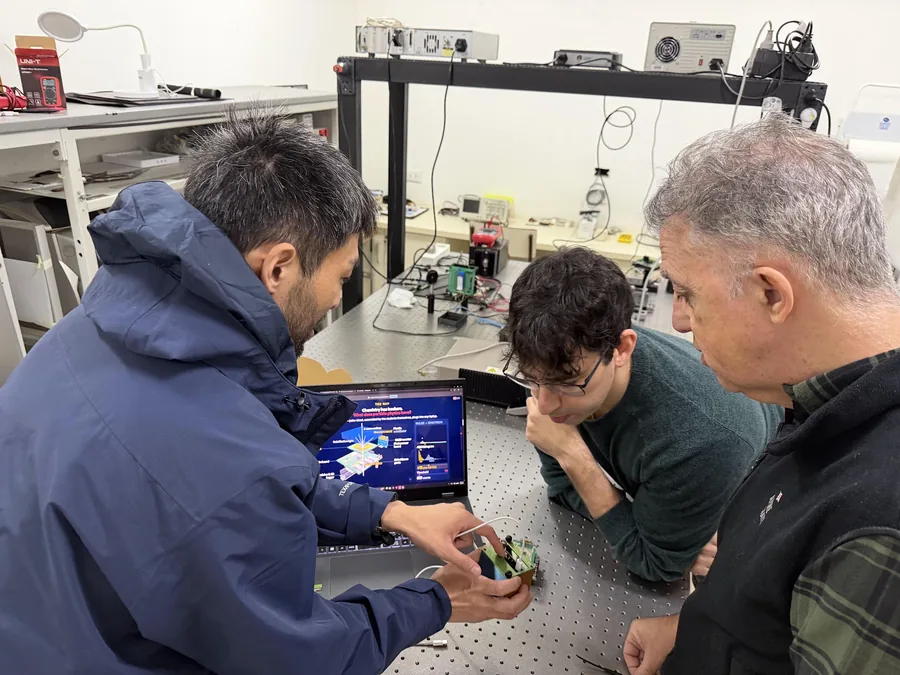
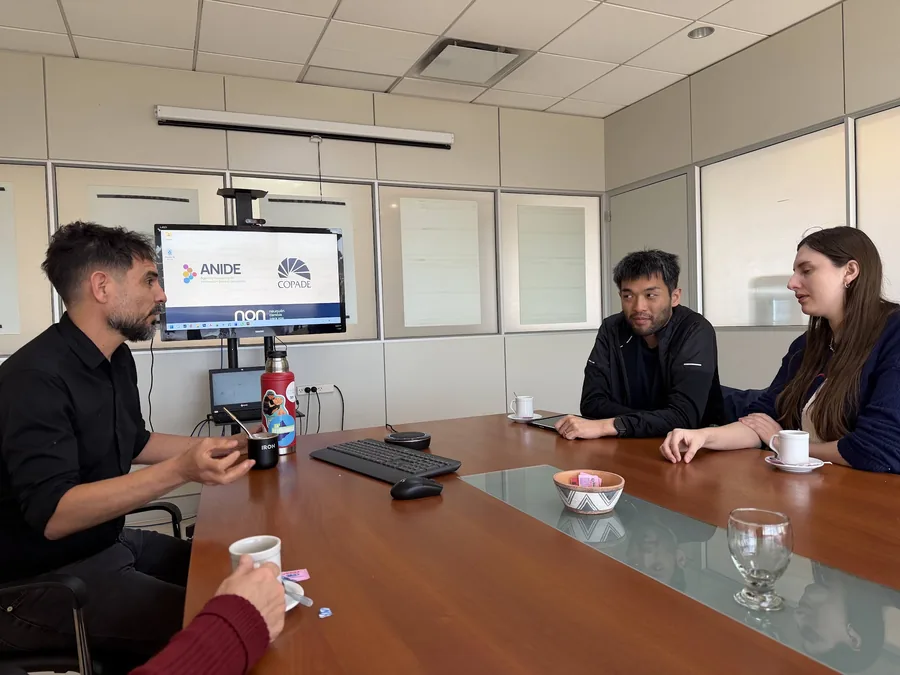
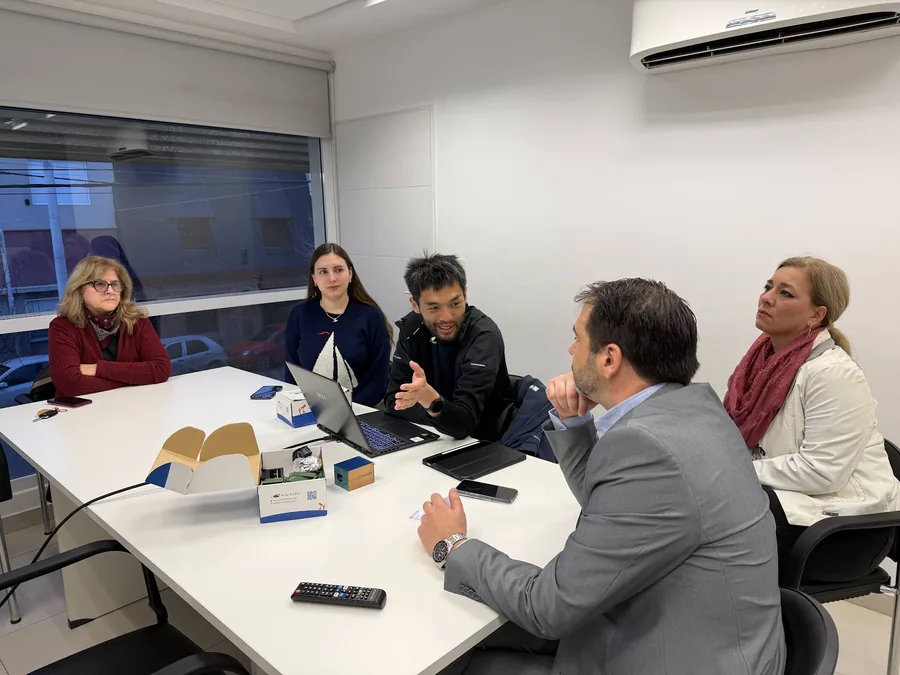
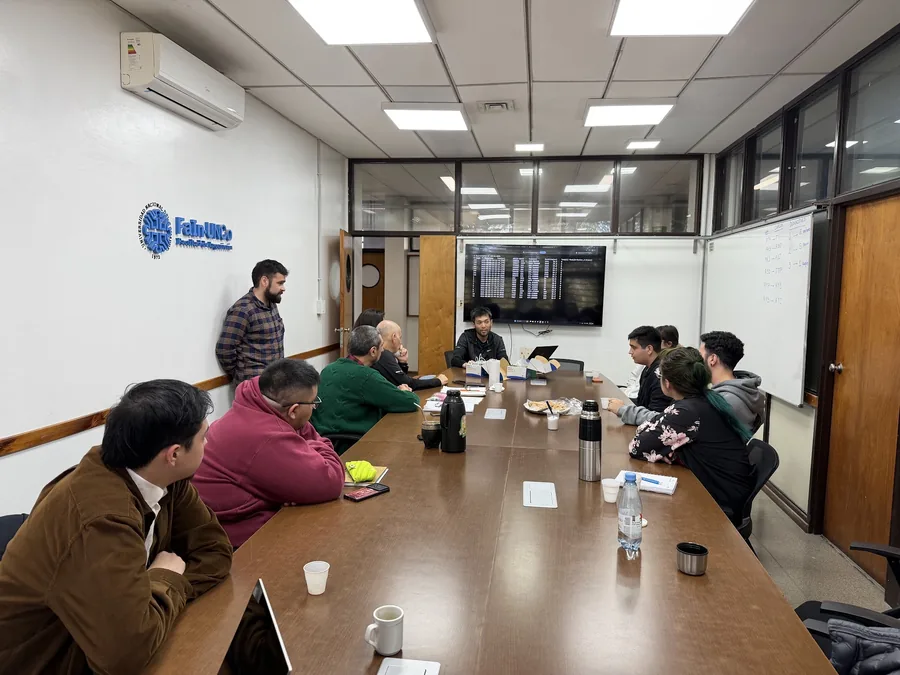
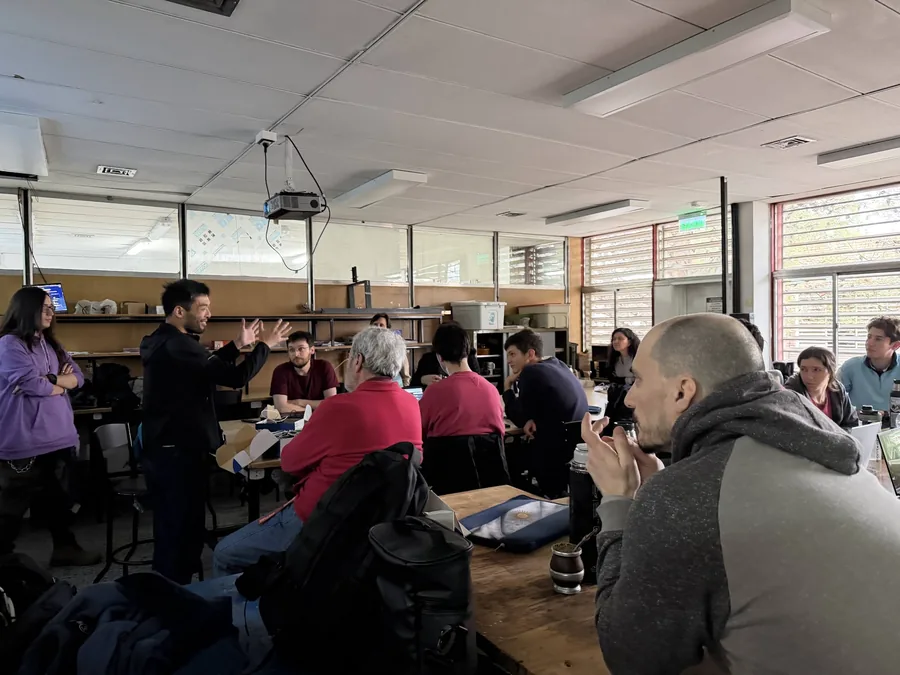
Photographs: Universidad Nacional del Comahue / NoticiasNQN (Nico Calabró)
- La Facultad de Ingeniería de la UNCo vivió una jornada internacional de ciencia portátil con el Dr. Kazuo TanakaUniversidad Nacional del Comahue, 7 August 2026 (Spanish)
- El gran misterio de la física: por qué existe materia en el universoNoticiasNQN, 7 August 2026 (Spanish)
- La tecnología que permite saber con más precisión dónde actúa la radiación contra un tumorNoticiasNQN, 7 August 2026 (Spanish)
Santo Domingo — at the oldest university in the Americas
On 12–13 August the tour reached the Universidad Autónoma de Santo Domingo (UASD), founded in 1538 and the oldest university in the Americas. The host was the Physics Education Area of the Institute of Physics in the Faculty of Sciences (coordinator Prof. Erika Montero; institute director Dr. Nelphy de la Cruz), with the Dominican Astronomical Society (ASTRODOM) as co-host.
The first day opened with a courtesy visit to the Rector, attended by the Ambassador of Japan to the Dominican Republic, followed by a meeting with the authorities of the Faculty of Sciences and a visit to the Japanese Embassy. The afternoon brought a lecture and a live cosmic-ray experiment in the High Technology Building, for physics students, faculty and researchers together with members of ASTRODOM and SODOFI, the Dominican physics society. In the evening came a meeting with the ASTRODOM board at the National Museum of Natural History and a tour of their workspaces. The next day the group drove some 120 km inland to the UASD Azua campus (directed by Dr. Francisco Ramírez) to discuss how physics is taught at each level of the Japanese education system with faculty and master's students in physics education.
Two detectors stayed in Santo Domingo, giving the Caribbean a new pair of points on the map that keep measuring after the visitors leave.
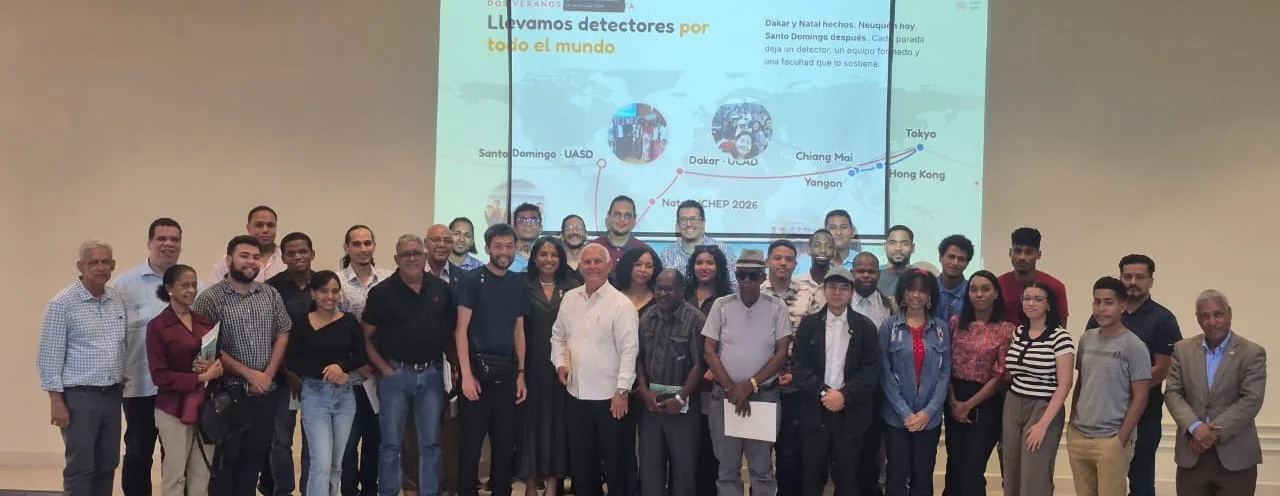
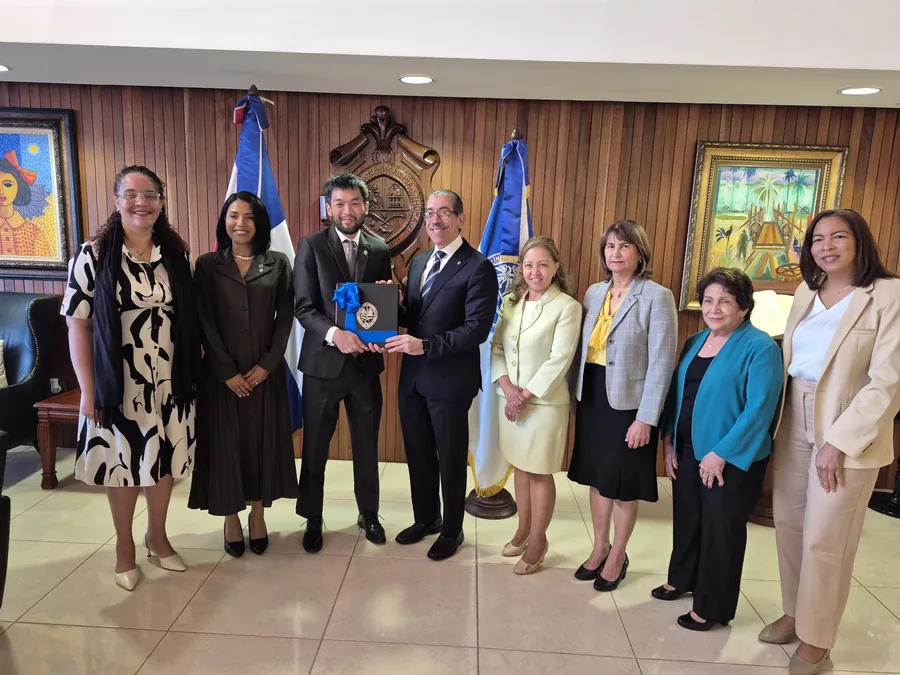
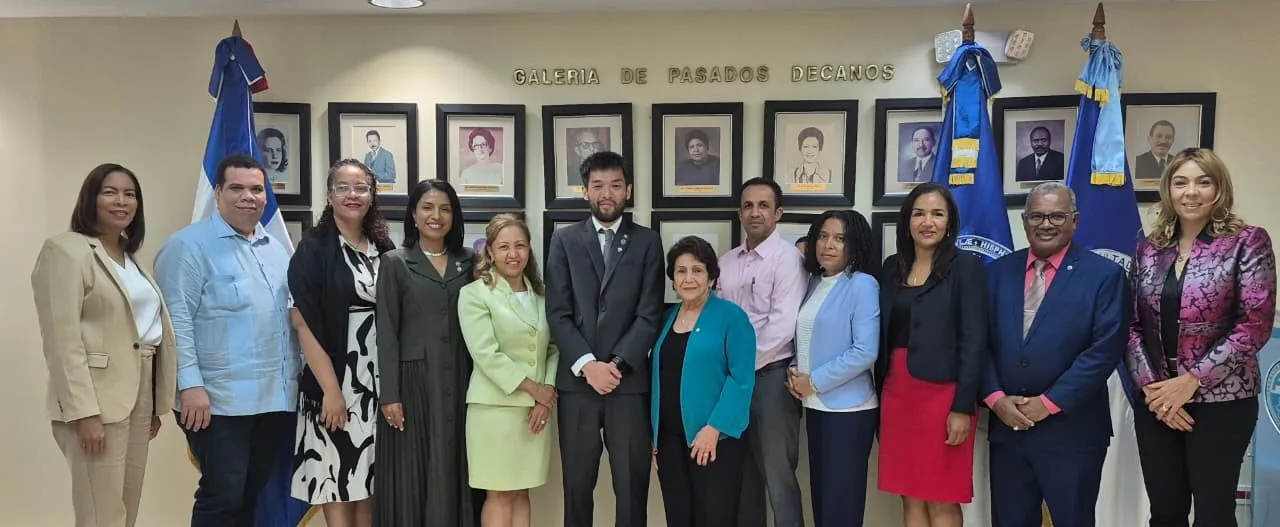
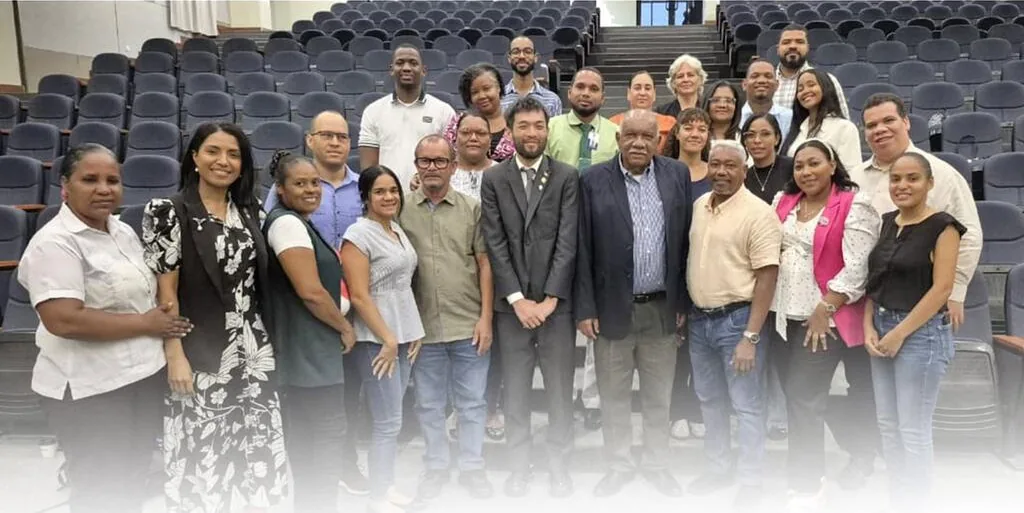
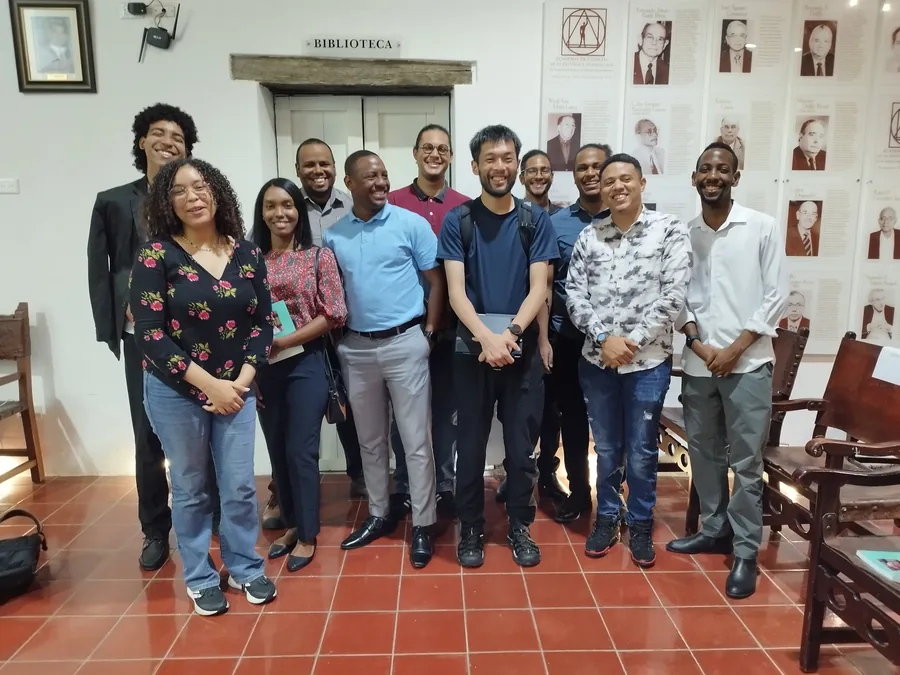
Photographs: Institute of Physics, Universidad Autónoma de Santo Domingo (IFIS-UASD)
- Físico japonés Kazuo Tanaka conecta a la UASD con la física experimental y redes científicas internacionalesInstituto de Física, UASD, 14 August 2026 (Spanish)
- The seminar at the Azua campus (video)Centro UASD Azua, Facebook
What stays behind is a node, not a donation
Every stop leaves behind a detector and a team that knows how to use it. Not a donation — a node.
── from the ICHEP2026 talkShipping a detector takes a courier. Going in person is for running the first workshop together. In all four countries the same three things ended up in place: a detector, a team that can use it, and a faculty willing to host it.
The next step is people. In Argentina, plans are already moving to send a Japanese student to Patagonia to lead workshops in local schools. In parallel, simultaneous observations on a shared protocol will start between Tokyo and each new station. Different latitude, different rate — and that difference is exactly the reason for students to trade data.
The near-term target is International Cosmic Day on 19 November 2026, when schools worldwide measure cosmic rays on the same day and pool the results. The six detectors installed this summer join as new observation points.
Accel Kitchen's detector loans and research mentoring are free for secondary-school students. Enquiries from schools and universities outside Japan are welcome.
26–27 July. Hosted by Prof. Alassane Traore: a lecture and hands-on training on using the detectors. One detector installed. The group is now a partner in IPPOG Global Cosmics.
30 July – 5 August. Oral presentation on 31 July in the Education & Outreach session, on the student-built detector and the international observation network that has grown around it.
6–8 August. International lecture; public hands-on muon-detection workshop streamed over Zoom; meetings with the provincial Ministry of Education, ANIDE, the Dean and the international relations office; planning for a Japanese student to teach locally. Three detectors installed. Hosted by Mg. Ana Prieto and Dr. Susana Ramos.
12–13 August. Courtesy visit to the Rector with the Ambassador of Japan attending; meeting with the Faculty of Sciences authorities; visit to the Embassy of Japan; lecture and live cosmic-ray experiment in the High Technology Building; meeting with the ASTRODOM board; discussion of physics education at the Azua campus. Two detectors installed.
This activity is supported by the Mitsubishi Mirai Ikusei Foundation. In April 2025 Accel Kitchen received the Commendation for Science and Technology (Public Understanding) from Japan's Minister of Education, Culture, Sports, Science and Technology.
About Accel Kitchen
Accel Kitchen lends particle detectors to secondary-school students free of charge and supports their research into space and particle physics in partnership with research institutes. More than 300 detectors have been lent out, supporting over 200 students. Participation is free.
Press contact
- Accel Kitchen LLC — Press office: Maiko Sudo
Tel: +81-3-4500-0403 / E-mail: info@accel-kitchen.com - High-resolution photographs from the visits, the ICHEP2026 presentation material and interviews with Kazuo Tanaka can be arranged on request.
- Schools and universities outside Japan interested in hosting a detector or joining a shared observation are welcome to use the same contact.